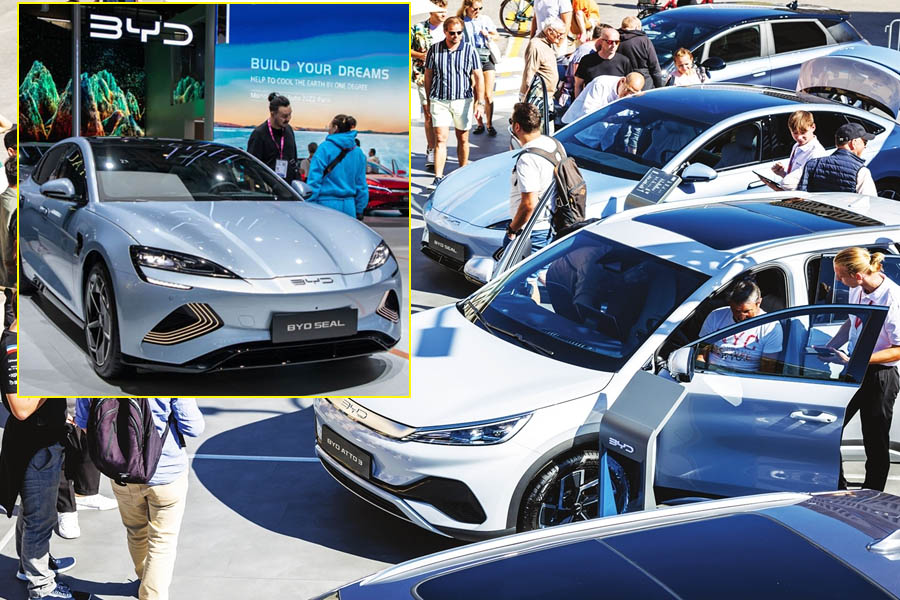
EU Launches Anti-Subsidy Probe into Chinese EV Makers — 13-Month Investigation Could Reshape Global Electric Vehicle Trade
Brussels, Belgium – In a landmark move that signals escalating trade tensions between the world's largest trading blocs, the European Commission has formally launched a 13-month anti-subsidy investigation into Chinese electric vehicle manufacturers. The probe, announced on September 13, 2023, could result in punitive tariffs on Chinese EV imports—a development that threatens to disrupt the rapid ascent of Chinese automakers in Europe's booming electric mobility market.
The investigation responds to mounting concerns—particularly from French President Emmanuel Macron—that Europe's EV sector could suffer a similar fate as its solar panel industry, where Chinese manufacturers now dominate an estimated 80% of global supply. European officials argue that massive state subsidies give Chinese EV makers an unfair advantage, allowing them to undercut European rivals on price while rapidly capturing market share.
Chinese EV Dominance: Numbers That Alarmed Brussels
Chinese EV manufacturers have made spectacular inroads into the European market. Between January and July 2023, Chinese brands sold 820,000 vehicles in Europe—a staggering 55% increase compared to the same period in 2022. Their overall market share across all vehicle segments has risen from just 6% in 2021 to 13% in 2023, with independent forecasts suggesting this could reach 15% by 2025.
In the fully-electric vehicle segment alone, Chinese manufacturers now hold an 8% market share in Europe, up from 4% in 2021. Projections from industry analysts estimate that by 2030, Chinese EVs could capture between 12.5% and 20% of Europe's pure electric market—representing annual sales volumes of 725,000 to 1.16 million vehicles. For legacy European automakers like Volkswagen, Stellantis, and Renault, this trajectory represents an existential challenge.
France and Germany: United Behind the Probe
French Finance Minister Bruno Le Maire has been among the most vocal advocates for EU intervention, warning that Europe cannot afford to repeat the "solar panel mistake." French Minister for Europe Laurence Boone stated: "We cannot allow the European market to be flooded by heavily subsidised EVs. Fair competition must prevail." Germany, despite its carmakers' deep reliance on Chinese sales, has also backed the investigation. German Economy Minister Robert Habeck emphasized the importance of ensuring a level playing field, noting that any breach of free competition rules must be addressed.
The probe will examine whether Chinese EV manufacturers—including industry giants BYD, SAIC Motor, Nio, and Geely—have benefited from unfair state subsidies ranging from direct grants to preferential financing and land acquisition. Under EU rules, if the investigation confirms illegal subsidies, the Commission can impose countervailing duties ranging from 10% to 25% or higher, on top of the existing 10% standard tariff.
Beijing Strikes Back: "Protectionism in Disguise"
China's Ministry of Commerce reacted sharply, describing the EU investigation as an act of protectionism that could "disrupt and distort the global automotive industry chain." In a strongly worded statement, Beijing argued that China's EV industry success stems from "genuine innovation and a complete industrial supply chain"—not subsidies. The Ministry warned of potential retaliation, though specific measures were not detailed.
Chinese EV makers now face a two-front challenge: slowing domestic demand (as China's post-COVID recovery falters) and now potential trade barriers in their most promising export market. The Beijing-based Zhong Lun Law Firm cautioned that once the EU investigation concludes and tariffs are imposed, Chinese manufacturers will face "substantial pressure" to restructure supply chains or risk losing European market share.
What's at Stake: Global EV Landscape Shifts
The global electric vehicle market continues to expand at a breathtaking pace. According to the International Energy Agency (IEA), new EV sales exceeded 10 million units in 2022 and are on track to reach approximately 14 million in 2023. Electric cars now account for 14% of all new vehicle sales worldwide—up dramatically from 9% in 2021 and less than 5% in 2020. China alone accounts for roughly 58% of all electric cars on the road globally, underscoring its central role in the EV revolution.
For European automakers, the investigation offers a potential lifeline—a temporary reprieve to accelerate their own EV transitions and close the price gap with Chinese rivals. However, protectionist measures carry risks. Retaliatory tariffs from Beijing could harm European luxury automakers like BMW and Mercedes-Benz, which rely heavily on Chinese sales. Moreover, higher EV prices could slow Europe's green transition at a critical moment.
Path Forward: Investigation Timeline and Scenarios
The EU anti-subsidy investigation has a maximum duration of 13 months, though provisional duties could be imposed within nine months. Chinese EV makers have limited time to optimize supply chains, potentially shifting final assembly to European plants (as BYD and Geely are already exploring). Alternatively, they may pivot to other markets—including Southeast Asia, Latin America, and the Middle East—where trade barriers are lower.
As the probe unfolds, all eyes are on Brussels and Beijing. The outcome will not only determine the fate of Chinese EV makers in Europe but will also set a precedent for how the West responds to China's industrial ambitions in next-generation technologies. One thing is certain: the era of unfettered Chinese EV expansion in Europe may be coming to an end.
Related Coverage: For deeper analysis of the shifting automotive landscape, explore our special reports: European Carmakers vs. Chinese Rivals, EV Industry Outlook, and Auto Review & Analysis.
Global Post Headline — independent coverage of global trade, automotive industry, and electric mobility. globalpostheadline.com | Follow EV updates: ev-industry.html | auto-review.html

Authentic Nepali crafts, pashmina, singing bowls — worldwide shipping.