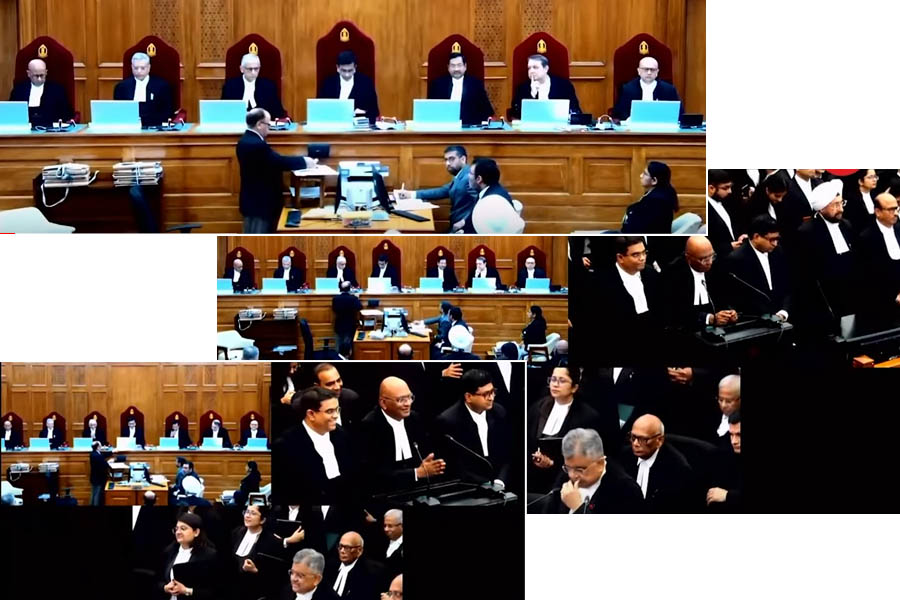
Supreme Court Overrules 1998 Order Granting Immunity to MPs & MLAs in Bribery Cases — Landmark Verdict Strengthens Anti-Corruption Framework
New Delhi, March 4, 2024: In a historic and unanimous judgment that will reshape Indian political accountability, a seven-judge Constitution bench of the Supreme Court on Monday overruled the 1998 PV Narasimha Rao judgment, declaring that Members of Parliament (MPs) and Members of Legislative Assemblies (MLAs) cannot claim immunity from criminal prosecution for accepting bribes in connection with their parliamentary or legislative functions. The landmark ruling, delivered by Chief Justice of India DY Chandrachud along with Justices AS Bopanna, MM Sundresh, PS Narasimha, JB Pardiwala, PV Sanjay Kumar, and Manoj Misra, closes a 26-year-old legal loophole that had shielded corrupt legislators.
The court unequivocally held that the parliamentary privileges conferred under Articles 105(2) and 194(2) of the Constitution — which protect freedom of speech and immunity from court proceedings for votes cast in the House — do not extend to bribery. "Corruption and bribery by legislators are not essential to legislative functions; they are a betrayal of the public trust," the court observed in its 300-page judgment.
"The claim of immunity under Articles 105(2) and 194(2) cannot be stretched to shield legislators from criminal prosecution for bribery. Such an interpretation would subvert the rule of law, encourage corruption, and undermine the integrity of democratic governance. Bribery is not a legislative function — it is a criminal act."
⚖️ Overruling the 1998 Precedent: The PV Narasimha Rao Case
The 1998 judgment (PV Narasimha Rao v. State) had controversially held that MPs and MLAs could claim immunity from prosecution under Articles 105(2) and 194(2) for receiving bribes to vote in a particular manner, reasoning that such acts were "incidental" to legislative functions. That ruling arose from the 1993 Jharkhand Mukti Morcha bribery scandal, where legislators were accused of taking money to vote in favor of a no-confidence motion against the PV Narasimha Rao government.
Overruling that decision, the Supreme Court observed that the earlier bench had "erroneously widened the scope of parliamentary privileges." The current bench emphasized that privileges are granted to ensure the collective functioning of the legislature, not to provide individual immunity for criminal acts. "An error in a judgment cannot be perpetuated simply because it has stood for a long time. This court must correct its mistakes to preserve constitutional morality," CJI Chandrachud wrote.
🏛️ Scope of Parliamentary Privileges Clarified
One of the most significant aspects of the verdict is the clear demarcation of the boundaries of parliamentary privileges. The court held that while legislators are protected for their speeches, votes, and actions within the House when conducting legitimate legislative business, bribery falls entirely outside that protected sphere. The judgment clarified that the test is whether the action is essential to legislative functioning — and bribery fails that test categorically.
The court also rejected the argument that prosecuting legislators for bribery would amount to a violation of the separation of powers. "The judiciary has a constitutional duty to prosecute criminal acts, irrespective of the offender's status. The legislature does not have exclusive jurisdiction over bribery of its members," the bench noted.
📜 Implications for Pending and Future Cases
The immediate effect of the judgment is that all pending bribery cases against MPs and MLAs — including the high-profile 2014 Rajya Sabha bribery case involving former union minister and now several other pending trials — can now proceed without the immunity shield. The court clarified that the ruling applies retrospectively, meaning no legislator can take refuge in the overruled precedent for acts committed before or after this judgment.
Legal experts estimate that approximately 20-25 pending cases across various high courts and trial courts will be revived. Additionally, the judgment empowers the Central Bureau of Investigation (CBI) and state anti-corruption agencies to file chargesheets and prosecute sitting and former legislators without seeking prior permission on grounds of parliamentary privilege.
🗣️ Reactions from Legal Fraternity and Political Circles
Senior advocate and constitutional expert Indira Jaising hailed the verdict as "a watershed moment for Indian democracy." She added, "This judgment sends a clear message that no one, not even elected representatives, is above the law. Corruption has no place in our parliamentary system."
The BJP-led government has welcomed the verdict, with Law Minister Arjun Ram Meghwal stating, "The judgment strengthens Prime Minister Modi's commitment to fighting corruption. The opposition should not have used immunity as a shield." However, some opposition leaders expressed concern that the ruling could be misused for political vendetta, a concern the court dismissed as "unfounded in law."
📰 Message to Our Readers
Landmark Judgment Summary: The Supreme Court of India delivered a historic verdict on March 4, 2024, overturning the 1998 PV Narasimha Rao Judgment. A 7-judge Constitution bench led by CJI DY Chandrachud unanimously ruled that MPs and MLAs cannot claim immunity under Articles 105(2) and 194(2) in bribery cases. The court held that bribery undermines democratic processes, erodes public trust, and cannot be considered incidental to legislative duties. The verdict clarifies the true scope of parliamentary privileges, reaffirms the judiciary's role in combating corruption, and strengthens the rule of law in India. This decision will allow pending bribery cases against legislators to proceed, marking a major victory for transparency and accountability in public life.
Thank you for reading globalpostheadline.com — Your trusted source for independent legal and political analysis. If you wish to advertise your company, events, products, or travel packages, contact us today.
Global Post Headline — authoritative coverage of Indian judiciary. globalpostheadline.com | Follow: Politics Section | National News

Authentic Nepali handicrafts, pashmina, singing bowls.