Iran Strikes Israel: 'Operation True Promise' - Unprecedented Aerial Attack Shakes Middle East
In a dramatic escalation of tensions between Iran and Israel, the Middle East has once again become the focal point of global concern. The recent airborne assault launched by Iran, under the banner of 'Operation True Promise', has sent shockwaves across the region, marking a dangerous turn in the already volatile situation. This unprecedented direct attack from Iranian territory represents a fundamental shift in the shadow war that has played out for decades.
The Attack: Over 200 Projectiles Launched
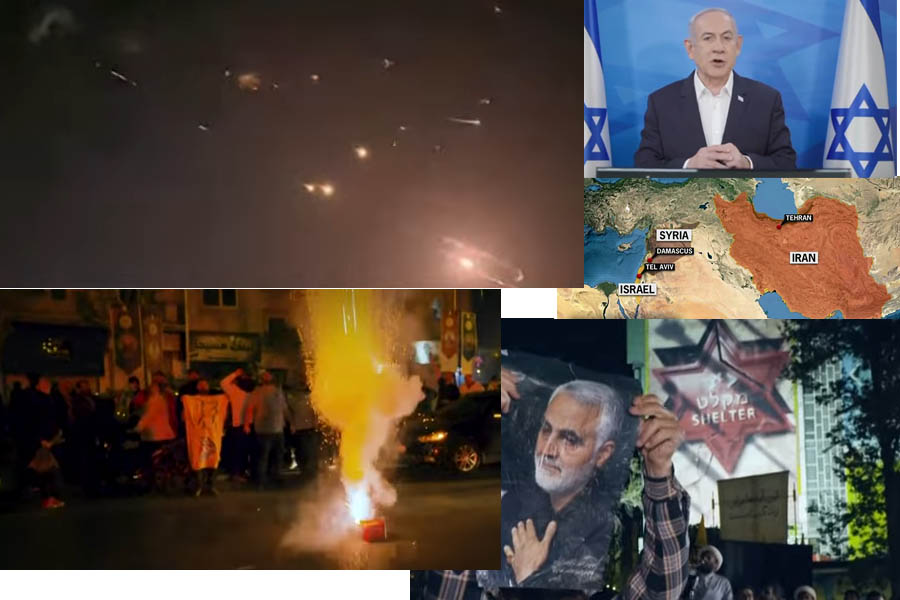
Reports indicate that Iran unleashed a barrage of over 200 drones and ballistic missiles, targeting Israeli territory with precision strikes. The Negev Desert, home to an Israeli Defense Forces (IDF) base, bore the brunt of the attack, with seven missiles reportedly hitting their mark. The skies over Bethlehem were illuminated by the haunting sight of projectiles hurtling towards Israeli soil, triggering widespread panic and prompting air raid sirens to blare across Jerusalem. Israeli civilians took shelter as the Iron Dome and Arrow defense systems activated across the country.
Israel's Defense: Iron Dome and Arrow System Activated
In response to the onslaught, Israel swiftly activated its formidable defense systems, with the Iron Dome interceptors working overtime to thwart the incoming threats. The Arrow missile defense system, designed for ballistic missile interception, was also deployed. Prime Minister Benjamin Netanyahu, taking refuge in a fortified shelter at a government complex, reassured the Israeli populace of their nation's readiness to confront any aggression. His message was clear: Israel stands prepared to defend itself against all adversaries, vowing to retaliate decisively against any further provocations. The IDF reported that 99% of incoming projectiles were intercepted before reaching Israeli territory — a testament to the effectiveness of the multi-layered air defense network.
US-UK-Jordan Coalition: Unprecedented Cooperation
President Joe Biden has lauded the decisive actions of the US military in aiding the Israel Defense Forces (IDF) to thwart a substantial Iranian assault aimed at Israeli military installations. In a statement issued by the White House after a late-night call with Israeli Prime Minister Benjamin Netanyahu, Biden commended the swift deployment of American aircraft and ballistic missile defense destroyers to the region. He attributed the success in repelling the attack to these strategic maneuvers and the exceptional expertise of US servicemembers, highlighting that their efforts facilitated the interception of 'nearly all' incoming drones and missiles. The president's remarks underscore the commitment of the United States to bolstering Israel's defense capabilities in the face of escalating threats from Tehran.
In a significant twist to the Iran-Israel conflict narrative, an Arab nation, purportedly Jordan, took action by intercepting and downing numerous Iranian drones breaching its airspace en route to Israel. Concurrently, reports indicate that both the U.S. and UK militaries provided assistance to Israel in neutralizing drones launched from Iran. This development underscores the complexity of regional dynamics and the collaborative efforts among nations in addressing security threats. Notably, the interception comes in the wake of Iran's aggressive move, launching a barrage of over 200 drones and missiles towards Israel during the night of April 13 and 14, amplifying tensions in the region.
Regional Fallout: Shifting Alliances
As the dust settles over the targeted sites, the geopolitical ramifications of this brazen attack reverberate far beyond the borders of Israel and Iran. The decision of Qatar and Kuwait to distance themselves from potential retaliatory measures, denying the United States the use of their military facilities, underscores the widening chasm between regional allies and traditional power brokers. This shift in alliances poses a significant challenge to U.S. efforts to counter Iranian influence in the region, further complicating an already precarious situation. Meanwhile, Saudi Arabia and the UAE called for restraint but stopped short of condemning Iran.
International Reactions: Calls for Restraint
Amidst the chaos, voices from both within and outside Israel are calling for a measured yet resolute response. John Bolton, former National Security Advisor, advocates for a robust reaction from Israel, warning against underestimating the severity of Iran's actions. Conversely, others urge restraint, emphasizing the need to avoid escalating the conflict into a full-blown war with unpredictable consequences. The United Nations Security Council convened an emergency session, with Secretary-General António Guterres calling for "maximum restraint" and warning that the region was "on the brink of a full-scale conflict." European leaders, including France's Emmanuel Macron and Germany's Olaf Scholz, similarly urged de-escalation.
Aftermath and Retaliation: What Comes Next?
Following the attack, Israel's War Cabinet convened to discuss response options. Within days, reports emerged of Israeli retaliatory strikes against Iranian military facilities in Isfahan and nuclear-related sites. However, both sides appeared to calibrate their responses to avoid all-out war — at least for the moment. The attack marked the first time Iran had directly attacked Israel from its own soil, crossing a threshold that had previously been limited to proxy warfare through Hezbollah, Hamas, and other militias. The incident fundamentally altered the rules of engagement between the two adversaries.
As the international community grapples with the aftermath of Iran's audacious strike, one thing remains abundantly clear: the Middle East stands on the brink of yet another catastrophic conflagration. With tensions simmering and the specter of further violence looming large, the need for diplomatic dialogue and de-escalation measures has never been more urgent. The fate of the region hangs in the balance, as the world watches with bated breath, hoping for a resolution that averts catastrophe and paves the way for lasting peace.
Related Coverage: For ongoing updates on the Middle East crisis, visit our Middle East Breaking News page and Israel-Iran-Gaza Live Updates.
Global Post Headline — independent Middle East coverage. globalpostheadline.com | Follow live: middle-east-breaking.php