Israel's Military Deploys Unconventional Tactics to Dismantle Hamas Tunnels in Gaza — Seawater Flooding Targets the 'Gaza Metro'
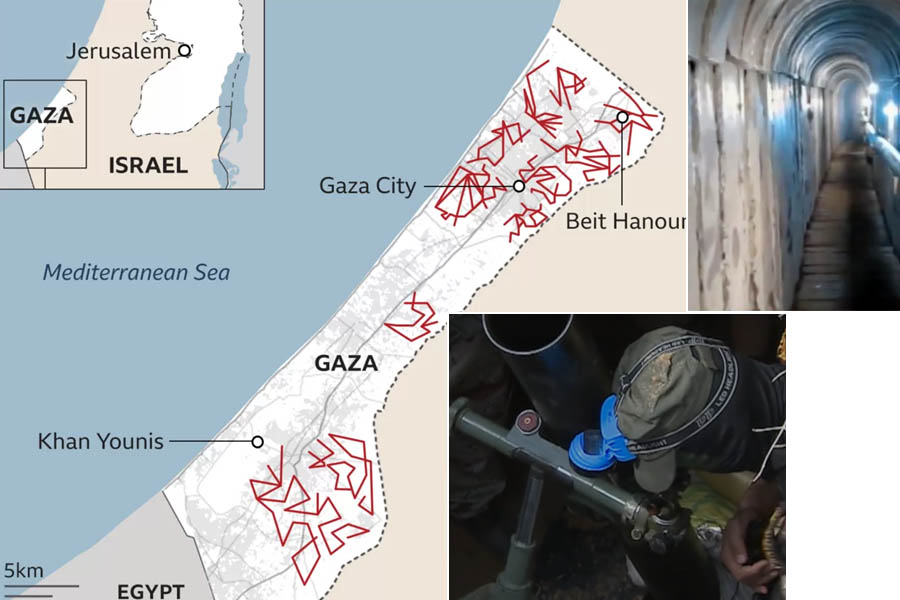
In a strategic move aimed at dismantling Hamas's extensive underground infrastructure, Israel has initiated the flooding of tunnels in Gaza with seawater, according to U.S. officials briefed on the ongoing military operations. This aggressive effort is part of a comprehensive campaign to neutralize the labyrinthine network that has long served as a vital component of Hamas's operations — known as the "Gaza Metro." The tunnel system, stretching approximately 300 miles (500 km) — longer than the New York City subway — and equipped with thick blast doors, has been a critical asset for Hamas.
Seawater Flooding Strategy
Five pumps installed initially, later expanded to seven. The process is expected to take weeks. Similar techniques used by Egypt in 2015 damaged crops. Concerns raised about Gaza's freshwater aquifer contamination.
The 'Gaza Metro': A 300-Mile Underground Fortress
The tunnel system, stretching approximately 300 miles and equipped with thick blast doors, has been a critical asset for Hamas, facilitating the movement of fighters across the battlefield, storing rockets and munitions, and serving as a command and control center for the group's leaders. Israeli officials also believe that hostages may be held within these tunnels, complicating the decision to flood them. The tunnels are reinforced with concrete, wired for electricity, and in some sections, include ventilation systems and communications infrastructure — making them one of the most sophisticated underground military networks in the world.
Multi-Pronged Assault on Underground Infrastructure
The decision to use seawater is still under evaluation, with concerns raised by some Biden administration officials about its effectiveness and potential impact on Gaza's freshwater supply. Similar techniques were employed by Egypt in 2015, resulting in complaints from farmers about damaged crops. The flooding process, expected to take weeks, commenced with the addition of two pumps to the five installed last month. The Israeli military is employing a multi-faceted approach, including airstrikes, liquid explosives, as well as deploying robots, dogs, and drones to target the underground network. The IDF has also used "sponge bombs" — a foam-like explosive that hardens and seals tunnel branches.
Khan Younis: The Last Stronghold
Israel's military focus is particularly intense in northern Gaza and beneath the city of Khan Younis, one of Hamas's last strongholds. The challenge lies not only in gaining control above ground but also in overcoming the subterranean complexity that remains a significant obstacle. Israeli forces have encircled the city and are conducting targeted raids, but the tunnel network allows Hamas fighters to ambush troops and disappear. Despite the reluctance to send soldiers underground due to tactical concerns — including booby traps and close-quarters ambushes — Israel's top general, Herzi Halevi, emphasized the intensification of operations beneath the surface.
General Halevi: "Deepening Activity Underground"
"We are deepening our control over northern Gaza and our penetration into the southern strip, and also deepening activity underground," stated General Halevi from Khan Younis. The military pressure is escalating, with Israeli forces encircling Jabalia in northern Gaza and the Shujaiya neighborhood in Gaza City, where Hamas allegedly maintains its fiercest fighters. Israeli Defense Minister Yoav Gallant declared that northern Gaza is on the brink of collapse.
Surrenders and Casualties
While Israel claims over 500 militants have surrendered in the past month, Hamas denies these allegations, asserting that Israeli forces have arrested civilians instead. The ongoing conflict has resulted in a significant toll, with Israeli estimates indicating the death of at least 7,000 Hamas militants and over 18,400 Palestinians, the majority being women and children — figures that Gaza's health ministry reports but cannot independently verify. Israeli losses include 105 soldiers killed in the ground invasion as of December 2023.
Humanitarian Aid and International Pressure
Amid international pressure, Israel has started facilitating the movement of aid trucks into Gaza from the Kerem Shalom crossing, doubling the aid entering the enclave. However, the United Nations warns that more support is needed, urging the use of the Kerem Shalom crossing for both commercial and aid convoys. Recent incidents at Kamal Adwan Hospital in northern Gaza, where two mothers were killed, highlight the challenges faced by civilians caught in the crossfire. The International Committee of the Red Cross and other international groups are called upon to protect medical staff and civilians in the conflict zone.
Environmental Concerns and Effectiveness
US officials have expressed reservations about the seawater flooding strategy. Environmental experts warn that pumping seawater into Gaza's already strained aquifer could render the territory's freshwater undrinkable for years. The soil salinity could damage agriculture in an enclave already facing food insecurity. Militarily, the effectiveness remains uncertain; Hamas tunnels are equipped with drainage systems and blast doors that may resist flooding. Some tunnels could simply be abandoned, with Hamas fighters relocating to unaffected sections of the network. Nevertheless, Israel views the tunnel network as an existential threat that must be neutralized, and the flooding strategy represents one of several unconventional methods being tested.
As the conflict unfolds, the world watches closely, hoping for a resolution that minimizes civilian casualties and provides humanitarian relief to those affected. The complex dynamics on the ground and the unconventional tactics being employed underscore the difficulties in reaching a swift and peaceful conclusion to the hostilities in the region.
Related Coverage: For ongoing updates on the Gaza war, visit our Middle East Breaking News page and Israel-Gaza War Hub.
Global Post Headline — independent Middle East coverage. globalpostheadline.com | Follow live: middle-east-breaking.php