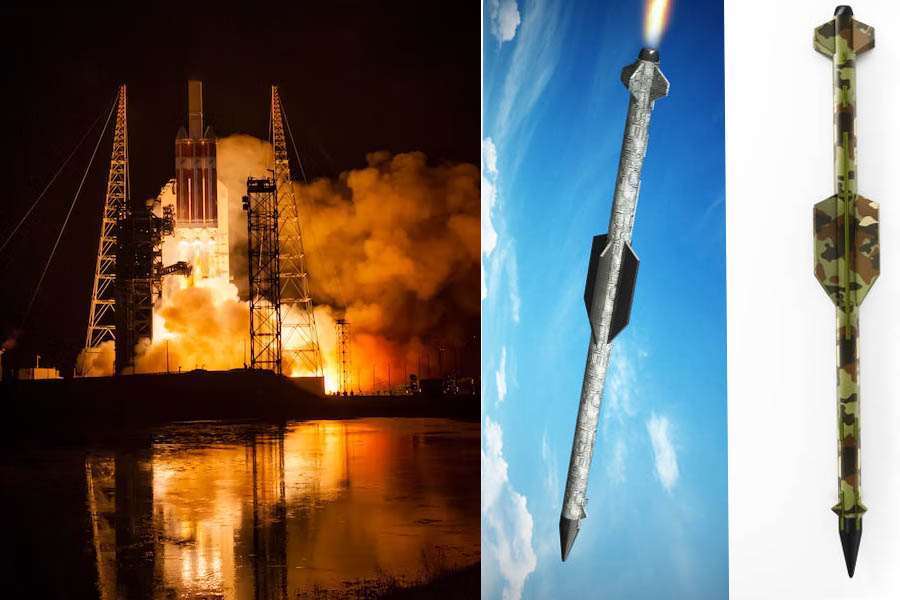
The Perilous Rise of Space-Based Nuclear Weapons: Russia's Nuclear-Powered Jammer Threatens Global Satellite Infrastructure — Strategic Implications and Urgent Response
Washington D.C. — February 16, 2024 — The recent revelation of Russia's alleged plans to deploy a space-based nuclear weapon has sent shockwaves through global security circles, sparking urgent calls for transparency, diplomatic intervention, and strategic reassessment. While the exact nature of the purported weapon remains shrouded in classified intelligence, reports suggest it is not a nuclear-armed satellite designed to detonate in orbit, but rather a nuclear-powered electronic warfare jammer — a device that would use a small nuclear reactor to generate electromagnetic pulses (EMP) capable of disabling vast swaths of satellite infrastructure across low Earth orbit (LEO) and geosynchronous orbit (GEO).
The weapon, if deployed, would represent a fundamental violation of the 1967 Outer Space Treaty, which explicitly prohibits the placement of nuclear weapons or other weapons of mass destruction in orbit around Earth. More critically, it would introduce an unprecedented level of strategic instability, threatening the thousands of satellites that underpin modern civilization — from GPS navigation and financial transactions to weather forecasting and military communications.
- 🚀 Weapon type: Nuclear-powered electronic warfare/jamming satellite
- 🎯 Target: Low Earth Orbit (LEO) and Geosynchronous Orbit (GEO) satellite constellations
- ⚠️ Capability: EMP generation to disable multiple satellites simultaneously
- 🌍 Violation: Outer Space Treaty Article IV (prohibits nuclear weapons in orbit)
- 📡 Potential impact: GPS, communications, surveillance, banking, military systems
🛰️ The Nature of the Threat: A Nuclear-Powered Jammer, Not a Bomb
Initial media reports suggested Russia was developing a nuclear-armed satellite capable of destroying other satellites via detonation. However, subsequent intelligence briefings — confirmed by sources in the U.S. Department of Defense — indicate the weapon is more nuanced and arguably more destabilizing: a nuclear-powered electronic warfare platform. This device would not detonate its nuclear core but would use the reactor to generate massive bursts of electromagnetic radiation, essentially creating a powerful, mobile EMP cannon in space.
Unlike kinetic ASAT weapons (anti-satellite missiles that physically destroy targets), an EMP weapon could disable satellites without creating debris fields — though the electromagnetic pulse could also cause cascading failures across multiple satellites in the same orbital plane. The weapon could be positioned in geosynchronous orbit (35,786 km altitude), where it could threaten the constellations of communications, weather, and surveillance satellites that are critical to both civilian and military operations.
"This is not a 'nuke in space' as popularly imagined," said Dr. Brian Weeden, director of program planning at the Secure World Foundation. "It's a directed-energy or broad-spectrum jammer powered by a nuclear reactor. The reactor gives it sustained power — potentially years of operation — allowing it to target satellites repeatedly or continuously. That's strategically more dangerous than a one-time explosion."
📜 Legal and Ethical Quandaries: Violating the Outer Space Treaty
Regardless of its exact form, the deployment of a nuclear-powered weapon system in space would violate longstanding international treaties, posing legal and ethical quandaries. Article IV of the Outer Space Treaty — ratified by 111 countries, including Russia and the United States — explicitly states: "States Parties to the Treaty undertake not to place in orbit around the Earth any objects carrying nuclear weapons or any other kinds of weapons of mass destruction."
Russia has argued that its system does not constitute a "weapon of mass destruction" in the traditional sense, but Western analysts reject that interpretation. "A nuclear-powered EMP device designed to disable critical satellite infrastructure certainly qualifies as a weapon with potentially mass-destructive effects," said Dr. Laura Grego, a scientist at the Union of Concerned Scientists. "The loss of GPS alone would cripple global economies. The loss of communication satellites would end modern internet and telecommunications. The effects would be catastrophic and indiscriminate."
- 📜 Outer Space Treaty (1967): Prohibits nuclear weapons in orbit; bans military bases on celestial bodies
- 📜 Partial Test Ban Treaty (1963): Prohibits nuclear tests in space, atmosphere, underwater
- 📜 Anti-Ballistic Missile Treaty (1972, US-USSR): Limited space-based interceptors (US withdrew 2002)
- 📜 UN Committee on Peaceful Uses of Outer Space (COPUOS): Promotes international cooperation
🎯 Strategic Ramifications: Targeting Critical Infrastructure
The strategic ramifications of Russia's alleged intentions are equally troubling. If realized, such a weapon could target vital infrastructure in geosynchronous orbit, posing a direct threat to satellite systems integral to global communications, surveillance, navigation, and military operations. The prospect of widespread disruption to satellite networks, including those supporting the International Space Station (ISS), GPS (which guides everything from civilian aviation to precision munitions), and secure military communications, looms large.
Analysts have identified several potential mission profiles for the weapon:
- Geosynchronous orbit (GEO): Positioning the jammer among communications satellites (eg, SiriusXM, DirecTV, military comsats) to disrupt or destroy them with EMP pulses.
- Low Earth Orbit (LEO): Disabling constellations like Starlink (SpaceX), OneWeb, and the International Space Station, as well as Earth observation satellites used for surveillance and environmental monitoring.
- Mobile anti-satellite platform: Using orbital maneuvering to approach and selectively disable high-value targets.
The U.S. Space Force has publicly expressed concern about Russia's development of both ground-based and space-based anti-satellite capabilities. In 2021, Russia conducted a direct-ascent ASAT test that destroyed one of its own satellites, creating over 1,500 pieces of trackable debris and endangering the ISS. The nuclear-powered jammer represents a more sophisticated — and potentially more dangerous — evolution of ASAT technology.
🛡️ Challenges to Deterrence and Arms Control
The emergence of space-based nuclear weapons challenges existing paradigms of deterrence and arms control. In an era marked by renewed great power competition and rapid technological advancements, the deployment of such weapons undermines decades of efforts to stabilize the nuclear arms race and mitigate the risk of conflict escalation. The implications extend beyond the U.S.-Russia rivalry, with potential ripple effects on global security dynamics and strategic calculations.
China, which has also developed ASAT capabilities, would likely respond to a Russian space-based weapon by accelerating its own space weapons program. India, which tested an ASAT in 2019, would similarly feel compelled to match new capabilities. The result could be an accelerating arms race in the ultimate high ground — a domain that the international community has long sought to preserve as a "global commons" for peaceful purposes.
"Space is becoming a war-fighting domain," said General David Thompson, vice chief of space operations for the U.S. Space Force. "We cannot ignore that reality. But we must also work to prevent the worst outcomes — the deployment of weapons that threaten the entire space ecosystem. A nuclear weapon in space would be a game-changer, and not in a good way."
🌐 International Response: Calls for Transparency and Diplomacy
In response to this alarming development, calls for decisive action resonate across the international community. U.S. intelligence officials have briefed allies on the threat, and the Biden administration has reportedly considered both public disclosure and behind-the-scenes diplomatic pressure to dissuade Russia from deploying the weapon. Transparency and declassification of intelligence reports are imperative, empowering policymakers and the public to grasp the magnitude of the threat and formulate effective strategies.
Concerted diplomatic efforts, bolstered by international cooperation, are essential to uphold the integrity of existing arms control agreements and prevent further escalation. The Biden administration has proposed a UN Security Council resolution affirming the prohibition of nuclear weapons in space — a measure that Russia would likely veto, exposing its position but also galvanizing international opposition.
European allies, including France and Germany, have expressed alarm. "The weaponization of space threatens all nations," said French Foreign Minister Stéphane Séjourné. "We urge all parties to refrain from actions that could lead to an uncontrolled arms race in outer space."
🔭 Enhancing Space Situational Awareness and Defense
Beyond diplomacy, enhancing space situational awareness (SSA) and investing in robust satellite protection measures are vital steps to mitigate the risks posed by space-based nuclear weapons. The U.S. Space Force is rapidly expanding its satellite surveillance network, including the Space Surveillance Network (SSN) of ground-based radars and optical telescopes, as well as classified space-based sensors. Commercial satellite operators are also being encouraged to incorporate hardening and shielding against EMP effects.
Potential defensive measures include:
- EMP hardening: Shielding satellite electronics against electromagnetic pulses
- Orbital diversification: Distributing satellites across multiple orbits to reduce vulnerability
- Rapid reconstitution: Maintaining launch-on-demand capabilities to replace disabled satellites
- Counterspace operations: Developing capabilities to disable or destroy hostile space-based weapons
By bolstering resilience and deterrence capabilities, the international community can signal its resolve to safeguard the sanctity of outer space and preserve strategic stability in an increasingly contested domain. Ultimately, the specter of space-based nuclear weapons underscores the imperative of proactive multilateral engagement and strategic foresight. As the United States and its allies confront this unprecedented challenge, collective action and steadfast commitment to arms control principles offer the best hope for averting a perilous descent into an era of heightened strategic instability.
Original Reporting: This analysis was first published on 16 February 2024. Continuous coverage at Global Post Headline Security Desk.
Global Post Headline — independent coverage of space security and nuclear threats. globalpostheadline.com | Follow: Security Desk | Technology Section


Authentic Nepali handicrafts, pashmina, singing bowls.