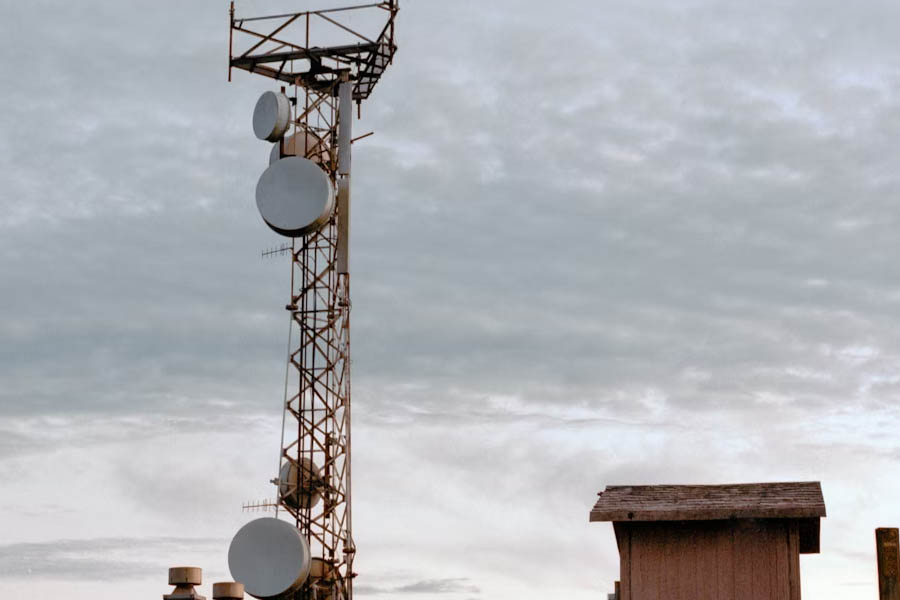
Raytheon's CHIMERA Advances Microwave Weaponry in Countering Kamikaze Drones — Low-Cost HPM System Revolutionizes Anti-Swarm Defense
In the evolving landscape of modern warfare, where adversaries increasingly turn to low-cost, asymmetric threats to overwhelm advanced defense systems, the development of cost-effective countermeasures has become a strategic imperative. The recent advances in high-power microwave (HPM) technology, most notably exemplified by Raytheon's CHIMERA (Counter-Electronics High Power Microwave Advanced Missile Project), represent a paradigm shift in the arsenal against aerial threats — particularly kamikaze drones and drone swarms that have proven devastatingly effective in conflicts from Ukraine to the Middle East.
CHIMERA has successfully demonstrated its capability to track and neutralize targets, representing a pivotal development in cost-effective point-defense solutions. Reports from Defense One highlight its ability to track both static and aerial targets simultaneously, marking a crucial step toward a defense mechanism capable of countering incoming swarms of missiles or drones and disrupting their electronics at the speed of light.
- ⚡ Type: High-Power Microwave (HPM) directed energy weapon
- 🎯 Targets: Kamikaze drones, swarm UAVs, cruise missiles, electronic systems
- 🔄 Mechanism: Overwhelms/fries electronics via electromagnetic pulse
- 💲 Cost per shot: Negligible (electricity only) — estimated $0.01-$1.00
- 📡 Engagement: Speed of light, multi-target simultaneous engagement
⚡ The Drone Threat: Why HPM Matters Now
The urgency for such advancements in defense technology is underscored by recent attacks against US and allied assets. Iranian-made Shahed-136 "kamikaze" drones, which cost as little as $20,000 per unit (and as low as $2,000 for smaller commercial drones converted for military use), have been used extensively by Russia against Ukrainian infrastructure and by Iranian proxies against US bases in the Middle East. These drones are difficult to detect, cheap to produce, and can be launched in swarms to overwhelm traditional air defense systems.
Conventional defense against such threats is prohibitively expensive. The US Navy's Standard Missile-2 (SM-2) costs approximately $2 million per interceptor — a 100:1 cost asymmetry in favor of the attacker when facing a $20,000 drone. Even cheaper systems like the AIM-9X Sidewinder or Stinger missiles cost $400,000+ per shot. Against a swarm of 50 drones, defending with missiles could cost over $20 million — a financially unsustainable strategy.
Directed energy weapons (DEWs) like CHIMERA invert this economic calculus. A high-power microwave system, once deployed, costs only the electricity required to generate each pulse — estimated at pennies per shot. And unlike lasers, which engage one target at a time, HPM weapons can affect multiple drones simultaneously if they are within the beam's field of view.
- 💰 Shahed-136 drone: $20,000 (Iranian cost estimate)
- 💰 Commercial quadcopter conversion: $2,000 - $5,000
- 💸 Standard Missile-2 (SM-2): $2,000,000 per intercept
- 💸 AIM-9X Sidewinder: $400,000+ per missile
- ⚡ CHIMERA HPM shot: ~$0.01 - $1.00 (electricity only)
HPM offers a 1,000,000:1 cost advantage over traditional missile defense
🛡️ How High-Power Microwave Weapons Work
While laser weapons focus a concentrated beam of light to physically burn through targets, HPM weapons work differently — and in some ways, more effectively against drone swarms. A high-power microwave system generates an intense, short-duration burst of electromagnetic energy that induces voltage surges in electronic circuits. For a drone, this means:
- Frying onboard electronics: Microcontrollers, GPS receivers, and communication chips are overloaded and permanently damaged
- Loss of control link: The drone loses connection with its operator
- Motor/ESC failure: Power electronics can be damaged or destroyed
- Battery damage: Some HPM effects can thermally damage lithium batteries
Unlike a kinetic interceptor that destroys a single target, an HPM weapon can have a "wide beam" effect — potentially affecting all drones within a cone of vulnerability. This makes HPM particularly effective against swarms, where drones are flying in close formation.
Kevin Cogley, in a publication for the US Naval Sea Systems Command, emphasizes the graduated effects of HPM weapons, from electronic jamming (reversible disruption) to permanent physical destruction of electronics, with minimal visible damage to targets. This scalability and stealthiness — no explosion, no fragmentation, just silent electronic death — make HPM weapons an attractive option for modern warfare scenarios.
🚀 CHIMERA vs Lasers: Complementary, Not Competitive
A comparative analysis by the US Government Accountability Office (GAO) sheds light on the differences between laser and high-power microwave (HPM) weapons — both are directed energy, but they serve different tactical niches.
Laser weapons (e.g., HELIOS, LaWS):
- Engage a single target at a time with concentrated thermal energy
- Require dwell time (seconds) to burn through target
- Affected by atmospheric attenuation (dust, fog, rain)
- Effective against small drones, rocket artillery, surface vessels
HPM weapons (e.g., CHIMERA, HIJENKS, THOR):
- Can engage multiple targets simultaneously in beam area
- Instantaneous effect (speed of light, no dwell time)
- Electronics-focused — drone stops flying immediately
- Less affected by weather than lasers at certain frequencies
Raytheon's CHIMERA is designed to complement laser systems, offering a wide-area defense against swarm attacks, while lasers provide precision engagement of individual high-value targets. The US Army has already fielded the THOR (Tactical High-Power Microwave Operational Responder) system for base defense, and CHIMERA represents a more powerful, longer-range evolution.
🏛️ Naval Deployment: HPM at Sea
As per Asia Times and defense analysts, challenges persist in the adoption of laser and microwave weapons aboard naval platforms, including technological maturity, power generation, thermal management, and supply chain dependencies. However, the US Navy is aggressively pursuing both laser and HPM systems to address the asymmetric drone threat, particularly in the Red Sea and Persian Gulf.
The Navy's Office of Naval Research has funded the HIJENKS (High-Powered Joint Electromagnetic Non-Kinetic Strike) weapon — a compact, air-deliverable HPM warhead designed to neutralize electronic targets and penetrate hardened facilities. While CHIMERA is a ground/sea-based system, HIJENKS represents the air-launched counterpart, offering the ability to take out enemy radar, communications, or drone control nodes from standoff range.
Analysts note that HPM weapons may not be universally effective — particularly against adversaries with antiquated or well-protected systems like North Korea, which may use vacuum tubes or hardened electronics less susceptible to EMP effects. However, for the vast majority of modern drones and guided weapons, HPM offers a devastatingly effective countermeasure.
- 🎯 Type: Air-launched HPM warhead
- ✈️ Platforms: Cruise missiles, glide bombs, UAVs
- ⚡ Effect: Neutralize electronic targets without kinetic explosion
- 🏢 Applications: Hardened facilities, radar sites, communications nodes
🔮 The Future: Directed Energy in the 2020s and Beyond
Raytheon's CHIMERA and advancements in microwave weaponry represent significant strides towards countering evolving threats in modern warfare. While challenges remain — including power requirements, beam divergence over distance, and integration with existing combat systems — ongoing research and development efforts promise to enhance the effectiveness and applicability of directed energy weapons.
The Department of Defense has requested over $1 billion for directed energy research in fiscal year 2025, covering lasers, HPM, and electromagnetic railguns. The US Army plans to deploy its first company of directed energy systems (50kW-class lasers and HPM) by 2026 as part of its Indirect Fire Protection Capability (IFPC) program.
"We are on the cusp of fielding operational directed energy weapons for the first time," said Dr. Mark Gunzinger, director of defense concepts at the Mitchell Institute. "CHIMERA and systems like it will fundamentally change the economics of air defense. When a $20,000 drone can be defeated by a $0.01 microwave pulse, the calculus of swarm warfare flips dramatically in favor of the defender."
As Iran's Shahed-136 drones continue to terrorize Ukraine and Middle East battlefields, and as commercial drone technology proliferates, the need for affordable, magazine-deep countermeasures has never been more urgent. Raytheon's CHIMERA may well be the answer — a weapon that fires at the speed of light, costs pennies per shot, and leaves nothing but silent, fried electronics in its wake.
Original Reporting: This analysis was first published on 9 February 2024. Continuous coverage at Global Post Headline Technology Desk.
Global Post Headline — independent coverage of defense technology. globalpostheadline.com | Follow: Tech Desk | Defense Section


Authentic Nepali handicrafts, pashmina, singing bowls.