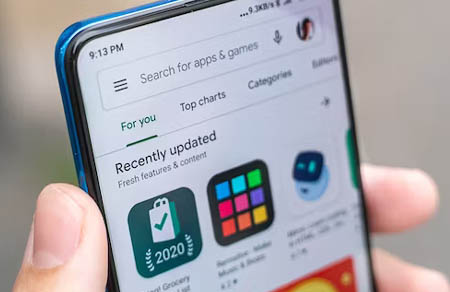
The App Store Economy Faces Unprecedented Threats: Apple & Google's Profit Machines Under Siege
The app store economy — a multi-billion dollar ecosystem built by Apple and Google — is facing its most significant challenges yet. Following a landmark court ruling against Google and ongoing regulatory pressure on Apple, the tech giants' profitable app store models are under unprecedented scrutiny. From developer lawsuits to government antitrust actions, the walls are closing in on the "walled gardens" that have defined mobile commerce for over a decade.
⚖️ Google's Court Loss: A Landmark Verdict
In a groundbreaking decision, a federal court ruled against Google in its antitrust battle with Epic Games, the maker of Fortnite. The jury found that Google maintained an illegal monopoly over Android app distribution and in-app payment processing. This verdict strikes at the heart of Google's Play Store business model, which generates billions in revenue through commissions of 15% to 30% on digital purchases.
Epic Games v. Google: Key Findings
- Google maintained illegal monopoly power
- Anti-competitive agreements with developers
- Project Hug (secret deals with major developers)
- Unlawful tying of Google Play Billing
🍎 Apple's Ongoing Antitrust Battles
Apple has faced similar challenges in its own Epic Games lawsuit. While Apple largely prevailed in that case, the court ordered Apple to allow developers to link to alternative payment methods — a significant crack in the App Store's walled garden. Additionally, the European Union's Digital Markets Act (DMA) is forcing Apple to allow sideloading and alternative app stores on iPhones in Europe, threatening the company's tight control over iOS app distribution.
Digital Markets Act (EU)
Forcing Apple to allow sideloading and alternative app stores
Alternative Payments
Court order allows developers to link to external payment systems
Commission Pressure
Reduced rates for small developers (15%) and alternative payment options
Global Scrutiny
Investigations in US, UK, Japan, South Korea, Australia
💰 The Billions at Stake
The app store economy is enormous. In 2022 alone, consumers spent over $130 billion on apps through Apple's App Store and Google Play combined. Apple's Services division, which includes the App Store, generated nearly $80 billion in revenue. The commissions charged by Apple and Google — typically 15% to 30% — represent pure profit for the tech giants, making app stores among the most lucrative businesses in technology.
👨💻 The Developer Revolt
Epic Games isn't alone. Major developers like Spotify, Match Group (owner of Tinder), and numerous smaller indie developers have joined the Coalition for App Fairness, advocating for more equitable app store policies. The #FreeTheAppStore movement has gained momentum, with developers arguing that Apple and Google's fees are excessive and anti-competitive.
Coalition for App Fairness Members
- Epic Games — Fortnite creator
- Spotify — Music streaming giant
- Match Group — Tinder, Hinge, OkCupid
- Basecamp — Productivity software
- Proton — Privacy-focused services
- Tile — Bluetooth trackers
🏛️ Global Regulatory Response
Governments worldwide are taking action. The European Union's Digital Markets Act is the most comprehensive, but other nations are following suit:
European Union
Digital Markets Act — effective 2024
China
Antitrust actions against app stores
Japan
Investigating Apple/Google practices
Australia
App store regulation proposals
South Korea
First to ban mandatory payment systems
United States
Open App Markets Act proposed
The app store economy is at a crossroads. The coming years will determine whether Apple and Google can maintain their walled gardens or whether a more open, competitive marketplace will emerge. What's certain is that the billion-dollar profit machines built on 30% commissions will never be the same.