BREAKING: BNP Wins Big in Bangladesh's First Free Election in Decades
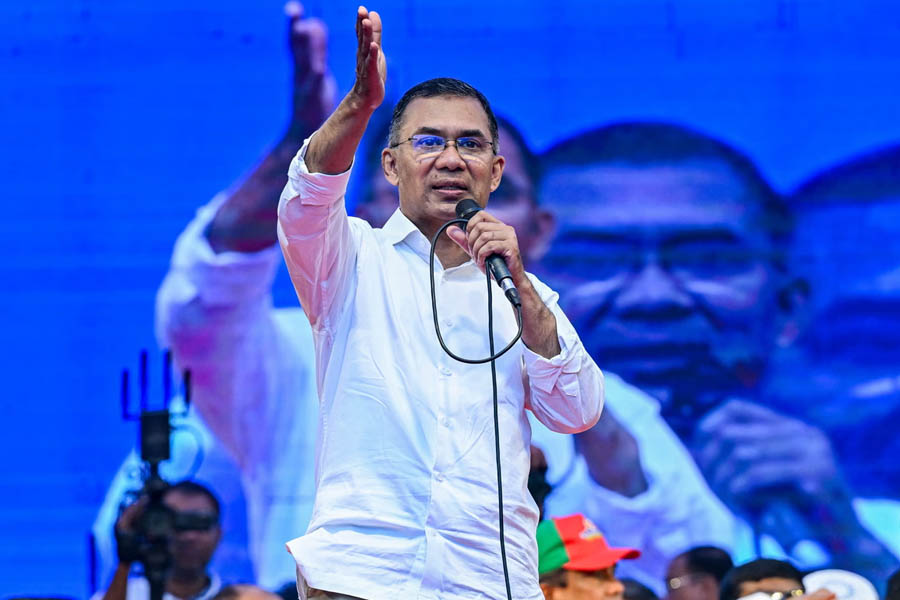
🇧🇩 BNP leader Tarique Rahman addresses supporters during the final day of campaigning ahead of Bangladesh’s landmark parliamentary election.
🇧🇩 BNP Claims Landslide Victory in Historic Post-Hasina Election | Bangladesh Democracy Reset After Gen-Z Uprising
Bangladesh Election 2026 Democracy Restored South Asia Politics
13-Feb-2026: 🇧🇩 The Bangladesh Nationalist Party (BNP), led by Tarique Rahman, has claimed a sweeping victory in the country’s first election since the overthrow of Sheikh Hasina’s long-running regime. Early results by Friday morning showed BNP securing 181 seats, with leaders expressing confidence of crossing 200 seats — a potential two-thirds majority in the 300-seat parliament. The vote marks Bangladesh’s first widely regarded free and fair election in nearly two decades.
The election follows a dramatic student-led uprising that toppled Hasina after 15 years in power, a period marred by allegations of vote-rigging, suppression of dissent, and human rights abuses. The United Nations previously estimated that around 1,400 people were killed during the violent crackdown preceding her removal. Thursday’s polls, however, were largely peaceful, with voter turnout reaching 60.69% — significantly higher than the 42% recorded in the last election. Overseas and postal voting participation surged past 80%, reflecting strong engagement from the diaspora.
Political Comeback Reform Mandate
Tarique Rahman, who returned from 17 years of exile in 🇬🇧 London in December, is poised to become prime minister. The son of former prime minister Khaleda Zia and former president Ziaur Rahman, Rahman represents one of Bangladesh’s most powerful political dynasties. BNP leaders described the result as a “landslide victory,” pledging a new democratic era with zero tolerance for corruption, economic revival through foreign investment, and limits on prime ministerial terms.
The Islamist party Jamaat-e-Islami secured 61 seats — its strongest showing ever — positioning itself as a significant opposition force. While conceding defeat, party leaders alleged irregularities in close constituencies and vowed to pursue “positive politics” rather than confrontational opposition.
Constitutional Referendum Governance Reform
Alongside parliamentary voting, citizens cast ballots in a referendum proposing major constitutional reforms. Early counts indicate more than 60% support for measures including a neutral interim government during elections, a bicameral legislature, stronger judicial independence, increased women’s representation, and a two-term limit for the prime minister — a direct response to years of concentrated executive power.
International reactions were swift. 🇺🇸 The United States Embassy congratulated the BNP on its “historic” victory. 🇮🇳 India, whose ties with Dhaka had strained after Hasina fled there following a war crimes conviction, also welcomed the “decisive” result, signaling a possible diplomatic reset. Regional observers note that geopolitical dynamics — including growing 🇨🇳 China influence — could shape Bangladesh’s next chapter.
Sheikh Hasina, now in exile, denounced the vote as a “carefully planned farce,” claiming her Awami League party was unfairly barred. Yet for many Bangladeshis, the election represents a long-awaited democratic reset after years of unrest that disrupted daily life and impacted key industries such as garments — the world’s second-largest apparel export sector.
With 175 million citizens watching closely, Bangladesh stands at a crossroads. The BNP’s decisive win may signal not just a transfer of power, but the beginning of a new political era shaped by reform, accountability, and the voices of a generation that demanded change. 🗳️✨
Bangladesh at the Crossroads
With Hasina in India and China eyeing investment — who should Dhaka align with?
🗳️ 3,842 votes cast • View results →