The Middle Kingdom Beckons: A Personal Journey Through Beijing, Shanghai, Hong Kong & the Magical Mountains of Guilin
There are places you visit, and then there are places that visit you — that leave an imprint on your soul long after you've returned home. China, for me, was the latter. In the summer of 2009, I embarked on a journey that would reshape my understanding of history, culture, and natural beauty. From the ancient hutongs of Beijing to the futuristic skyline of Shanghai, from the bustling harbor of Hong Kong to the ethereal karst peaks of Guilin — this is my travel story.
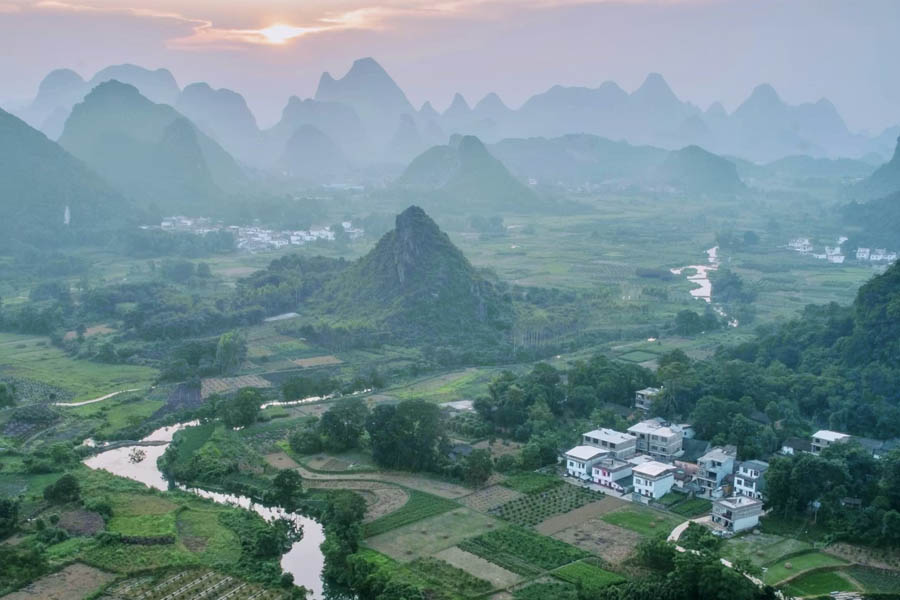
Why this story matters to me: I first visited Guilin in 2009, and those mist-shrouded limestone peaks along the Li River remain one of the most breathtaking sights I've ever witnessed. Sixteen years later, China has transformed dramatically — high-speed rail connects cities that once required overnight trains, digital payments have replaced cash, and tourism infrastructure has leaped forward. But the magic? The magic remains.
🏯 Beijing: Where Emperors Walked and History Lives
The Forbidden City
Stepping through the Meridian Gate of the Forbidden City, I felt the weight of 500 years of imperial history. For nearly five centuries, this 178-acre complex was off-limits to commoners — home to 24 Ming and Qing emperors. Walking through the Hall of Supreme Harmony, I tried to imagine the dragon throne occupied, ministers prostrating, and eunuchs scurrying through secret passageways.
The Great Wall at Mutianyu
No photograph prepares you for the Great Wall. Snaking across mountain ridges like a sleeping dragon, it is simultaneously humbling and awe-inspiring. I visited the Mutianyu section — less crowded than Badaling, with breathtaking views. The cable car ride up revealed layer upon layer of green mountains, and standing on the watchtowers, I could almost hear the echo of ancient sentinels.
Memory that lingers: Touching the ancient bricks, knowing they were laid by hand over 600 years ago, and realizing that this wall stretches over 13,000 miles.
Temple of Heaven & The Hutongs
The Temple of Heaven, with its iconic blue-tiled circular altar, was where emperors prayed for good harvests. But what touched me more was the park outside — filled with elderly locals practicing tai chi, singing opera, playing cards, and flying elaborate kites. It was China's soul on display.
And then there were the hutongs — Beijing's ancient alleyways. Renting a rickshaw, I wound through narrow lanes lined with siheyuan (courtyard homes), watching life unfold: mahjong games, hanging laundry, the smell of jianbing (savory crepes) drifting from street stalls.
Beijing Bites: What I Ate
- Peking Duck (北京烤鸭) at Quanjude — Crispy skin, thin pancakes, hoisin sauce. A religious experience for food lovers.
- Zhajiangmian (炸酱面) — Noodles with fermented soybean paste. Simple, soulful, satisfying.
- Lamb Skewers (羊肉串) from a Wangfujing night market vendor — Spicy, smoky, and unforgettable.
🌃 Shanghai: The City of Yesterday, Today, and Tomorrow
The Bund
If Beijing is China's heart, Shanghai is its wallet — and its showcase to the world. Standing on the Bund at sunset, watching the colonial-era buildings on one side and the futuristic Pudong skyline on the other, I felt like I was standing at the crossroads of two centuries. The Pearl Tower, Shanghai Tower, and Jin Mao Tower pierced the clouds, their lights beginning to twinkle as darkness fell.
Yu Garden & The Old City
Hidden among Shanghai's skyscrapers lies a Ming Dynasty garden — a pocket of serenity in the metropolis. Yu Garden's rockeries, pavilions, and koi ponds transported me to another era. The adjacent Yuyuan Bazaar buzzed with vendors selling everything from jade jewelry to soup dumplings.
China's High-Speed Rail Miracle: In 2009, I took an overnight train from Beijing to Shanghai — a 12-hour journey in a hard sleeper cabin. Today, the same trip takes just 4.5 hours on the G-series trains, reaching speeds of 350km/h (217mph). China now operates the world's largest high-speed rail network — over 25,000 miles of track connecting every major city.
French Concession & Nightlife
The French Concession offered leafy streets, art deco buildings, and boutique cafes. I spent an afternoon at Xintiandi — a restored shikumen (stone-gate) neighborhood that perfectly blends old Shanghai charm with modern sophistication. That night, I experienced Shanghai's legendary nightlife — from jazz at the Peace Hotel's Old Jazz Band to rooftop bars overlooking the Huangpu River.
🏙️ Hong Kong: Where East Meets West
Victoria Harbour
Hong Kong hit me differently. The energy was electric, frantic, intoxicating. From my hotel room on Kowloon side, I watched the Symphony of Lights — a synchronized laser and music show across the harbor — with Victoria Peak rising behind the Central skyline. The Star Ferry ride across the harbor cost less than a dollar but offered million-dollar views.
Victoria Peak
The Peak Tram — one of the steepest funicular railways in the world — carried me up to 1,811 feet for a panorama I'll never forget. The city sprawled below: skyscrapers jostling for position, the harbor busy with ferries and junks, and green mountains rising on all sides. Hong Kong is a city that shouldn't work — too dense, too vertical — but it does, brilliantly.
Wong Tai Sin Temple & Markets
For a different side of Hong Kong, I visited Wong Tai Sin Temple — famous for kau chim (fortune-telling) where devotees shake bamboo sticks until one falls out, revealing their fate. Then came the markets: Ladies' Market for knockoffs, Temple Street Night Market for seafood and souvenirs, and the frantic goldfish market in Mong Kok.
Hong Kong Food Diary
- Dim Sum (点心) at Lin Heung Tea House — Pushcarts, chaos, and some of the best har gow (shrimp dumplings) ever.
- Egg Waffles (鸡蛋仔) from a street cart — Crispy outside, soft inside.
- Roast Goose (烧鹅) at Yat Lok — Michelin-starred perfection.
- Milk Tea (奶茶) — The silkier, stronger cousin of British tea. Hong Kong's fuel.
⛰️ Guilin (桂林): The Most Beautiful Place on Earth
— My journal, August 18, 2009
The Li River Cruise (漓江)
This was the reason I came to China. The four-hour cruise from Guilin to Yangshuo is not a boat ride — it's a pilgrimage through a Chinese landscape painting. The karst mountains rise from the earth like the spine of a sleeping dragon, their limestone peaks draped in mist. Water buffalo graze on emerald banks, while cormorant fishermen float on bamboo rafts.
I sat on the deck for the entire journey, camera in hand, unable to look away. Each bend in the river revealed a scene more spectacular than the last. The famous "Nine Horses" mountain — where Chairman Mao claimed he could see nine horses in the rock formations — was pointed out by our guide. (I saw four. I blame the morning fog.)
Yangshuo (阳朔): Backpacker Paradise
Yangshuo, at the end of the Li River cruise, is what happens when dramatic natural beauty meets a laid-back traveler scene. West Street — or "Foreigner Street" — was lined with cafes, souvenir shops, and bars playing Western music. But the real magic was outside town: renting a bicycle and riding through rice paddies with karst peaks as backdrop, climbing Moon Hill for 360-degree views, and floating down the Yulong River on a bamboo raft.
Evening ritual: Watching the "Impression Liu Sanjie" light show — directed by Zhang Yimou (of Beijing Olympics fame) — performed on the river itself with 600 local actors. Surreal and spectacular.
The Reed Flute Cave (芦笛岩)
Back in Guilin city, the Reed Flute Cave offered a different kind of wonder. This natural limestone cave is filled with stalactites, stalagmites, and rock formations illuminated in psychedelic colors. The cave has been a tourist attraction for over 1,200 years — Tang Dynasty inscriptions date back to 792 AD. The "Crystal Palace" chamber, 240 feet long and 150 feet wide, hosted underground concerts during World War II.
📅 My China Itinerary: 14 Days, 4 Cities
🎒 Practical Tips for China Travel (2026 Update)
Visas & Entry Requirements
- Tourist Visa (L Visa): Most nationalities need a visa before arrival. Apply 1-2 months in advance.
- 144-Hour Visa-Free Transit: Available in Beijing, Shanghai, Guangzhou, and other major cities for citizens of 53 countries.
- Visa on Arrival: Available for Hainan Province (30 days visa-free for 59 countries).
Essential Apps for China
- WeChat (微信): You'll need it for messaging, payments, and even restaurant ordering.
- Alipay (支付宝): Second major payment app — bring cash as backup.
- Didi (滴滴): China's Uber — essential for taxis.
- Metro China: Subway maps for all major cities.
- VPN: Absolutely necessary to access Google, WhatsApp, Instagram, Facebook, and X.
Getting Around
- High-Speed Train: The best way to travel between cities. Beijing-Shanghai: 4.5 hours. Shanghai-Hong Kong: 8 hours.
- Subway: Clean, efficient, and cheap in all major cities. English signs in Beijing, Shanghai, Hong Kong.
- Domestic Flights: For longer distances (Beijing to Guilin: 3 hours).
- Bikeshare: HelloBike and Meituan bikes are everywhere — scan with Alipay/WeChat.
🆕 What's Changed in China Since 2009?
- Cashless Society: In 2009, I paid for almost everything with cash. Today, WeChat Pay and Alipay are universal — even street vendors and temples accept digital payments.
- High-Speed Rail: The overnight train from Beijing to Shanghai no longer exists for most travelers — replaced by 4.5-hour bullet trains.
- Air Quality: Dramatically improved in Beijing and Shanghai thanks to environmental regulations.
- Tourism Infrastructure: Better signage in English, more digital ticketing, and improved hotel quality everywhere.
- Visa Policies: More visa-free transit options, though the visa process remains required for longer stays.
❓ Frequently Asked Questions About China Travel
Yes for most nationalities. Apply at the Chinese embassy 1-2 months before travel.
Extremely safe — violent crime is rare. Petty theft exists in tourist areas, but less than Europe or US.
Limited outside major hotels and tourist sites. Download Google Translate (with offline Chinese pack) before you go.
April-May and September-October for pleasant weather. Avoid Golden Week (first week of October) — domestic travel chaos.
Badaling is packed. Go to Mutianyu, Jinshanling, or Simatai for fewer crowds.
No — not without a VPN. Install a reliable VPN before arriving in China.
Reflections from 2026
China in 2009 felt like a country on the cusp of transformation. The Olympics had just showcased Beijing to the world, the high-speed rail network was in its infancy, and international tourism was still discovering places like Yangshuo. Sixteen years later, China has leaped into the future — but the ancient soul remains. The Forbidden City still holds its secrets. The Great Wall still winds across the mountains. And the Li River? The mist still rises over the karsts each morning, just as it has for millennia.
To anyone considering China: Go. Go for the history. Go for the food. Go for the landscapes that will leave you speechless. And most of all, go for the people — whose warmth, hospitality, and resilience will stay with you long after you've returned home.
谢谢 · Xièxiè — Thank you, China.