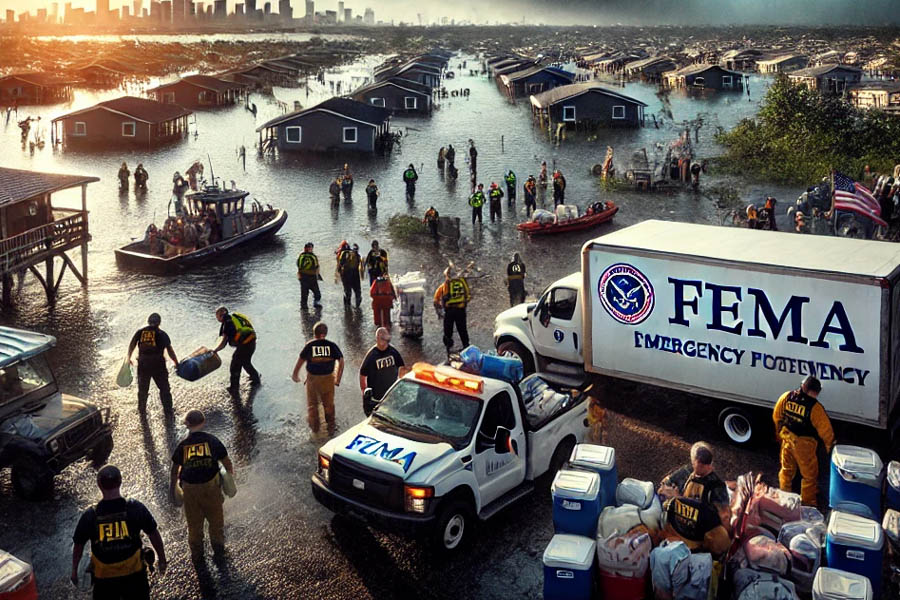
FEMA's Strategic Response to Hurricane Milton | Emergency Support and Disaster Recovery 2024
HURRICANE MILTON UPDATE
Storm surges predicted 10-12 feet. Evacuation orders in effect for Florida and Alabama coastal areas.
As Hurricane Milton intensifies and barrels toward the Gulf Coast, the Federal Emergency Management Agency (FEMA) is taking decisive action to protect vulnerable communities in Florida, Alabama, and beyond. With a history of devastation from similar hurricanes, FEMA's comprehensive plan reflects their commitment to disaster preparedness, response, and recovery.
🚨 Immediate Response and Preparedness: A Coordinated Effort
FEMA's immediate priority is safeguarding lives and property. The agency has deployed emergency response teams, coordinating with local authorities to activate shelters and provide essential services. Evacuation orders have been issued in high-risk areas, with FEMA working closely with state officials to ensure smooth logistics for residents who need assistance.
"Public safety is our number one priority," said FEMA Administrator Deanne Criswell. "We urge everyone to stay informed and follow local guidance as we prepare for the worst while hoping for the best."
In addition, FEMA's Urban Search and Rescue (USAR) teams have been strategically positioned to respond quickly to areas likely to experience flooding, wind damage, and power outages. These teams are equipped with specialized technology to help in locating survivors trapped in debris.
Emergency Response Teams
Deployed to high-risk areas
Shelter Activation
Coordinated with local authorities
Evacuation Orders
Issued for coastal zones
USAR Teams
Specialized rescue equipment
🌊 Flooding and Storm Surge: Mitigating Environmental Impact
One of the greatest threats from Hurricane Milton is severe flooding, with storm surges predicted to reach 10-12 feet in coastal areas. FEMA has issued warnings to residents in low-lying regions, urging them to prepare for possible evacuation. Flood-prone zones across Florida and Alabama are on high alert, as FEMA has deployed flood mitigation experts to assess and manage risks before the storm hits.
FEMA's flood mapping system is being actively used to identify vulnerable areas, helping local governments plan for water diversion and drainage management. The agency has partnered with the U.S. Army Corps of Engineers to reinforce levees and other critical infrastructure in anticipation of the storm's landfall.
💰 Support for Individuals: FEMA's Financial Aid for Disaster Survivors
For individuals facing the devastating aftermath of Hurricane Milton, FEMA's Individuals and Households Program (IHP) will offer much-needed relief. This program provides financial assistance for temporary housing, home repairs, and other disaster-related expenses that may not be covered by insurance.
Temporary Housing
Financial assistance for displaced families
Home Repairs
Uninsured damage coverage
Online Portal
Apply for assistance 24/7
Disaster Hotline
1-800-621-3362
Residents can apply for assistance through FEMA's online portal or disaster assistance hotlines, and the agency has already established mobile Disaster Recovery Centers (DRCs) in key locations to expedite the process. These centers will be crucial for connecting disaster survivors with aid as soon as it's safe to return.
"FEMA's mission is to help people before, during, and after disasters. If your family or home is impacted, we are here to support you every step of the way," emphasized Criswell.
🏗️ Long-Term Recovery: FEMA's Commitment to Rebuilding Communities
As the hurricane threatens to leave a trail of destruction, FEMA is also looking ahead to long-term recovery. The agency has allocated funds through the Hazard Mitigation Grant Program (HMGP) to assist with rebuilding infrastructure, homes, and businesses to be more resilient against future disasters. These grants will be made available to local governments, businesses, and individual homeowners seeking to rebuild in areas affected by Hurricane Milton.
Moreover, FEMA has partnered with nonprofit organizations to provide mental health support and trauma counseling to survivors. The agency understands that recovery is not only about rebuilding physical structures but also helping communities heal emotionally.
"We will not abandon these communities after the initial response," said Criswell. "Our goal is to help them rebuild stronger, more resilient, and better prepared for the future."
⚠️ Stay Vigilant and Prepared
As Hurricane Milton moves closer to the U.S. coastline, the importance of staying vigilant and prepared cannot be overstated. FEMA's extensive efforts—from immediate response to long-term recovery—highlight the agency's unwavering commitment to supporting communities in their time of need. Residents are urged to stay informed through FEMA's updates, heed local evacuation orders, and take necessary precautions to protect themselves and their families.
For those impacted, FEMA's resources and programs will be a lifeline in the storm's aftermath, ensuring that no one faces disaster recovery alone.
STAY SAFE AND STAY INFORMED
For real-time updates, visit fema.gov or call FEMA's disaster assistance hotline at 1-800-621-3362.
❓ Frequently Asked Questions
FEMA coordinates disaster response and recovery efforts across the U.S., providing aid before, during, and after disasters.
Focuses on building resilience, improving disaster preparedness, and enhancing equity in disaster response.
Approximately 20,000 personnel, including full-time staff and reserve workforce.
Visit fema.gov, call 1-800-621-3362, or visit a local Disaster Recovery Center.
The Federal Emergency Management Agency under the Department of Homeland Security.
Yes, providing financial assistance for temporary housing, home repairs, and disaster-related expenses.