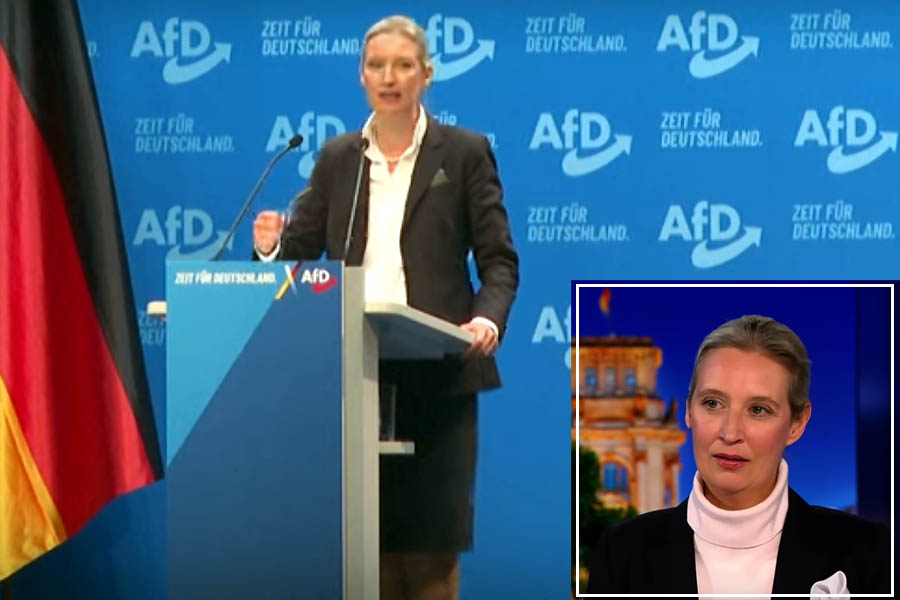
The Stakes of February 23: Can Germany Resist the Far-Right AfD Wave? — Europe's Largest Economy at a Crossroads
Berlin, January 13, 2025 — As Germany barrels toward its pivotal Bundestag election on February 23, 2025, the political climate has reached a boiling point not seen since the postwar era. The far-right Alternative für Deutschland (AfD), polling at a record 22%, has launched its most radical manifesto yet — one that calls for "remigration" (mass deportations of migrants), withdrawal from the euro and EU asylum system, and the dismantling of Germany's energy transition. The party's resurgence has sent shockwaves across Europe, forcing mainstream parties into a frantic scramble to consolidate voters while ruling out any coalition with the AfD.
The election, triggered by Chancellor Olaf Scholz's loss of a confidence vote in December 2024, has become a referendum on Germany's democratic values and its role as Europe's anchor. With the CDU/CSU alliance led by Friedrich Merz clinging to a narrow 30% lead, the SPD under Scholz languishing at 14-17%, and the upstart Bündnis Sahra Wagenknecht (BSW) threatening to enter parliament, the political landscape is more fragmented than at any time since the 1950s.
⚫🔴🟡 AfD's Radical Manifesto: 'Remigration,' Deutschmark, and EU Exit
The AfD's newly unveiled platform reads like a political earthquake. At its core is the concept of "remigration" — a term adopted from far-right ideology that advocates large-scale deportations of migrants, including those with legal residency status under certain conditions. The party also pledges to abolish the euro and reinstate the Deutschmark, withdraw from the EU's Common Asylum System, and dismantle the energy transition (Energiewende), including the closure of wind farms and reopening of coal-fired power plants.
In a strategic rebranding, the party disbanded its radical youth wing, Junge Alternative, replacing it with a more "strategic" organization. Critics argue this masks an intensification of extremist agendas. Co-leader Alice Weidel has emerged as the public face of the campaign, presenting a polished image while endorsing hardline policies. Despite its second-place polling, the AfD remains isolated — all major parties (CDU, SPD, Greens, FDP, and Left) have ruled out coalitions with it. However, its influence is undeniable, shaping public debate and forcing rivals to adopt tougher stances on migration and energy.
✊ The Protest Wave: 10,000+ Demonstrate Against AfD in Riesa
When the AfD held its national convention in Riesa, Saxony, in early January, it was met with a fierce backlash. Over 10,000 demonstrators descended on the small city, delaying the event by hours and blocking entrances. Protesters denounced the party's platform as a direct threat to democracy, chanting slogans against racism, xenophobia, and authoritarianism. Police clashes ensued, including one incident involving a left-wing politician that highlighted the intensity of Germany's fractured political landscape.
Civil society groups, trade unions, and churches have mobilized nationwide, organizing "Never Again" rallies in Berlin, Hamburg, Munich, and Cologne. The protests represent a broad-based pushback against the normalization of far-right politics — but polls suggest the AfD's support remains resilient, particularly in the former East German states where economic disillusionment runs deep.
🏛️ Mainstream Politics in Crisis: CDU's Merz, SPD's Scholz Struggle
Germany's mainstream parties find themselves in an existential bind. The CDU/CSU alliance led by Friedrich Merz leads with 30%, but its margin has shrunk as voters defect to both the AfD and the Greens. Merz has promised a "demand more, support less" welfare policy and stricter border controls, but his gaffe-prone campaign and lack of charisma have failed to inspire. His refusal to consider any coalition with the AfD — while adopting some of its rhetoric — has left him vulnerable to accusations of inconsistency.
Chancellor Olaf Scholz's Social Democrats (SPD) face a steep uphill battle, polling at a meager 14-17%. The collapse of his "traffic light" coalition (SPD, Greens, FDP) in late 2024 — triggered by budget disputes and the FDP's walkout — has left voters disillusioned. Scholz's leadership has come under fire from within his own party, though he remains defiant, promising to steer Germany with "pragmatism and responsibility." His refusal to send long-range Taurus missiles to Ukraine has drawn criticism from Western allies but resonates with Germany's pacifist-leaning electorate.
🌱 Emerging Players: BSW's Left-Conservative Challenge
The Bündnis Sahra Wagenknecht (BSW) is the wildcard in this election. Founded by ex-communist Sahra Wagenknecht after her split from Die Linke, the party campaigns on a unique left-conservative platform: withdraw U.S. military influence from Germany, block Ukraine's EU accession, impose price controls on energy, and restrict migration. Polling at around 5-7%, the BSW has a real chance of entering the Bundestag — potentially disrupting the parliamentary arithmetic and making coalition formation even more complex.
Wagenknecht's anti-war, anti-NATO, and anti-green transition messaging has attracted disaffected voters from both the far-left and far-right, though the party firmly rejects coalitions with the AfD. Its entry into parliament could deny the CDU a stable majority, potentially forcing a three-party coalition.
⚡ Energy Wars and Elon Musk's Controversial Endorsement
Energy policy has become a central battlefield. The AfD proposes reopening coal-fired power plants, abandoning wind energy projects, and reversing Germany's 2045 net-zero target — painting itself as the savior of Germany's energy independence. The party's ties to Elon Musk, who endorsed the AfD on X (formerly Twitter) and hosted a live chat with Alice Weidel, have added fuel to the fire. Musk's comments — ranging from Mars colonization to a critique of "climate hysteria" — have emboldened AfD's narrative while sparking global condemnation. German Chancellor Scholz called Musk's intervention "utterly inappropriate," while EU officials warned of foreign interference.
Meanwhile, the Greens, polling at 12-14%, have doubled down on their climate agenda, warning that an AfD victory would mean "abandoning our children's future." But the Greens have struggled to defend their record after the coalition's collapse, and their support among rural voters has eroded.
🌍 The High-Stakes Gamble for Germany and Europe
As Germany approaches February 23, the stakes could not be higher. The election is more than a domestic contest; it is a referendum on Europe's political direction. Will Germany reject the far-right's vision and reaffirm its commitment to liberal democracy, or will it succumb to the populist wave reshaping the continent from France to Hungary and Italy?
Analysts warn that an AfD breakthrough — even without entering government — would normalize far-right rhetoric, weaken Germany's leadership in the EU, and embolden nationalist parties across Europe. A CDU-led coalition would likely continue support for Ukraine but shift rightward on migration and welfare. A "Kenya coalition" (CDU, SPD, Greens) remains mathematically possible but ideologically fraught.
Whatever the outcome, the ripple effects will be felt far beyond Germany's borders. February 23, 2025, will mark a defining moment in European political history — a test of whether the continent can resist the siren song of nationalism or whether the far-right wave has finally reached Berlin.
Original Analysis: This report was first published on 13 January 2025. Updated with latest polling and protest developments. Continuous coverage at Global Post Headline Europe Desk.
Global Post Headline — independent coverage of European politics. globalpostheadline.com | Follow: Europe Desk | Politics Section


Authentic Nepali handicrafts, pashmina, singing bowls.