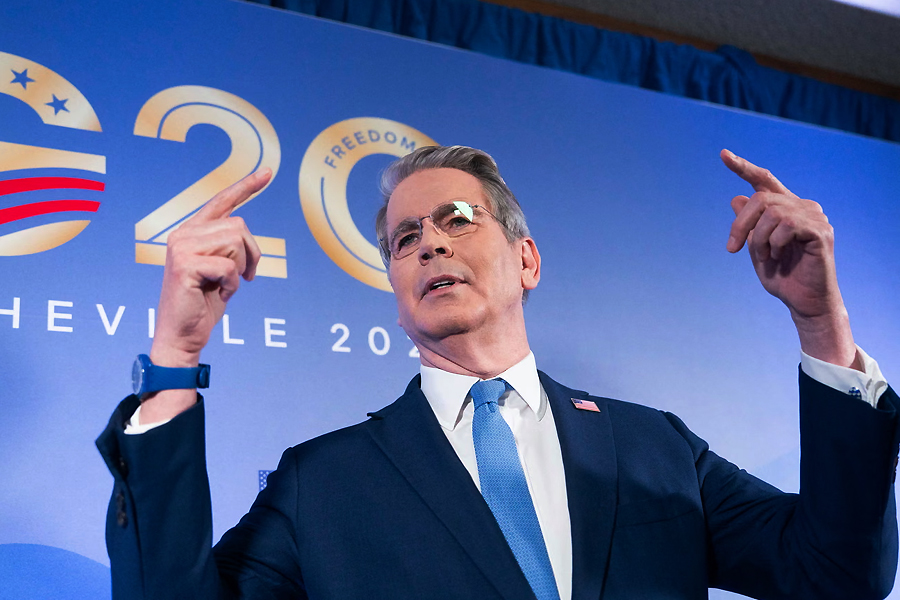
Scott Bessent speaks to reporters as he arrives for the G20 finance ministers meeting in Asheville, North Carolina.
1 September 2026 | Washington, Tehran, Asheville — Updated 23:45 GMT
The US and Iran have exchanged fire for the first time in a month, with missiles and drones fired at Iranian rocket launchers on an island in the strait of Hormuz, and Iran targeting US military bases in Jordan and the United Arab Emirates in response.
The US president, Donald Trump, on Monday threatened further action. The US is trying to prise open Tehran's grip on shipping going through the strait, which before the war accounted for a fifth of the world's seaborne energy supply. Washington claimed that Iranian control over the waterway had been loosened by repeated US attacks on Iranian missile launchers and radars.
US Central Command said it acted late on Sunday, launching the first strikes on Iran since July, after it detected the Iranians were planning to deploy fresh mines in the strait. Last week Trump claimed the US navy had cleared the strait of mines for the first time since the conflict started on 28 February, a claim the Iranians rejected as lies.
Iranians are facing runaway food inflation, closed petrol stations and a seemingly never-ending depreciation of the nation's currency caused by a lack of foreign exchange reserves. Vegetable oil in Iran in August cost 383% more than a year ago. The price of eggs rose by 294%, chicken by 177% and red meat by 148%.
Welcome to the latest world headlines — where military escalation, economic warfare, and the human cost of conflict collide in the Middle East.
🌍 WORLD HEADLINES — KEY NUMBERS: US and Iran exchange fire • First strikes since July • US targeted Iranian launchers on Larak Island • Iran struck US bases in Jordan, UAE • 3 Iranian soldiers killed, 2 wounded • US MQ-9 drone shot down • Oil exports at 3.8m bpd vs 9.8m during ceasefire • Iranian inflation at 84.4% • Food inflation: vegetable oil +383%, eggs +294%, chicken +177% • US dollar at 2m rials (record).
US and Iran Exchange Fire as Trump Threatens Further Military Action
The US and Iran have exchanged fire for the first time in a month, with missiles and drones fired at Iranian rocket launchers on an island in the strait of Hormuz, and Iran targeting US military bases in Jordan and the United Arab Emirates in response.
The US president, Donald Trump, on Monday threatened further action. The US is trying to prise open Tehran's grip on shipping going through the strait, which before the war accounted for a fifth of the world's seaborne energy supply. Washington claimed that Iranian control over the waterway had been loosened by repeated US attacks on Iranian missile launchers and radars.
US Central Command said it acted late on Sunday, launching the first strikes on Iran since July, after it detected the Iranians were planning to deploy fresh mines in the strait. Last week Trump claimed the US navy had cleared the strait of mines for the first time since the conflict started on 28 February, a claim the Iranians rejected as lies.
— Donald Trump, US President
In response to the US attack, the Islamic Revolutionary Guard Corps (IRGC) said it "targeted technical infrastructure, maintenance facilities and enemy fighter jet positions at the US-operated King Hussein and al-Azraq airbases in Jordan" with ballistic missiles, causing "heavy damage". The UAE defence ministry said it intercepted a drone over its territorial waters.
Trump responded to the Iranian reprisals by telling Fox News: "We're going to hit them hard. There will be a response." The US president called Iran "officially a failed nation without an airforce, a navy or a currency", adding that inflation was at 300% and its leaders were incapable of representing their country.
The White House last week signalled that Trump was shelving military measures in favour of a campaign to destroy the Iranian economy by enforcing sanctions.
The IRGC said the US attack had killed three soldiers and wounded two citizens. Iran's Mehr news agency quoted the IRGC as saying its air defences shot down a US MQ-9 drone over the strait, causing it to crash into Gulf waters. The US said all missiles fired towards US forces in Jordan had been intercepted with no significant impact.
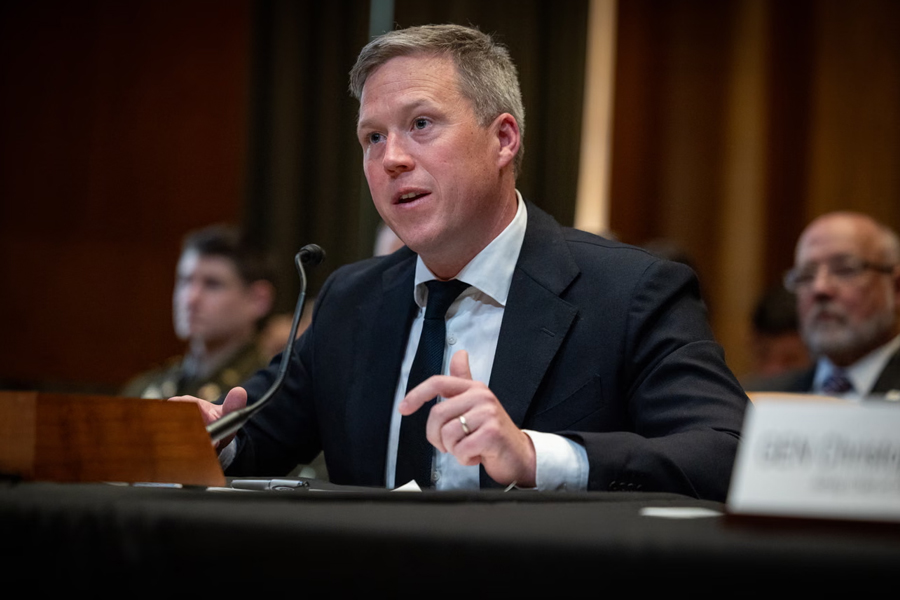
Secretary of the army Dan Driscoll was second in line to defense secretary Pete Hegseth.
Army Secretary Dan Driscoll Resigns Amid Pentagon Turmoil
Army secretary Dan Driscoll has handed his resignation to Donald Trump, the White House said on Monday, becoming the latest high-profile figure to depart the defense department.
The army official, who is second in line to defense secretary Pete Hegseth, had reportedly been eyeing an exit from the Pentagon amid apparent friction with the secretary.
"Secretary Driscoll has been highly effective in advancing President Trump's agenda to Make America Strong Again at the Department of the Army by providing outstanding leadership during historic military operations, restoring an emphasis on readiness and lethality, assisting with negotiations between Russia and Ukraine, and more," White House spokesperson Anna Kelly said in a statement to the Associated Press.
"The United States Army is more powerful than ever thanks to his work alongside the Commander-in-Chief and Secretary of War," she added.
The news was first reported by the Wall Street Journal. The resignation comes after months of turmoil at the defense department, which has seen numerous incidents, from leak investigations and budget issues to the ousting of several senior officials including the army chief of staff Randy George in April. In June, the army's commander of its forces in Europe and Africa, Gen Christopher Donahue, unexpectedly stepped down.
Driscoll is an Iraq war veteran, tech investor and former adviser to JD Vance, whom Driscoll met at Yale law school. When nominating Driscoll in 2024, Trump called him "a disruptor and change agent".
Iran's Economy in Freefall: 300% Inflation, Food Crisis, and Empty Petrol Stations
For many Iranians, the new US sanctions campaign, called Operation Economic Outcast, seems superfluous given the grim economic situation in their country.
Iranians are facing runaway food inflation, closed petrol stations and a seemingly never-ending depreciation of the nation's currency caused by a lack of foreign exchange reserves.
Vegetable oil in Iran in August cost 383% more than a year ago. The price of eggs rose by 294%, chicken by 177% and red meat by 148%.
The cratering economy leaves the country's political class on edge as they try to prevent economic conditions leading to social chaos.
On 23 August, the US dollar reached roughly 2m rials on Iran's open market, a new record. Three days later, Iran's statistical centre announced that year-on-year inflation in August reached 84.4%; the rolling annual average rate was about 65%.
As purchasing power in Iran collapses, households are buying fewer goods. Diets are changing, clothes are being patched up and repaired rather than replaced, and medicine is in short supply, though it can be found on the hidden market.
— Mohsen Zavaar, Biomedical Engineer, Tehran
"For part of the population, the issue is no longer buying a house or a car; the issue is cutting out meat, reducing food quality, postponing medical treatment, and scraping by until the end of the month," said Mohsen Zavaar, a biomedical engineer. "The people don't want miracles – they want decisions."
According to the Mehr news agency, demand for red meat fell by 50% in April 2026 compared with the same period last year. There has also been a leap in the consumption of potatoes, leading to shortages.
Golshan Fathi, an Iranian feminist, recently said: "They don't understand that people can no longer afford even a normal life." Basic goods like eggs are now unaffordable to middle- and working-class families.
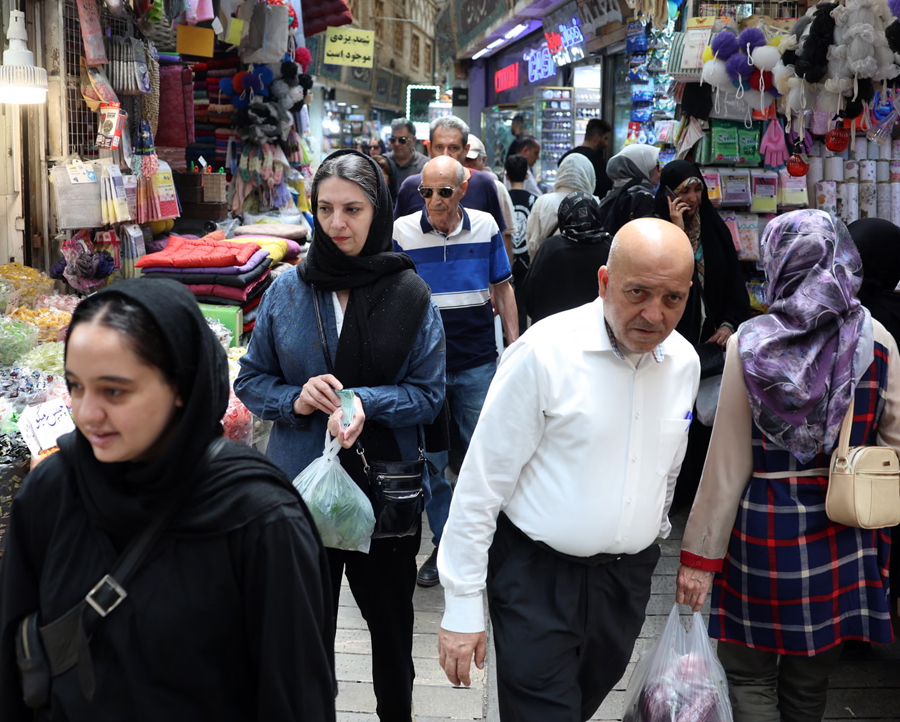
A bazaar in Tehran in June. Iranians' buying power is being decimated by runaway food and fuel inflation and currency depreciation.
Petrol Queues and Fuel Smuggling Expose Iran's Economic Desperation
The crisis has spread beyond food and clothes. Long lines of cars stretched through parts of Tehran and the north-eastern Iranian city of Mashhad on Tuesday and Wednesday as motorists queued for fuel, with some lines blocking entire streets. Many petrol stations, including some of the largest, were closed.
Officials blamed isolated panic buying caused by rumours of a government-planned price increase, or Israeli bombs that destroyed two of Tehran's three main oil depots.
Inside the government, anxious discussions have been under way for weeks about increasing the price of oil to reduce costly subsidies, but the political class know from past experience that there could be significant pushback. A sudden overnight petrol price rise of 50% in November 2019 sparked week-long violent protests.
Public anger has been exacerbated by an admission that vested interests in the government made it hard to tackle fuel smuggling.
— Saqab Esfahani, Deputy to Iran's President
Saqab Esfahani, deputy to Iran's president, said: "Both political factions in the country are involved in fuel smuggling, and if I were to shut down their operations, they would break my windows." Masoud Pezeshkian, Iran's president, has been urged to investigate the remarks.
However, transparency over the economic conditions in Iran is likely to decrease. Fatemeh Mohajerani, a spokesperson for the Iranian government, said recently that future poverty statistics would only be published with the permission of the country's supreme national security council, making the decline in living standards akin to a classified state secret.
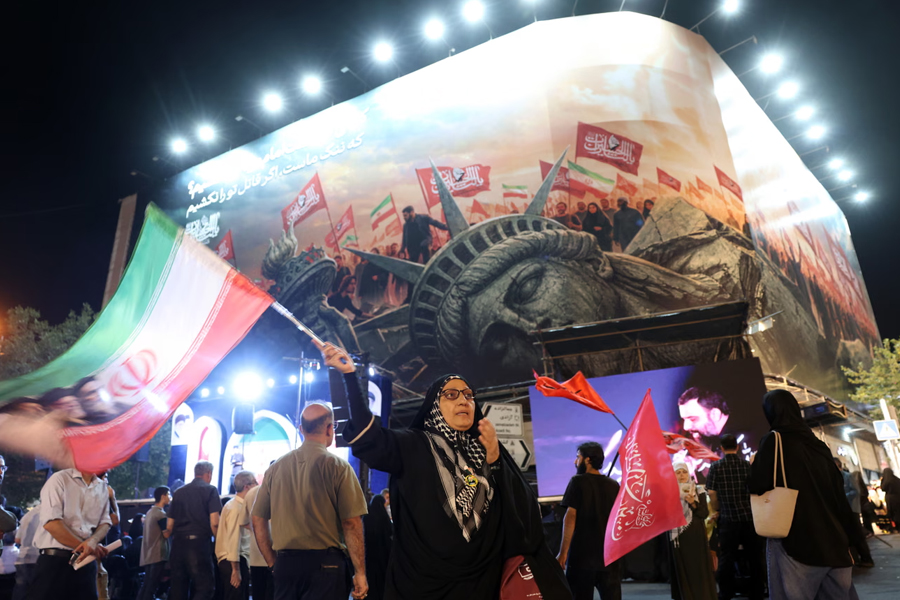
Iran's leaders have appealed to the public's sense of patriotism as they try to weather the country's economic downturn.
Iran's Leaders Appeal to Patriotism as Economic Crisis Deepens
Iran's leaders now cast the home front as part of the war against America. Hojatoleslam Taeb, the new head of the Basij paramilitary force and a close ally of Mojtaba Khamenei, Iran's supreme leader, recently delivered a speech that conjured up an image of resistance against market forces distorted by US sanctions.
As part of this war, he said it was necessary to reduce petrol consumption by as much as 10% to reduce the need for expensive imports. Avoiding unnecessary travel would be an act of patriotism, he implied.
But these patriotic appeals increasingly have an air of desperation as the economic crisis becomes worse.
Mohsen Rezaei, the new, more hardline secretary of the supreme national security council, said: "I advise young people to start producing the products they and society need in their homes, just as they gather in public spaces."
Mohammad Taheri, editor of the economics magazine Tejarat Farda, said the advice reminded him of Mao's "backyard steel furnaces" during the Great Leap Forward. Mao encouraged people to produce their own steel, with disastrous effect.
Amirhossein Hashemi-Javid, an energy expert, said Iran's true economic crisis was its inability to export oil due to the US blockade. "The channels for selling Iranian oil are drying up. Oil that cannot reach customers from the well provides no revenue for the Iranian economy; it is simply barrels that incur increasing production, storage and risk costs every day," he said.
Iran Signals Readiness for Diplomacy Despite Military Escalation
Iranian state TV claimed the military exchanges escalated on Sunday after a tanker caught fire when hitting two Iranian naval mines while attempting to pass through the southern side of the strait close to Oman. Officials later said Iran had targeted three ships trying to navigate the southern route that Tehran says is unauthorised.
The IRGC warned that other ships violating its rules would face the same fate and said compliance with its regulations for passage through the strait was mandatory.
However, the Iranian president, Masoud Pezeshkian, told Pakistan's prime minister, Shehbaz Sharif, in a bilateral meeting on the margins of the Shanghai Cooperation Organisation summit in Kyrgyzstan on Monday that continuing the war was not in Iran's interest, adding he was still ready to implement the memorandum of understanding with the US that Pakistan had mediated in June.
At some point, the Iranian government will have to decide if it might achieve more through diplomacy than through continued confrontation.
Only six months on from starting a war, after Trump promised protesters in January that help was on its way, the only commodity the US is now offering Iranians is deeper poverty.
🌍 US-IRAN CONFLICT: THE NUMBERS THAT DEFINE THE MOMENT
💥 MILITARY ESCALATION
Month since last exchange
Iranian soldiers killed
Iranian citizens wounded
US MQ-9 drone shot down
🗣️ KEY VOICES
Donald Trump:
"We're going to hit them hard. There will be a response."
Mohsen Zavaar (Tehran Resident):
"The people don't want miracles – they want decisions."
Saqab Esfahani (Deputy to Iran's President):
"Both political factions in the country are involved in fuel smuggling."
🛢️ OIL EXPORTS (Strait of Hormuz)
📈 IRANIAN INFLATION
💔 ECONOMIC IMPACT
🌍 THE FINAL VERDICT: MILITARY ESCALATION, ECONOMIC WARFARE, AND THE HUMAN COST
✅ WHAT'S HAPPENING:
- US and Iran exchange fire after month-long lull
- Trump threatens "hard" response to Iranian reprisals
- US Army Secretary Dan Driscoll resigns
- Iran signals readiness for diplomacy despite escalation
- G20 finance ministers clash over Iran sanctions
⚠️ THE CHALLENGES:
- Iranian inflation at 84.4%, food prices up 383%
- Oil exports at 3.8m bpd (down from 9.8m)
- Petrol queues, fuel smuggling, economic desperation
- 3 Iranian soldiers killed, US drone shot down
- Pentagon in turmoil with senior resignations
- Iran's leaders appeal to patriotism amid crisis
"We're going to hit them hard," Trump declared, as the US and Iran exchanged fire for the first time in a month. Iran's IRGC struck US bases in Jordan and UAE after Washington targeted Iranian launchers in the Strait of Hormuz. Meanwhile, Iran's economy is in freefall — inflation at 84.4%, food prices up 383%, and the US dollar at a record 2m rials. "The people don't want miracles – they want decisions," said one Tehran resident. Army Secretary Dan Driscoll resigned amid Pentagon turmoil. Iran's leaders appeal to patriotism, but the crisis deepens.
— World Headlines Analysis
Stay updated with the latest world headlines, Middle East developments, and breaking news on our World News Page.