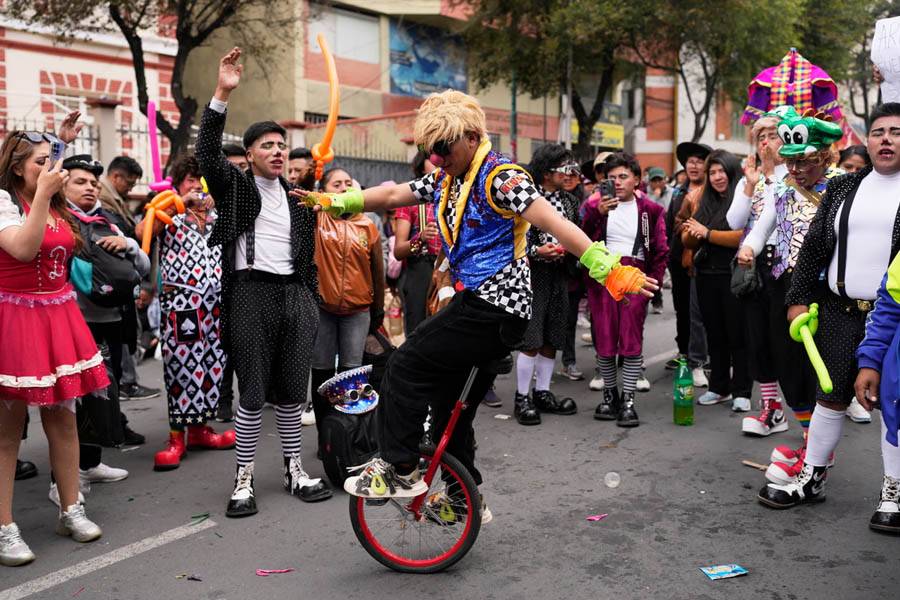
La Paz, Bolivia – Dozens of clowns marched through the streets of Bolivia's capital on Monday, protesting a government decree that they say threatens their livelihoods by limiting school events.
Wearing full face paint and their iconic red noses, the entertainers gathered outside the Ministry of Education to oppose a mandate introduced in February. The decree requires schools to complete 200 days of lessons annually, effectively restricting extracurricular activities where clowns are commonly hired.
Key developments:
- Dozens of clowns protested in La Paz against a government decree limiting school events
- The decree requires 200 school days annually, restricting extracurricular activities
- Clowns play a key role in school festivities like Children's Day (12 April)
- Tailors and photographers also joined the demonstration
- Bolivia faces its worst economic crisis in decades
- Officials say feedback will be considered for 2027 school year policies
Impact on School Celebrations
Clowns in Bolivia play a key role in school festivities, entertaining children during breaks and special occasions. Events such as Children's Day, celebrated nationwide on 12 April, often provide vital income opportunities for performers.
Under the new rules, such celebrations are no longer permitted during regular school days, though they may still take place voluntarily on weekends.
Voices from the Protest
"This decree will economically affect all of us who work with children," said Wilder Ramírez, a leader of the local clown union, known by his stage name Zapallito.
Ramírez emphasized the importance of joy in children's lives, stating that "children need to laugh," while other performers questioned whether policymakers fully understood the value of childhood experiences.
Elías Gutiérrez, a spokesperson for the Confederation of Artisanal Workers of Bolivia, warned that the decision could significantly reduce incomes. "With the economic crisis the country is going through, our future looks increasingly gloomy," he said.
Wider Economic Struggles
The protest comes at a time when Bolivia is facing one of its worst economic crises in decades. Declining natural gas production has reduced national revenues, while a shortage of US dollars has driven up the cost of imports in the landlocked nation.
The effects of the decree extend beyond clowns. Tailors who create costumes and photographers who cover school events also joined the demonstration, highlighting the broader impact on creative and informal sectors.
Scenes from the Demonstration
Protesters marched through central La Paz, blowing whistles and setting off small fireworks. Some carried signs criticizing the government, including one that read: "Taking away smiles, and taking work away."
Government Response
The decree was issued under the administration of President Rodrigo Paz. Officials have stated that feedback from the protests will be considered when drafting policies for the 2027 school year, but for now, the restrictions remain in place.
For Bolivia's clowns and associated workers, the uncertainty continues as they struggle to balance cultural traditions with changing educational policies and economic pressures.