13 May 2026 | Bucharest / Kyiv / Moscow / Ankara
BUCHAREST, Romania – Nato’s eastern flank issued one of its strongest warnings yet to Russia on Tuesday as leaders gathering in Romania declared that Moscow’s war against Ukraine is no longer merely a regional conflict, but a direct threat to the entire Euro-Atlantic security order.
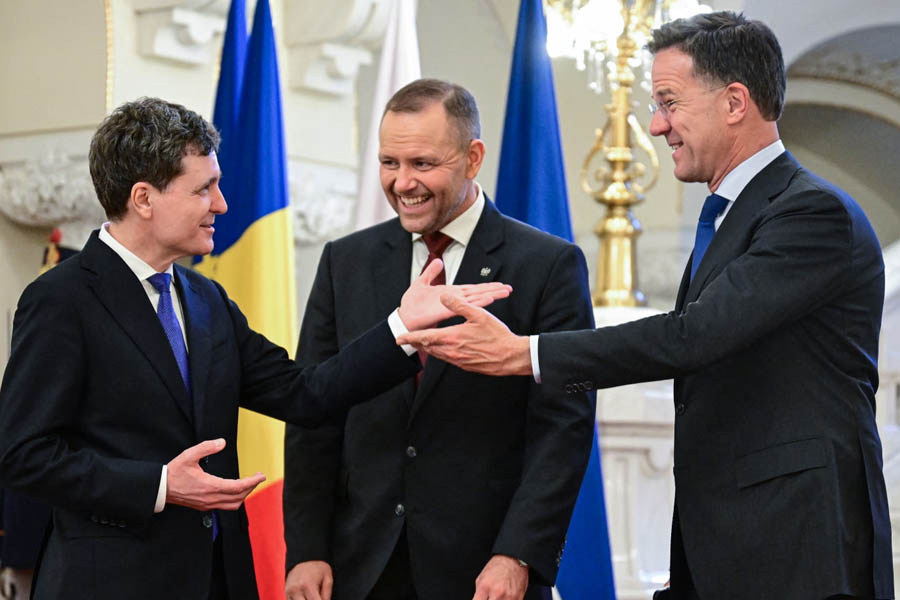
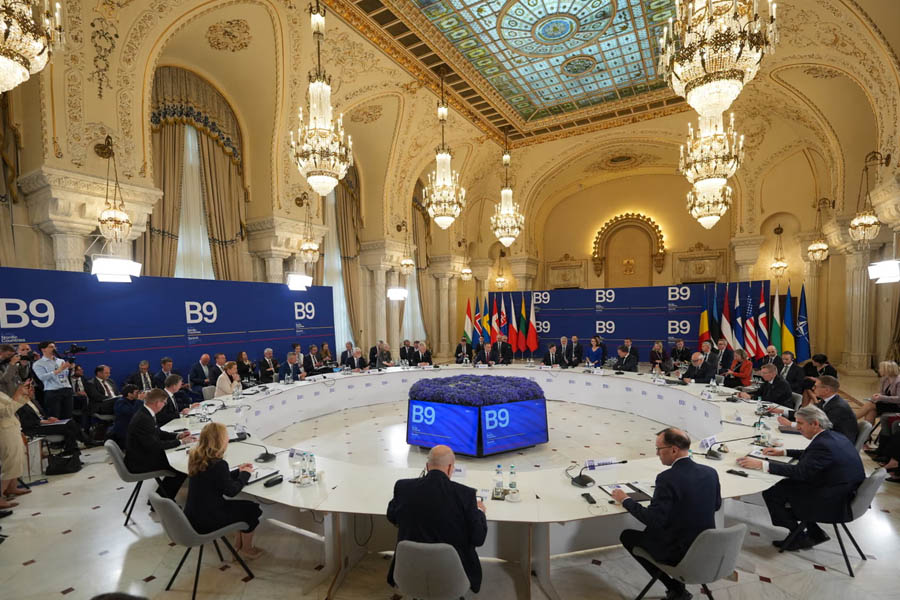
Meeting at the Cotroceni Palace in Bucharest, leaders of the Bucharest Nine (B9) nations and Nordic allies called for stronger collective defence, expanded military capabilities, and sustained support for Ukraine as Russian missile and drone attacks intensified once again across Ukrainian territory.
Romanian president Nicușor Dan, Polish president Karol Nawrocki and Nato secretary general Mark Rutte led discussions ahead of the upcoming Nato summit in Ankara, where alliance members are expected to debate defence spending, forward military deployments and long-term deterrence against Russia.
⚡ NATO SUMMIT WARNING: Bucharest Nine leaders warn Russia threatens all Euro-Atlantic security • Ukraine support declared vital for Nato security • Leaders push for higher defence spending • Russia launches new combined airstrikes on Ukrainian infrastructure • Ankara Nato summit expected to strengthen eastern flank deployments
"Russia's Aggression Is Not an Isolated Conflict"
Opening the summit, Romanian president Nicușor Dan described the gathering as taking place during a “dynamic international situation,” referencing the wars in Ukraine and the Middle East, as well as mounting security threats facing countries bordering Russia.
Dan stressed that support for Ukraine and Moldova was directly tied to the security of Nato member states themselves.
"We must not only make it declarative, but we must make it effective, because our security depends on their security," he said.
The Romanian leader also urged alliance members to transform rising defence budgets into concrete military capabilities while building what he called a “solid transatlantic military industrial base.”
His comments come as European governments increasingly fear that Russia’s war economy and expanding weapons production could outpace Western military readiness if Nato countries fail to accelerate defence investment.
Poland: "Nobody Can Say They Were Not Warned"
Polish president Karol Nawrocki delivered some of the summit’s sharpest remarks, arguing that eastern European nations had spent years warning the West about Russia’s imperial ambitions.
— Polish President Karol Nawrocki
Nawrocki said Russia’s invasion of Ukraine was no longer simply a bilateral war, but a direct assault on Nato’s wider security architecture.
"Russia’s continued aggression against Ukraine is not an isolated conflict," he said. "It is a direct challenge to the entire Euro-Atlantic security order."
He added that eastern Europe was no longer the alliance’s outer edge.
— Karol Nawrocki
The Polish president demanded that the upcoming Nato summit in Ankara send an unmistakable signal to Moscow.
"Nato is united, Nato is ready, and Nato will defend every inch of allied territory," he declared.
Zelenskyy Arrives as Russia Launches New Air Assault
The summit unfolded as Ukrainian president Volodymyr Zelenskyy arrived in Romania to join security discussions amid another wave of Russian attacks on Ukrainian cities and infrastructure.
In a message posted on X, Zelenskyy said the summit represented an opportunity for coordinated international action.
"All of us in the world need joint decisions and joint work so that there is more security for everyone," he wrote.
At nearly the same moment, Ukraine’s military intelligence warned that Russia had launched a “combined airstrike on critical facilities” across the country.
According to Ukrainian officials, Russia deployed large numbers of drones to overwhelm Ukrainian air defences before launching cruise missiles, sea-based missiles and ballistic missiles against strategic targets.
The attacks reportedly focused on energy infrastructure, defence industry facilities and government buildings in major Ukrainian cities.
Lavrov: "Nothing Is Happening in Real Life"
While Nato leaders gathered in Bucharest, Russian foreign minister Sergei Lavrov expressed frustration over stalled diplomatic engagement with the United States.
Speaking to Russian media, Lavrov said that despite positive rhetoric surrounding Donald Trump’s return to the White House, relations between Washington and Moscow had shown little practical improvement.
— Russian Foreign Minister Sergei Lavrov
Lavrov argued that US sanctions policies remained largely unchanged from the Biden administration and suggested hopes for a breakthrough in peace negotiations over Ukraine had stalled.
His comments are unlikely to soften positions among eastern Nato members, many of whom increasingly view Russia as a long-term structural threat rather than a temporary geopolitical crisis.
Belarus Also Under Scrutiny
Nawrocki also used the summit to criticise Belarus for supporting Russia’s military operations and facilitating hybrid attacks against Nato members.
He warned that any future peace settlement in Ukraine must be “just” and should not reward aggression.
— Karol Nawrocki
The comments reflect growing fears within eastern Europe that a frozen conflict or rushed settlement could embolden Moscow and undermine Nato credibility.
Ankara Summit Expected to Shape Nato's Future Strategy
The Bucharest meeting is widely seen as a precursor to the larger Nato summit scheduled for Ankara later this year.
Alliance leaders are expected to debate major increases in defence spending targets, expanded troop deployments on Nato’s eastern flank and stronger industrial coordination between North American and European defence manufacturers.
The war in Ukraine has fundamentally transformed Nato’s strategic posture, with countries bordering Russia now increasingly viewed as the alliance’s primary line of deterrence.
For nations such as Poland, Romania and the Baltic states, the conflict has validated years of warnings that Russia’s ambitions extended far beyond Ukraine itself.
📊 BUCHAREST NINE SUMMIT: KEY FACTS
- Location: Cotroceni Palace, Bucharest
- Main participants: B9 nations, Nordic allies, Nato leadership
- Key issue: Russia’s war against Ukraine
- Upcoming event: Nato summit in Ankara
- Major concerns: Air defence, deterrence, military spending
- Ukraine focus: Continued military and political support
- Russian attacks: Combined missile and drone strikes on infrastructure
- Belarus concern: Hybrid operations supporting Russia
- Nato objective: Defend “every inch” of alliance territory
- Strategic shift: Eastern Europe now viewed as Nato’s core defence zone
The Security Architecture of Europe Is Being Redrawn
The atmosphere in Bucharest reflected a Europe increasingly convinced that the continent has entered a new era of prolonged confrontation with Russia.
For eastern European governments, the debate is no longer whether Russia poses a threat, but how quickly Nato can adapt to meet it.
As missile strikes continue across Ukraine and diplomatic efforts remain frozen, alliance leaders appear determined to harden Nato’s eastern flank before the conflict spreads further into Europe’s security landscape.
The Ankara summit may ultimately define how aggressively Nato chooses to prepare for what many leaders now openly describe as a generational security struggle.
10 Key Questions and Answers About the Bucharest Nine Summit
❓ Q&A SPECIAL
- Q1: What is the Bucharest Nine (B9)?
A: The B9 is a group of Nato countries on the alliance’s eastern flank focused on regional security and deterrence against Russia. - Q2: Why is the summit important?
A: Leaders are coordinating strategy ahead of the major Nato summit in Ankara while responding to Russia’s ongoing war in Ukraine. - Q3: What did Poland warn about Russia?
A: Poland said Russia’s aggression is not isolated but a direct challenge to the entire Euro-Atlantic security system. - Q4: Why is eastern Europe now strategically important?
A: Nato increasingly sees eastern Europe as the alliance’s main defensive line against potential Russian aggression. - Q5: What did Romania emphasise?
A: Romania stressed that supporting Ukraine and Moldova is essential for wider European security. - Q6: What attacks did Ukraine report?
A: Ukraine said Russia launched drones, ballistic missiles and cruise missiles against critical infrastructure. - Q7: What is Nato expected to discuss in Ankara?
A: Defence spending, troop deployments, industrial production and military readiness are expected to dominate discussions. - Q8: What did Lavrov say about US-Russia relations?
A: Lavrov said that despite positive rhetoric under Trump, “nothing is happening in real life.” - Q9: Why was Belarus criticised?
A: Belarus was accused of supporting Russia’s war effort and enabling hostile hybrid activities against Nato members. - Q10: What is Nato’s central message to Russia?
A: Nato leaders insist the alliance is united and prepared to defend every inch of allied territory.
Stay updated with the latest Russia-Ukraine war headlines and Nato security developments on our Russia-Ukraine War Page.