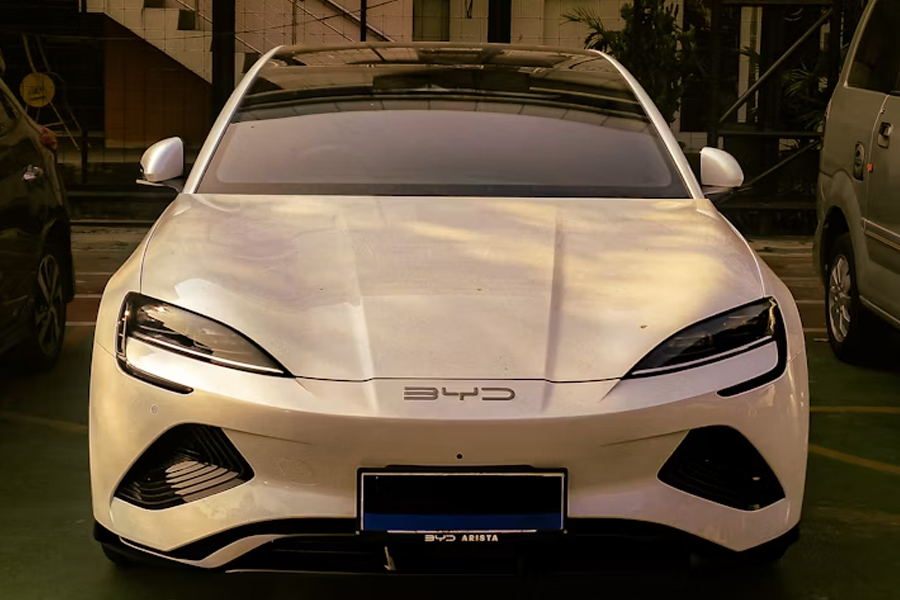
Shenzhen, China / London, UK – Chinese electric vehicle giant BYD has set its sights on becoming the world's largest automaker within the next five years, targeting Toyota's long-held crown with rapid advances in battery technology, a massive £1.8 billion European charging infrastructure investment, and expanding overseas production.
"BYD will truly become the number one automaker globally in terms of scale in five years," founder and chair Wang Chuanfu told the company's annual shareholder meeting in Shenzhen, expressing confidence that BYD could overtake global rivals through rapid advances in battery technology, fast charging, and growing production overseas including Europe.
Overnight, the company announced plans to spend nearly £1.8 billion in Europe to develop infrastructure for five-minute "flash charging" of its cars – a technology that could revolutionize EV adoption by eliminating range anxiety and long charging stops.
Key developments:
- BYD aims to become world's largest automaker within five years, targeting Toyota's top spot
- £1.8bn investment in European five-minute "flash charging" infrastructure announced
- BYD overtook Tesla as world's biggest EV maker by sales last year
- Sold 160,000+ vehicles abroad in May alone, up 80% year-on-year
- Aims to sell 1.5m vehicles overseas in 2026, up 40% from 2025's 1.05m
- Toyota sold 11.3m vehicles globally in 2025; BYD sold 4.8m
- Hungary plant to begin vehicle assembly in Q4 2026
- Turkey plant paused to focus on EU production amid tariff challenges
- Seeking second European production facility after Hungary
- Hungary factory faces allegations of EU employment law breaches with Chinese migrant workers
The Numbers: How BYD Plans to Close the Gap
In 2025, Toyota retained its crown as the world's top-selling carmaker with 11.3 million vehicles sold globally. BYD sold 4.8 million vehicles in the same period – a significant gap, but one that Wang Chuanfu believes can be closed within five years through aggressive expansion and technological innovation.
The company's momentum is undeniable. BYD overtook Tesla last year as the world's biggest EV maker by sales, a milestone that signaled the shifting balance of power in the global automotive industry. In May alone, BYD sold more than 160,000 vehicles abroad, up 80% from the same month the previous year.
For the full year, BYD aims to sell 1.5 million vehicles overseas in 2026, up more than 40% from last year's 1.05 million. This export surge is being driven by growing demand for affordable, technologically advanced EVs in markets across Europe, Southeast Asia, Latin America, and the Middle East.
The Flash Charging Revolution
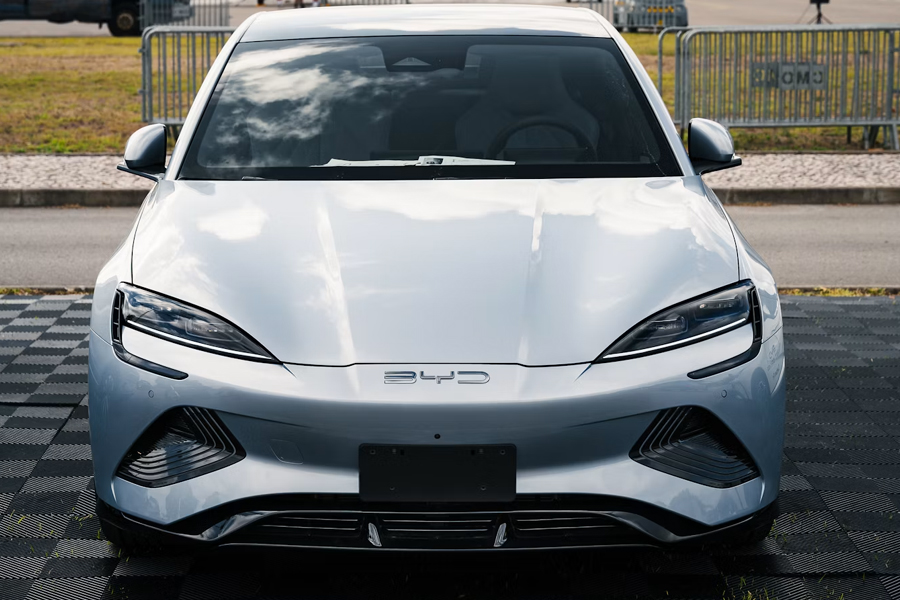
The centerpiece of BYD's European expansion is its planned £1.8 billion investment in five-minute "flash charging" infrastructure. Currently, even the fastest EV chargers take 15-30 minutes for a significant charge. Reducing that to five minutes would bring EV refueling times nearly in line with traditional petrol and diesel vehicles, eliminating one of the biggest barriers to EV adoption.
BYD's flash charging technology relies on advanced battery chemistry and high-power charging systems that can deliver massive energy transfer without degrading battery life. The company has not disclosed specific technical details but claims the system will be compatible with its entire European vehicle lineup.
Analysts say the flash charging network could be a game-changer for BYD's European ambitions. "Range anxiety and charging time remain the top concerns for potential EV buyers," said automotive industry analyst Maria Schmidt of Berlin-based EV Research Group. "If BYD can deliver five-minute charging at scale, they will have a significant advantage over competitors still relying on 20-30 minute charging times."
European Production: Hungary First, More to Come
BYD's top international executive, Stella Li, separately told reporters in London that the company would start assembling cars at its new plant in Hungary in the fourth quarter of this year. The Hungary facility represents BYD's first European production base and is critical to the company's strategy of selling locally assembled vehicles to avoid tariffs.
Li also confirmed that BYD had paused work on a planned plant in Turkey while it focuses on production within the European Union. The decision reflects the company's priority to establish a foothold inside EU borders, where locally assembled cars will help it beat tariffs that Brussels introduced on Chinese electric vehicles two years ago.
"Hungary is the number one priority right now," Li told Reuters. "The second priority will be to focus on finding a second facility in Europe."
The search for a second European production site suggests BYD is planning for significant long-term growth in the region, potentially challenging established European automakers like Volkswagen, BMW, and Mercedes-Benz on their home turf.
Labour Controversy in Hungary
BYD's rapid expansion has not been without controversy. The company's Hungary plant recently faced allegations that EU employment laws were being breached as it races to build its first European factory using Chinese migrant workers.
Labour unions have raised concerns about working conditions, wages, and compliance with EU regulations. BYD has stated that it is committed to following all local laws and regulations and is working with Hungarian authorities to ensure compliance.
The controversy highlights the challenges Chinese companies face when expanding into Europe, where labour standards and regulatory oversight differ significantly from China's domestic environment.
Why This Matters: The Global Auto Industry Shift
BYD's ambition to overtake Toyota represents more than just corporate competition – it signals a fundamental shift in the global automotive industry. For decades, Japanese and German automakers have dominated the industry. The rise of Chinese EV manufacturers like BYD, Geely, and Nio is reshaping that landscape.
Several factors are driving BYD's ascent:
- Vertical integration: BYD manufactures its own batteries, semiconductors, and other critical components, reducing supply chain vulnerabilities
- Cost advantage: Chinese manufacturing efficiency gives BYD significant pricing power
- Technology leadership: BYD's Blade Battery and now flash charging technology are industry-leading
- Government support: Chinese industrial policy has strongly supported EV development and exports
- First-mover advantage in emerging markets: BYD is building market share in Southeast Asia, Latin America, and Africa before Western competitors establish a foothold
Toyota's Response: Not Standing Still
Toyota, which has been slower than some competitors to embrace battery EVs, is not standing still. The Japanese giant has pledged to invest heavily in EV technology while also pursuing hybrid, hydrogen fuel cell, and solid-state battery research.
Toyota sold 11.3 million vehicles globally in 2025, more than double BYD's 4.8 million. However, BYD's growth rate – particularly in the EV segment – far outpaces Toyota's. The question for investors and industry observers is whether Toyota can accelerate its EV transition quickly enough to maintain its leadership position.
What's Next for BYD
The next five years will be critical for BYD's ambitions. Key milestones to watch include:
- Q4 2026: First vehicles roll off Hungary assembly line
- 2027-2028: Second European production facility announced
- 2028: Flash charging network rollout across major European markets
- 2030: BYD's target to become world's number one automaker
With the global automotive industry undergoing its most dramatic transformation in a century, BYD's bold bet on flash charging technology and European expansion could position the Chinese giant to lead the electric future – or serve as a cautionary tale about the challenges of rapid global expansion.
⚡ The Big Picture
BYD's ambition to overtake Toyota within five years represents a seismic shift in the global automotive industry. The Chinese EV maker is not just competing on price – it's betting on game-changing technology like five-minute flash charging and building a European manufacturing presence to overcome trade barriers. With £1.8 billion committed to European infrastructure and production ramping up in Hungary, BYD is positioning itself as a formidable challenger to established automakers. Whether it can close the gap with Toyota's 11.3 million annual sales remains to be seen, but the trajectory is clear: the future of the auto industry is electric, and China's BYD intends to lead it.
⚡ For more breaking news and automotive industry updates: Visit NewsOrbit - World Breaking News for the latest headlines from around the globe.