3 May 2026 | Yerevan, Armenia
YEREVAN, Armenia – The guest list has always been strictly European. Until now.
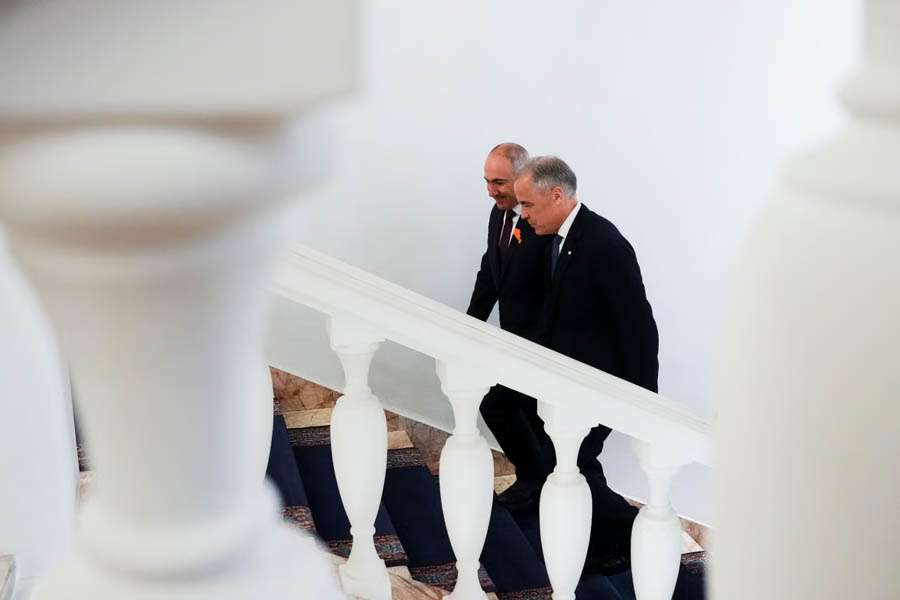
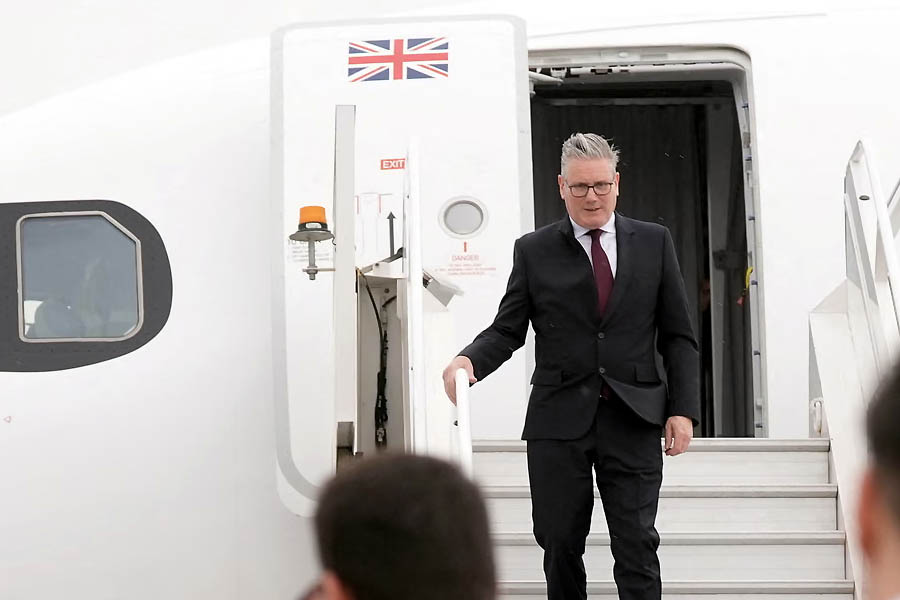
Mark Carney made history on Monday as Canada became the first non-European nation invited to attend a meeting of the European Political Community (EPC) – a quiet revolution in a summit that has never before welcomed a leader from across the Atlantic.
His presence in Yerevan is about more than geography. It is a statement. After the rupture with Donald Trump's United States, Canada is looking for new friends. And Europe is listening.
⚡ THE CONTEXT: Canada becomes first non-European nation at EPC summit • Carney seeks new alliances after US rupture under Trump • Armenia at historic crossroads – decoupling from Russia, inching toward Europe
A New Atlantic Bridge: Canada's European Gambit
Carney has said he is determined to build a new network of trade and diplomatic alliances after the loss of US markets under Donald Trump. His presence at the EPC – an institution championed by French President Emmanuel Macron that includes the UK, Turkey, Norway, Switzerland, and Iceland – represents a dramatic realignment of western alliances.
Canadian diplomats have rejected suggestions Ottawa might seek EU membership. But the symbolism of being the first non-European nation at the table is unmistakable. Canada is signaling that its future partnerships may lie increasingly across the Atlantic, not just across the 49th parallel.
Trump's plan to pull more than 5,000 troops out of Germany over the next year and the economic impact on western economies of a prolonged US-Iran conflict will be among the main subjects of discussion in Yerevan.
— Marta Kos, EU Enlargement Commissioner
Armenia's Historic Crossroads: Between Moscow and Brussels
Yerevan was chosen to host the EPC to give Armenia a chance to showcase its strengthening links with Europe – and so continue its slow decoupling from Russia, its former backer. Prime Minister Nikol Pashinyan has pursued a policy of diversification that in practice is slowly drawing his country into the European ambit.
The country of 3 million people signed a comprehensive partnership agreement with the EU in 2017. Last year, it adopted a law formally declaring its intention to apply for membership of the bloc – taking the country in a very different political direction to neighbouring Georgia.
Yet Armenia remains a member of the Russian-led Eurasian Economic Union and the Moscow-led Collective Security Treaty Organisation (CSTO) alliance, although it froze its membership of the latter in 2024. Vladimir Putin said in April that Armenia could not be a member of both the EU and CSTO. "It's simply impossible by definition," the Russian president warned Pashinyan.
The Pashinyan Dilemma: Peace, Elections, and a Fine Line
Pashinyan's Civil Contract party is facing parliamentary elections in June and is seeking a big win so he can continue efforts to make peace with Azerbaijan. He faces three opposition parties more sympathetic to Russia.
Thomas de Waal, a senior fellow with Carnegie Europe specializing in the Caucasus region, said European leaders face a delicate balancing act.
— Thomas de Waal, Carnegie Europe
"The country itself deserves full European attention," de Waal added. "It is on the verge of a painful but transformative peace agreement with Baku that will lead to the reopening of its two long borders with Azerbaijan and Turkey, which have been closed since the 1990s. The country also has a historic opportunity to loosen its overdependence on Moscow as the war in Ukraine continues to distract and drain Russia."
What Armenia Wants: Funding, Visas, and a Path Forward
The day after hosting the EPC, Yerevan hopes the first bilateral summit between Armenia and the EU on Tuesday will result in the bloc offering extra funding to promote democracy as well as visa liberalisation. When the EU's enlargement commissioner, Marta Kos, visited the country in March, she declared that "Armenia and the EU have never been closer."
With the support of Trump, Armenia and Azerbaijan initialled a peace agreement in Washington last August. The Azerbaijani side said it would fully sign up to the peace agreement once Armenia changed its constitution, claiming that it contains territorial claims against Azerbaijan – which Armenian authorities have repeatedly denied.
Macron's Moment: A Personal Commitment to Armenia
Macron has been the premier champion of closer European-Armenian ties, and his attendance at the Yerevan summit is being given a state-visit-level importance. He is also expected to attend a concert in Gyumri, Armenia's second-largest city. For the French president, Armenia represents a test case for European influence in a region long dominated by Russia.
The EPC, which was set up in 2022, was met with scepticism at its inception. Some feared it was a sop for countries that had been waiting years for their applications for EU membership to be progressed. But the willingness of European leaders to continue to attend the summits suggests the gatherings serve a purpose – and now, with Canada at the table, the EPC's reach may be expanding further.
What Comes Next?
For Canada, Carney's presence in Yerevan is a first step in rebuilding a network of alliances at a time when the United States has become an unpredictable partner. For Armenia, the summit is an opportunity to accelerate its decoupling from Russia and deepen ties with Europe. For the EPC, the arrival of a non-European member raises questions about what the grouping might become.
"Canada has never been closer," Kos said. But closeness is not membership. And in a world where old alliances are fracturing and new ones are forming, the summit in Yerevan may be remembered as the moment when the map of the West began to be redrawn.
Stay updated with the latest politics headlines on our Politics Page.