8 May 2026 | Beijing
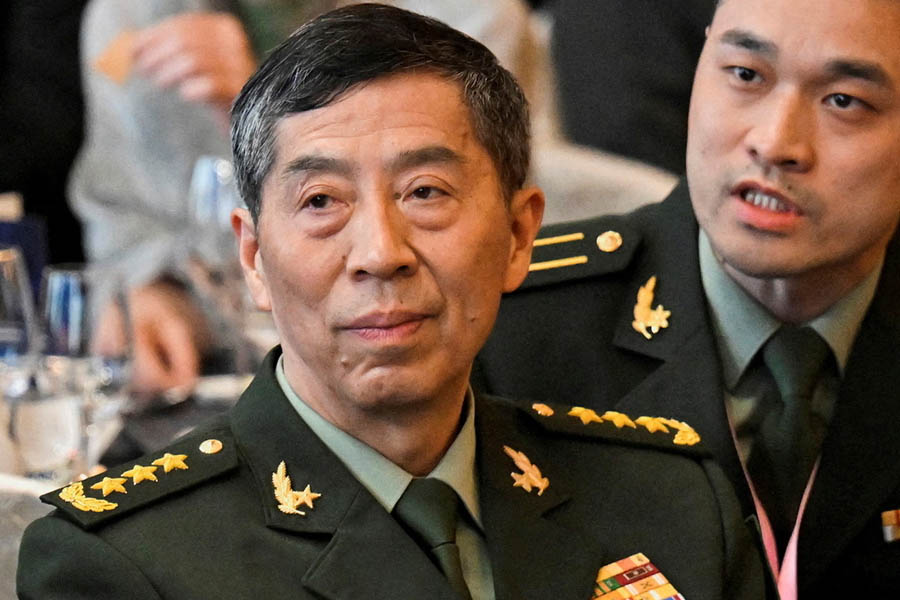
BEIJING – China’s sweeping anti-corruption purge inside the military has reached another dramatic milestone, as two former defence ministers were handed suspended death sentences in one of the harshest crackdowns on senior military leaders in recent years.
Former defence ministers Li Shangfu and Wei Fenghe were both convicted of bribery by China’s military court on Thursday and sentenced to death with a two-year reprieve, according to Chinese state media Xinhua. The punishment, among the most severe in Xi Jinping’s long-running anti-graft campaign, signals Beijing’s determination to tighten discipline inside the armed forces.
Under Chinese law, a death sentence with a two-year reprieve is usually commuted to life imprisonment if the convicted individual demonstrates good behavior during the suspension period. However, Xinhua said both Li and Wei will be permanently stripped of political rights and all personal property, with no parole eligibility.
⚡ KEY DEVELOPMENTS: Li Shangfu sentenced • Wei Fenghe sentenced • Death penalty with two-year reprieve • No parole allowed • Political rights revoked • Property confiscated • Military corruption purge intensifies
From Military Power to Political Collapse
Li Shangfu served as China’s defence minister for only seven months in 2023 before abruptly disappearing from public life, fueling speculation of an internal investigation. His predecessor, Wei Fenghe, held the same position for five years and was considered one of the most influential military figures in Beijing’s strategic command structure.
While the title of defence minister carries international visibility, the real power over military affairs in China lies with the Central Military Commission (CMC), chaired by President Xi Jinping.
Both Li and Wei held powerful positions before becoming defence ministers, controlling massive budgets and highly sensitive military assets.
Li headed China’s Equipment Development Department from 2017 to 2022, overseeing military procurement and modernization projects worth billions of dollars. Wei, meanwhile, led the PLA Rocket Force, the branch responsible for managing China’s nuclear and strategic missile arsenal.
What Were They Accused Of?
Chinese investigators accused Li of “serious violations of Party discipline and the law,” a phrase commonly used in corruption cases before formal charges are made public.
According to state investigators, Li used his positions to seek “improper benefits” for himself and others, manipulating personnel appointments and accepting large sums of money and valuables in exchange for favors.
— Chinese state investigation report
Wei’s case has been less publicly detailed, but analysts believe it involves procurement contracts and promotions linked to the Rocket Force.
Xi Jinping’s Deepening Military Purge
The convictions are part of a much broader campaign inside the People’s Liberation Army (PLA), where more than 100 senior military officers have reportedly been investigated, removed, or disappeared since 2022.
President Xi Jinping has made anti-corruption enforcement a defining pillar of his leadership since taking power in 2012. But the military has increasingly become a major target, reflecting Beijing’s concern over internal discipline, loyalty, and operational readiness.
The purge has touched some of the highest ranks of the Chinese military establishment, including top commanders, procurement chiefs, and Rocket Force officials.
The Rocket Force Under Pressure
The PLA Rocket Force has been particularly hard hit by investigations. As the branch controlling China’s nuclear arsenal and long-range missile systems, it remains central to Beijing’s military strategy, especially amid tensions in the South China Sea, Taiwan Strait, and Indo-Pacific region.
Wei Fenghe’s former leadership role there makes his conviction particularly significant, raising questions about corruption at the core of China’s strategic deterrence capabilities.
📊 CHINA MILITARY PURGE AT A GLANCE
- Li Shangfu served: 7 months (2023)
- Wei Fenghe served: 5 years
- Sentence: Death with two-year reprieve
- Parole: Not permitted
- Political rights: Revoked for life
- Property: Fully confiscated
- Military officers investigated since 2022: 100+
- Xi anti-corruption campaign began: 2012
Warning to China’s Military Elite
The harsh sentences send a powerful warning throughout China’s armed forces: rank, political connections, and past influence will not shield officials from Xi’s campaign.
Military analysts say the crackdown serves both as an anti-corruption drive and a loyalty test, ensuring that the military remains firmly aligned with Xi’s leadership.
Yet the repeated purges also raise concerns about instability within the PLA’s command structure. Frequent removals of senior commanders can weaken institutional continuity and military readiness at a time when China faces increasing geopolitical tensions.
What Comes Next?
The sentencing of Li and Wei is unlikely to mark the end of China’s military clean-up campaign. More investigations are expected as Xi Jinping continues restructuring the armed forces and consolidating authority over strategic military branches.
For China’s military leadership, the message is unmistakable: corruption is no longer merely a political liability—it can now end careers, fortunes, and freedoms at the highest level.
As Beijing pushes to modernize its armed forces into a world-class military by 2027, the purge may shape not only China’s military hierarchy, but also its readiness for future global confrontations.
Stay updated with the latest Asia and global security news on our Asia News Page.