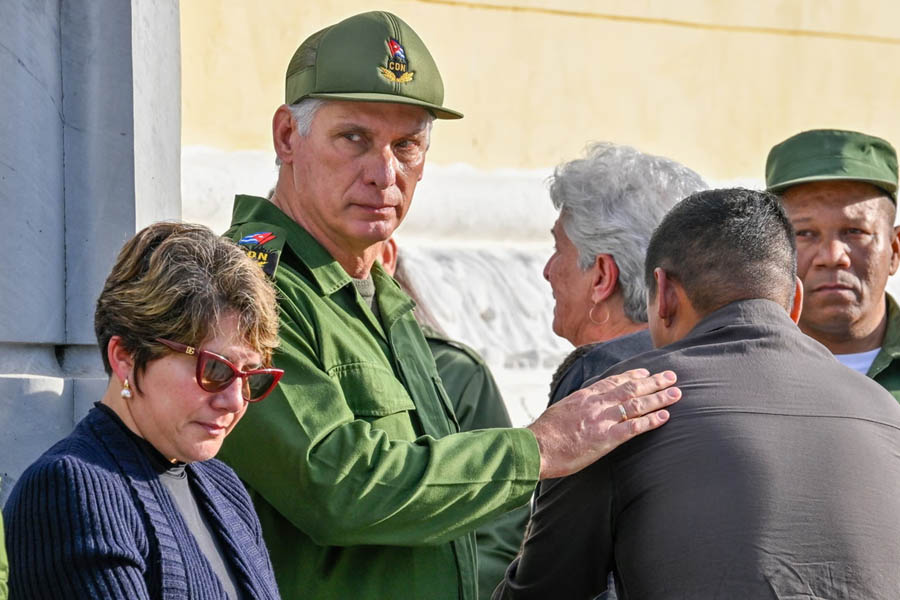
Havana, Cuba – Cuban President Miguel Diaz-Canel has drawn a line in the sand. Under intense pressure from Washington, he will not resign. Not now. Not ever. In his first televised interview with an American broadcaster, the Cuban leader delivered a message of defiance that echoed across the Caribbean and into the halls of the White House.
"We have a free sovereign state, a free state," Diaz-Canel told NBC News, his voice steady, his gaze unbroken. "We have self-determination and independence, and we are not subjected to the designs of the United States."
The message was clear: Cuba bows to no one.
Key developments:
- Diaz-Canel refuses US resignation demands: "Revolutionaries don't step down"
- Russia reaffirms unwavering support: "We cannot betray Cuba"
- Russian tanker delivers 730,000 barrels of crude oil to ease energy crisis
- Trump suggests US could "take" control of Cuba, labels leadership a security threat
- Washington threatens tariffs on nations supplying fuel to the island
- Energy shortages and blackouts worsen after Venezuelan oil shipments disrupted
"Revolutionaries Do Not Abandon Their Positions"
The Cuban leader didn't stop at rejecting US demands. He dismantled them.
"The concept of revolutionaries giving up and stepping down is not part of our vocabulary," Diaz-Canel said, his words landing like hammer blows. For a man who has led Cuba through one of its most turbulent periods, resignation is not an option. It never was.
The interview marked a rare moment of direct communication between Havana and the American public – and Diaz-Canel used it to remind the world that Cuba, though small, remains unbowed.
Washington Tightens the Screws
The United States has escalated its pressure campaign against Cuba to levels not seen in decades. Economic sanctions. Oil restrictions. A de facto energy blockade enforced by threatening tariffs on any nation that dares supply fuel to the island.
The result? Cuba's energy crisis has spiraled. Blackouts are now routine. Hospitals, schools, and homes are left in the dark. Key oil shipments from Venezuela – once a lifeline – were disrupted earlier this year, leaving the island producing only a fraction of the fuel it desperately needs.
Former President Donald Trump has poured gasoline on the fire. In recent remarks, he suggested the US could "take" control of Cuba, branding its leadership a direct threat to American national security. For Havana, those words are not just rhetoric. They are a warning of what may come.
Russia: "We Cannot Betray Cuba"
But Cuba is not alone.
As Washington tightens its grip, Moscow has stepped in. Russian Deputy Foreign Minister Sergei Ryabkov traveled to Havana, held talks with Diaz-Canel, and delivered a message that will reverberate across the Western Hemisphere: Russia will not abandon its ally.
"We cannot betray Cuba," Ryabkov said. "That is out of the question. We cannot leave it on its own."
Those were not empty words. In late March, a Russian tanker delivered approximately 730,000 barrels of crude oil to Cuba – the first such shipment in three months. More is expected to follow. Moscow has signaled that further support, both economic and diplomatic, is on the horizon.
For Cuba, the Russian oil is a lifeline. For Washington, it is a provocation. For the world, it is a reminder that the Cold War's shadows never truly disappeared – they simply shifted shape.
A Geopolitical Flashpoint in the Caribbean
Cuba has become a battleground – not of soldiers, but of superpowers. The United States wants regime change. Russia wants a foothold in America's backyard. And Cuba? Cuba wants to survive.
Analysts warn that the situation could escalate further. Energy shortages are deepening. Diplomatic relations are deteriorating. And with Trump hinting at military action, the unthinkable is no longer unspoken.
"This is not just about Cuba," said one regional analyst who spoke on condition of anonymity. "This is about who controls the Caribbean. This is about Russia testing the United States. And this is about whether a small island nation can defy a superpower – and live to tell the story."
What Comes Next?
For now, Diaz-Canel remains in power. Defiant. Unbroken. Backed by Moscow and determined to outlast Washington's pressure.
"Revolutionaries don't step down," he said. And he meant it.
But the question looming over Havana is not whether Diaz-Canel will resign. It is whether the United States will accept his refusal – or whether the pressure will turn into something far more dangerous.
As Russian tankers dock at Cuban ports and American warships patrol nearby waters, the Caribbean is once again becoming a flashpoint. And the world is watching.
Stay updated with the latest world headlines on our World Headlines Page.