27 May 2026 | Brussels, Berlin, Wolfsburg, Strasbourg — Updated 16:30 GMT
Twenty-five years ago, the US watched as Chinese imports hollowed out its industrial midwest — 2.5 million jobs lost, suicides rose, divorces multiplied, drug use spread. The Centre for European Reform has a warning for Germany: that same shock is coming for you.
China's surplus with Germany has doubled from $12bn to $25bn in just one year. The trade imbalance now stands at $94bn. Beijing is running a policy project named "10,000 little giants" specifically targeting Germany's Mittelstand — the innovative mid-sized firms that are the backbone of the German economy.
"China has already eaten much of German industry's lunch and is preparing to start on dinner," the CER warns. But instead of confronting Beijing, Berlin is "frantically searching for culprits" — blaming energy prices and bureaucracy while missing the real threat.
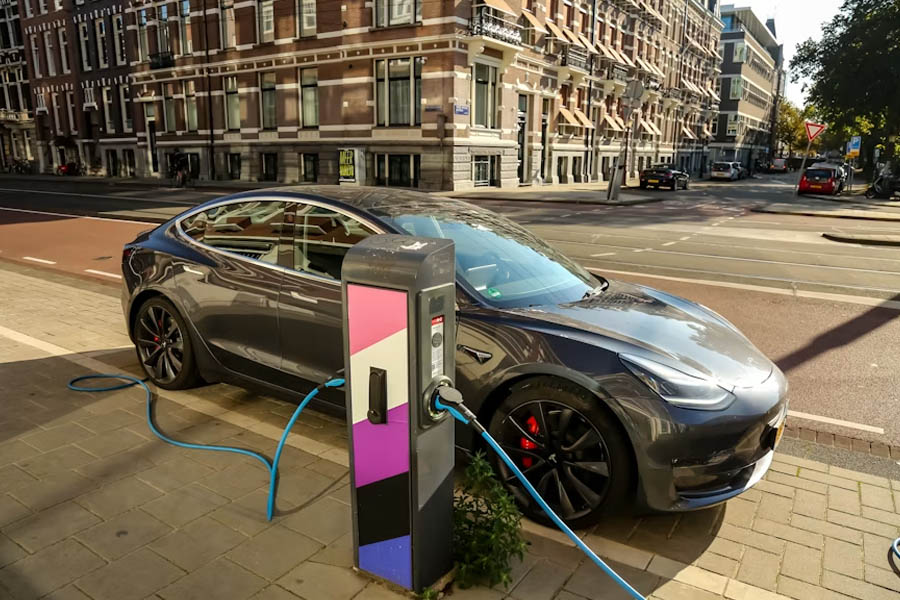
Meanwhile, the EU has confirmed it will water down its 2035 ban on new petrol cars, reducing the zero-emission requirement from 100% to 90% after heavy pressure from Germany and Italy. Hybrid car sales are surging. Chinese brands are extending their market share. Greenpeace calls it "an early Christmas present for Chinese electric car manufacturers."
BRUSSELS/BERLIN/WOLFSBURG/STRASBOURG – Germany is sleepwalking into a second "China shock" that could permanently hollow out its industrial heartland, a leading Brussels thinktank has warned, as new figures show hybrid car sales surging across the EU and the bloc watering down its flagship 2035 ban on new petrol and diesel cars.
The Centre for European Reform (CER) said Europe's largest economy risked a repeat of what happened in the US in 2001 when a sudden surge in imports from China permanently devastated towns across the American midwest.
⚡ GERMANY-CHINA TRADE CRISIS AT A GLANCE: China's surplus with Germany doubled to $25bn (2024-2025) • $94bn total trade imbalance • CER warns of "China Shock 2.0" • US lost 2.5m jobs in 2001 shock • Beijing's "10,000 little giants" targets German Mittelstand • EU waters down 2035 petrol car ban (100% → 90% zero emissions) • Hybrid car sales surge across EU • Chinese brands extend market share • Greenpeace: "Early Christmas present for China".
'China Shock 2.0': The Warning from History
"China Shock 1.0" not only led to losses of up to 2.5 million jobs in the United States but was also marked by a rise in suicides, divorce and drug use in towns that lost industries to the Chinese, according to the CER report.
That fraying of the US social fabric, it said, was "an eerie warning shot for Germany's car and machine-building cities like Wolfsburg and Stuttgart" — a reference to the homes of Volkswagen and Mercedes-Benz, two brands emblematic of German engineering and design success.
"Germany remains hesitant, even as China has already eaten much of German industry's lunch and is preparing to start on dinner," said the CER.
Entitled "China Shock 2.0: the cost of Germany's complacency," the thinktank report concluded: "Berlin cannot keep admiring the problem," adding that the risk for Berlin was acute, yet German political leaders had "struggled to see the problem clearly."
— Centre for European Reform
The Numbers: A $94bn Trade Imbalance
With China's surplus with Germany having doubled between 2024 and 2025 from $12bn (£9bn) to $25bn, creating a $94bn trade imbalance, the CER said Europe's largest economy faced an existential threat.
The report pointed out that Beijing was running a policy project, named "10,000 little giants," that was specifically targeting Germany's Mittelstand — the country's ecosystem of middle-sized, innovative industrial suppliers and firms.
Germany was described as "frantically searching for culprits" for its economic woes, with high energy prices and bureaucracy dominating the political conversation — instead of China.
Germany's failure to diagnose what was going on resembled the "phantom pain" of an amputee, the CER said, adding: "That missing limb is export demand, chopped off by China's profound pressure on Germany's industrial base."
The root of the problem was ballooning Chinese exports around the world as imports into China declined, with the country reporting a record $1.2tn surplus in 2025.
Three Causes of the Imbalance
The CER blamed the economic imbalance on three issues: dampened domestic demand in China; an extremely unfavourable exchange rate, potentially undervaluing the yuan by up to 30% against the euro; and a Beijing policy that ruthlessly targeted Germany's core industrial base.
The thinktank said political leaders needed to wake up: "Waiting for the shock to correct itself is not prudence, but a decision to let deindustrialisation run its course."
It said the best option for Berlin was to go on the offensive "and support Paris in pushing the IMF and G7 to confront China's currency undervaluation and one-sided trade model."
Industrial leaders in Europe and China have told the Guardian of their fears that European industry was being cannibalised, while one leading German industrialist said Europe might as well become "a province of China" such was the endemic damage.
Hybrid Car Sales Surge as Chinese Brands Gain Ground
Separately, sales of hybrid cars have shot up across the EU in the wake of the watering down of emission targets late last year, new figures show.
The new rules have also helped Chinese brands extend their market share, underlining growing political tensions over the growing deficit the EU has with China.
New figures show that every state in the EU, bar Finland and Ireland, has a deficit with China, which is now targeting middle industries, particularly in Germany.
EU Waters Down 2035 Petrol Car Ban
The European Commission has confirmed it wants to water down its 2035 ban on the sale of new petrol or diesel cars, yielding to heavy pressure from the car industry and leaders from several EU member states including Germany and Italy.
Under current legislation, manufacturers were obliged to ensure that 100% of production of cars and vans had zero emissions from 2035.
The European Commission has now proposed reducing this to 90%, enabling the continued manufacture of a portion of plug-in hybrid electric cars, or even combustion engines beyond 2035.
"This will allow for plug-in hybrids (PHEV), range extenders, mild hybrids, and internal combustion engine vehicles to still play a role beyond 2035, in addition to full electric (EVs) and hydrogen vehicles," the commission said.
Wopke Hoekstra, a European climate commissioner, described the proposals as a "win-win" situation for consumers and industry, keeping Europe on the electrification course with a series of carrot and stick measures.
In a carrot-and-stick approach, the remaining 10% of assembly line output that is not carbon neutral will need to be compensated by other green measures on the factory floor, including the use of green steel made in Europe or use of biofuels in non-electric vehicles.
— Apostolos Tzitzikostas, EU Commissioner for Sustainable Transport
Reaction: 'Early Christmas Present for China'
The proposals, which require approval from EU governments and the European parliament, represent the bloc's biggest retreat from its green policies enacted over the previous five years. Opponents said the announcement was a blow for Europe's electrification journey.
Chris Heron, the secretary general of the trade association E-Mobility Europe, said it was "the wrong time for Europe to take the wind out of its own sails," adding the only way the EU industry could remain competitive was to reinforce its policy, not by "pulling off course."
Greenpeace Germany's executive director, Martin Kaiser, described the plan as "an early Christmas present for Chinese electric car manufacturers."
Greenpeace UK's policy director, Dr Douglas Parr, urged Keir Starmer not to follow suit. "The UK must not join Europe in this act of economic self-sabotage," he said.
Announcing the proposals, Hoekstra said the EU was "staying the course on zero emissions" but "introducing some flexibility for manufacturers so they can meet their CO2 targets in the most cost efficient way."
Small Electric Cars: New Incentives
Séjourné also announced measures to accelerate the delivery of small electric cars. If the vehicles are under 4.2 metres in length, cost between €15,000 to €20,000 (£13,151 to £17,535) and are made in the EU, customers will benefit from reductions in road tolls and discounts at charging stations. Manufacturers will get bonus credits for their factory floor carbon output.
Up to 2035, manufacturers of small electric cars will get "super credits" allowing them to bank bonus carbon credits for their factories.
BEUC, the EU organisation of consumer bodies, welcomed efforts to bring small EVs to the market, saying hybrid cars at a cost of €40,000 were "nowhere near a real option for most households."
The commission is also proposing to relax targets for electric vans, reducing the requirements for a 50% reduction in carbon emissions by 2030 to 40%.
The move, which follows lobbying by the German chancellor, Friedrich Merz, and the Italian prime minister, Giorgia Meloni, will be seen as a victory for the European car industry, which has struggled to make the transition to electric and faces growing competition from Chinese rivals.
The decision has already been denounced by the Green party in the European parliament, which has said it amounts to a "gutting" of flagship legislation aimed at cutting Europe's emissions.
The commission president, Ursula von der Leyen, who championed the green deal, insisted that "Europe remains at the forefront of the global clean transition." She said the proposals were taken after "intense dialogues with the automotive sector, civil society organisations and stakeholders."
📊 GERMANY-CHINA TRADE CRISIS – KEY NUMBERS
- China's surplus with Germany (2024-2025): Doubled from $12bn to $25bn
- Total EU-China trade imbalance: $94bn
- EU states with China deficit: 25 out of 27 (only Finland and Ireland excluded)
- China's global surplus (2025): Record $1.2tn
- US jobs lost in "China Shock 1.0": Up to 2.5 million
- Yuan undervaluation estimate: Up to 30% against euro
- EU 2035 zero-emission target (original): 100%
- EU 2035 zero-emission target (proposed): 90%
- Small EV price target: €15,000-20,000
🔍 Germany-China Trade Crisis: Q&A / Vizual Guide
❓ What is "China Shock 2.0"?
A term coined by the Centre for European Reform to describe the risk that Germany will suffer the same industrial hollowing-out that the US experienced in 2001 when Chinese imports surged. The US lost up to 2.5 million jobs, with associated rises in suicide, divorce and drug use in affected communities.
❓ How big is the China-Germany trade imbalance?
China's surplus with Germany doubled from $12bn to $25bn between 2024 and 2025, creating a total trade imbalance of $94bn. Every EU state except Finland and Ireland now has a deficit with China.
❓ What is Beijing's "10,000 little giants" policy?
A Chinese government project specifically targeting Germany's Mittelstand — the ecosystem of mid-sized, innovative industrial suppliers and firms that form the backbone of the German economy. The policy aims to replicate and surpass German industrial capabilities.
❓ What is the CER's recommended solution?
The thinktank says Berlin must stop "admiring the problem" and go on the offensive, supporting Paris in pushing the IMF and G7 to confront China's currency undervaluation (the yuan may be undervalued by up to 30% against the euro) and one-sided trade model.
❓ What has changed with EU's 2035 petrol car ban?
The European Commission has proposed reducing the zero-emission requirement from 100% to 90% by 2035, allowing plug-in hybrids, mild hybrids, and even some combustion engines to continue beyond that date — a major retreat from flagship green legislation.
❓ Why is Greenpeace calling this a gift to China?
Greenpeace Germany's executive director Martin Kaiser said softening EU emissions targets and delaying the transition to full electric vehicles allows Chinese manufacturers, who have already mastered EV production, to extend their market share in Europe while European automakers continue producing hybrids and combustion engines.
📊 CHINA-GERMANY TRADE IMBALANCE ($bn)
Total trade imbalance: $94bn
🚗 EU 2035 PETROL CAR BAN – ORIGINAL vs PROPOSED
Original target
100%
Zero-emission vehicles by 2035
No combustion engines allowed
Proposed target
90%
Zero-emission vehicles by 2035
10% can be hybrids/combustion (with offsets)
🔍 THREE CAUSES OF CHINA-GERMANY IMBALANCE (CER)
🏭 GERMAN CITIES AT RISK – 'WARNING SHOT'
Wolfsburg
Volkswagen
"Warning shot" city
Stuttgart
Mercedes-Benz
"Warning shot" city
Emden
VW ID.4 plant
EV production
🌍 EU STATES WITH CHINA DEFICIT
Only Finland and Ireland have no deficit with China
Every other EU member state imports more from China than it exports
🗣️ KEY QUOTES – FROM THINKTANKS TO GREENPEACE
Centre for European Reform:
"Germany remains hesitant, even as China has already eaten much of German industry's lunch and is preparing to start on dinner."
Martin Kaiser (Greenpeace Germany):
"This is an early Christmas present for Chinese electric car manufacturers."
Dr Douglas Parr (Greenpeace UK):
"The UK must not join Europe in this act of economic self-sabotage."
Wopke Hoekstra (EU Climate Commissioner):
"We are staying the course on zero emissions but introducing some flexibility for manufacturers."
Stay updated with the latest global markets and business headlines on our Global Markets Page.