20 May 2026 | Mountain View & London — Updated 23:30 GMT
MOUNTAIN VIEW – Google declared Tuesday that "Search is AI search" as it unveiled the most dramatic transformation to its flagship product in nearly three decades — a Gemini-powered overhaul that turns the humble search bar into a personal assistant capable of booking trips, managing spreadsheets, and creating autonomous "information agents."
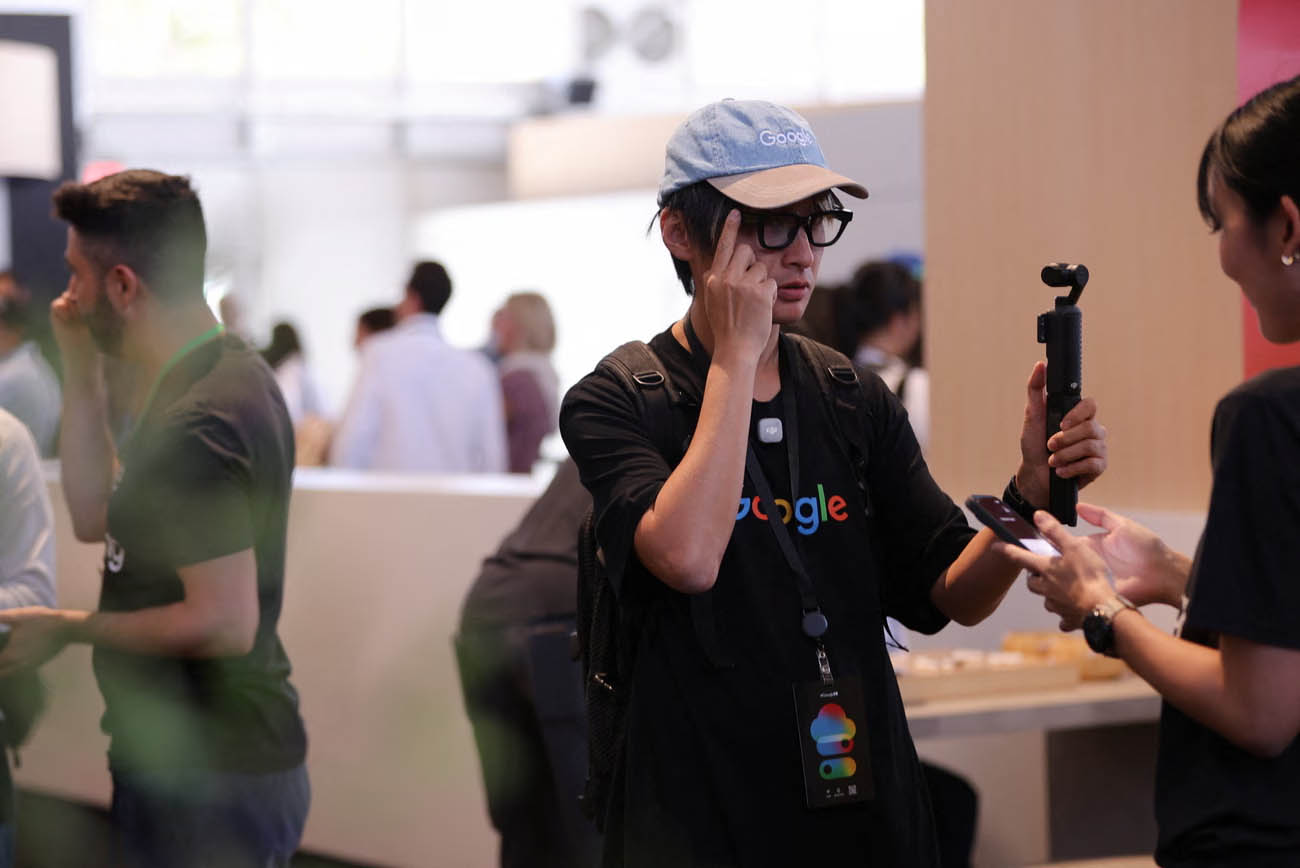
At the annual Google I/O developer conference, executives also announced that smart glasses are back. More than a decade after wearers of the original Google Glass were dubbed "glassholes" and laughed out of San Francisco, the company is partnering with Warby Parker and Gentle Monster to launch voice-activated, camera-equipped eyewear this fall.
But beneath the surface of product launches and optimism, a different story was unfolding 5,000 miles away. Google DeepMind workers in the UK have voted to unionize — the first "frontier" AI lab to seek union recognition — citing profound ethical concerns over a classified Pentagon deal signed just days earlier.
⚡ I/O 2026 AT A GLANCE: Gemini 3.5 unveiled • Search gets AI-first redesign • "Information agents" for Pro/Ultra subscribers • Smart glasses return (Warby Parker + Gentle Monster) • 900M monthly Gemini users • Google DeepMind UK workers unionize over Pentagon deal.
'Google Search Is AI Search': The Biggest Change in 30 Years
"Google Search is AI search," declared Elizabeth Reid, who oversees the product, calling the changes the biggest Google Search had seen in its nearly 30-year history. The updates rolled out globally Tuesday to desktop and mobile versions.
The search box will now accommodate longer, more specific queries — questions more like those people would ask one another than Search's idiosyncratic syntax. Results will resemble visually augmented versions of AI Overviews, the bulleted summary responses that Google Search currently returns. Users can still choose the original version — the classic list of links — by clicking a tab labeled "Web."
Reid said Google Search queries reached an all-time high last month. Since the debut of Search's "AI Mode" a year ago — in which users chat with a Gemini-powered bot rather than navigating to a list of links — queries to the chatbot-specific interface have doubled every quarter. If users add photos, videos or documents to the Chrome browser's search bar, Search will automatically go into AI mode.
— Elizabeth Reid, Google Search product lead
Gemini 3.5: Smarter, Faster, and Now with 'Information Agents'
The overhaul is underpinned by Gemini 3.5, Google's new artificial intelligence model announced the same day. Josh Woodward, who oversees the flagship AI's development, said the goal is "a universal assistant that's personal, proactive, persistent."
Google announced that 900 million people use the Gemini app monthly — still less than ChatGPT's 900 million weekly users, but a significant milestone.
For subscribers to its AI Pro and Ultra plans, Search will include the option to create "information agents" — autonomous AI bots that can perform in-depth research and return summaries or action plans. A "generative user interface" feature will create customized visuals and interactive elements like dashboards based on user requests.
A new agent feature, Gemini Spark, will access information from users' Gmail, Google Calendar and other Google products to perform research, shop, and plan upcoming trips, appointments or recurring tasks. It marks a significant expansion of AI agents beyond tech-savvy, business-focused users to the wider consumer realm.
Glasses Are Back: Warby Parker, Gentle Monster, and a Second Chance
In conjunction with Samsung and eyewear makers Warby Parker and Gentle Monster, Google unveiled "intelligent eyewear" — a line of sunglasses and eyeglasses set to go on sale this fall. The glasses will respond to users' voice commands to Gemini and take photos or videos with embedded cameras.
Fellow tech giant Meta has partnered with EssilorLuxottica to sell similar voice-activated, camera-equipped glasses — the Ray-Ban Meta — since 2021. But Google's history with smart glasses is checkered. In 2014, the company began selling Google Glass for $1,500, inspiring widespread derision. It was shuttered the following year.
In a sign of shifting attitudes, Meta sees its augmented-reality glasses as a major growth area, and Google is working on a second model with an in-lens display, nicknamed Project Aura. Other I/O announcements included AI coding features for Gemini and cybersecurity-focused AI tools.
Behind the Curtain: DeepMind Workers Vote to Unionize
While Google executives celebrated product launches on stage, a different battle was being fought in the UK. Workers at Google DeepMind — the company's AI research laboratory — have voted to unionize, seeking recognition from the Communication Workers Union and Unite the Union as joint representatives.
At least 1,000 workers will be represented if the company recognizes the union, according to union officials. It marks the first time a "frontier" AI lab has sought union recognition.
The timing is significant. Just days before the I/O conference, Google reportedly signed a classified AI deal with the US Pentagon, allowing the military to use Google's AI models for "any lawful government purpose" on classified networks. The agreement requires Google to help adjust its AI safety settings and filters at the government's request.
While the contract includes language stating that the AI system is "not intended for, and should not be used for, domestic mass surveillance or autonomous weapons (including target selection) without appropriate human oversight and control," the agreement also says it does not give Google the right to control or veto "lawful" government operational decision-making.
— Anonymous Google DeepMind worker, UK
'We Don't Want to Facilitate a Genocide': Workers Speak Out
One DeepMind worker, who requested anonymity because of fear of retaliation, said the union drive was driven by reports of the Pentagon deal, pointing to the US's "capricious Iran war" and the Trump administration's feud with Anthropic as indications the defense department was "not a responsible partner."
Another worker said many at the company had struggled with what they viewed as complicity in Israel's war in Gaza. Google provided the Israeli military with increased access to its AI tools from the early days of the war, the Washington Post reported last year, and in 2021 signed a $1.2bn cloud-computing contract with the Israeli government alongside Amazon.
"Our technology helped the IDF," said the second UK worker. "I want AI to benefit humanity, not to facilitate a genocide."
A Google spokesperson told the Guardian: "Google UK recently received a letter from Unite and the Communications Workers Union requesting recognition for Google DeepMind UK employees. At this stage in the process, there has been no vote to unionize. We have always valued constructive dialogue with employees." A union official reiterated that a vote took place and that there may be a separate ballot for recognition in the future should the company refuse to voluntarily recognize the union.
600+ Employees Sign Open Letter to Sundar Pichai
Last week, amid reports of the pending Pentagon deal, more than 600 Google employees signed an open letter to CEO Sundar Pichai, demanding the company not make its AI systems available for classified use.
"We feel that our proximity to this technology creates a responsibility to highlight and prevent its most unethical and dangerous uses," they wrote. "Therefore, we ask you to refuse to make our AI systems available for classified workloads."
Workers who voted to join the union said they want Google to commit not to develop technology "whose primary purpose is to cause harm or injury to people," establish an independent ethics oversight body, and grant workers the individual right to refuse to contribute to projects on moral grounds. Should the company refuse, they said, they are considering protests and "research strikes" — abstaining from work expected to significantly improve core products like Gemini while continuing less significant updates to avoid detection.
Investors have also raised concerns. A coalition of shareholders who own about $2.2bn of Alphabet's shares wrote a letter last week demanding a meeting and greater transparency about Google Cloud and AI deployments in "high-risk" contexts, including Project Nimbus and services to US immigration authorities.
📊 GOOGLE I/O 2026 & DEEPMIND UNION – KEY NUMBERS
- Gemini monthly users: 900 million
- ChatGPT weekly users: 900 million (comparison)
- Google Search queries: All-time high last month
- AI Mode query growth: Doubled every quarter since launch
- DeepMind UK workers represented: 1,000+
- Employees signing open letter to Pichai: 600+
- Shareholder coalition value: $2.2bn in Alphabet shares
- Original Google Glass price (2014): $1,500
- Pentagon AI agreements (2025): Up to $200m each with major labs
The Pentagon Deal: 'Any Lawful Government Purpose'
On Friday, the Pentagon confirmed it had reached agreements with seven leading AI companies: Google, SpaceX, OpenAI, Nvidia, Reflection, Microsoft and Amazon Web Services. Anthropic — whose technology is in wide use by the US military but which has sparred with the Pentagon over future contracts — was notably absent.
"These agreements accelerate the transformation toward establishing the United States military as an AI-first fighting force and will strengthen our warfighters' ability to maintain decision superiority across all domains of warfare," defense department officials said in a statement.
The Trump administration has pushed AI companies to make their tools available on classified networks without the standard restrictions they apply to users. Google's contract reportedly includes non-binding language about not using AI for mass surveillance or autonomous weapons without human oversight. But the agreement also states Google has no right to control or veto "lawful" government operational decision-making.
The Pentagon has said it has no interest in using AI to conduct mass surveillance of Americans or to develop lethal weapons that operate without human involvement, but wants "any lawful use" of AI to be allowed.
This is not Google's first military controversy. In 2018, thousands of employees protested Project Maven, in which Google agreed to build AI products for Pentagon drone footage analysis. The company did not renew the contract in 2019 and published AI principles that included a pledge — since dropped — not to design AI for weapons. Palantir took over Project Maven, which continues today.
Last year, Alphabet lifted its ban on AI for weapons and surveillance, removing language promising not to pursue "technologies that cause or are likely to cause overall harm." AI lead Demis Hassabis said in a blogpost that AI had become important for protecting "national security." Some employees expressed concerns on internal message boards. One asked: "Are we the baddies?" according to Business Insider.
🔍 Google I/O 2026 & DeepMind Union: Q&A / Vizual Guide
❓ What did Google announce at I/O 2026?
Google unveiled the biggest transformation to Search in nearly 30 years, putting AI front and center with Gemini 3.5. New "information agents" can research, shop, and plan trips autonomously. The company also announced smart glasses are back — partnering with Warby Parker and Gentle Monster for a fall launch.
❓ What is Gemini 3.5?
Google's new flagship AI model announced at I/O. It underpins the Search overhaul and enables longer text predictions, "information agents," and a "generative user interface" that creates customized visuals and dashboards. The goal, said Josh Woodward, is "a universal assistant that's personal, proactive, persistent."
❓ How many people use Gemini monthly?
Google announced 900 million monthly active users for the Gemini app. By comparison, ChatGPT has 900 million weekly users — meaning OpenAI's product sees more frequent engagement despite a similar total user base.
❓ What are "information agents"?
Autonomous AI bots available to Pro and Ultra subscribers. They can perform in-depth research, return summaries or action plans, and — through a new feature called Gemini Spark — access Gmail, Calendar and other Google products to shop, plan trips, and manage recurring tasks.
❓ What happened with Google Glass?
Google started selling Google Glass in 2014 for $1,500. It inspired widespread derision — wearers were dubbed "glassholes" — and was shuttered the following year. Now, Google is trying again with partners Warby Parker and Gentle Monster, launching this fall.
❓ Why did Google DeepMind workers vote to unionize?
Workers cited concerns over a classified Pentagon deal signed just days before I/O. They pointed to the US's "capricious Iran war," the Trump administration's feud with Anthropic, and Google's previous work with the Israeli military as reasons the defense department is "not a responsible partner."
❓ What does the Pentagon deal allow?
The classified agreement allows the Pentagon to use Google's AI models for "any lawful government purpose" on classified networks — including mission planning and weapons targeting. It requires Google to help adjust AI safety settings and filters at the government's request.
❓ Does the contract restrict how the military can use Google's AI?
The contract includes non-binding language stating the AI is "not intended for, and should not be used for, domestic mass surveillance or autonomous weapons without appropriate human oversight." However, it also says Google has no right to control or veto "lawful" government operational decision-making.
❓ What did the 600+ employee letter to Sundar Pichai say?
Employees demanded Google refuse to make its AI systems available for classified work. "We feel that our proximity to this technology creates a responsibility to highlight and prevent its most unethical and dangerous uses," they wrote.
❓ What is Project Maven and how is it related?
Project Maven was a 2018 Pentagon contract where Google built AI for drone footage analysis. Thousands of employees protested, and Google chose not to renew the contract. Palantir took over. In 2024, Google dropped its pledge not to design AI for weapons.
❓ What is Project Nimbus?
A $1.2bn cloud-computing contract signed with the Israeli government in 2021, alongside Amazon. Google provided the Israeli military with increased access to its AI tools. In 2024, Google fired 50 workers who protested against the contract.
❓ What do the unionizing workers want?
Workers are demanding Google commit not to develop technology whose "primary purpose is to cause harm or injury," establish an independent ethics oversight body, and grant workers the individual right to refuse to contribute to projects on moral grounds. They are considering "research strikes" if demands aren't met.
❓ How have investors reacted?
A coalition of shareholders owning $2.2bn in Alphabet shares wrote a letter demanding greater transparency about AI deployments in "high-risk" contexts, including Project Nimbus and services to US immigration authorities.
❓ Which other companies signed Pentagon AI agreements?
SpaceX, OpenAI, Nvidia, Reflection, Microsoft and Amazon Web Services. Anthropic was notably absent after sparring with the Pentagon over guardrails against using its AI for autonomous weapons or domestic surveillance.
❓ What did Google's AI lead Demis Hassabis say about national security?
After Alphabet lifted its ban on AI for weapons and surveillance last year, Hassabis wrote that AI had become important for protecting "national security." Some employees responded on internal message boards with questions like "Are we the baddies?"
📊 GEMINI VS CHATGPT – USER COMPARISON (MAY 2026)
Note: ChatGPT's weekly user count indicates higher engagement frequency despite similar total reach.
🔍 GOOGLE SEARCH – 30 YEARS OF EVOLUTION
🏛️ PENTAGON AI AGREEMENTS – WHO SIGNED (MAY 2026)
Anthropic was absent after refusing to remove guardrails against autonomous weapons and domestic surveillance.
✊ DEEPMIND WORKERS' KEY DEMANDS
🚫
No technology whose "primary purpose is to cause harm"
⚖️
Independent ethics oversight body
🙅
Right to refuse projects on moral grounds
📋
Transparency on military contracts
📜 GOOGLE'S AI ETHICS – A SHAKY TIMELINE
2018
Thousands protest Project Maven (drone AI). Google does not renew contract.
2019
Google publishes AI principles — pledges NOT to design AI for weapons.
2021
Project Nimbus ($1.2bn Israel contract) signed.
2024
Google fires 50 workers protesting Nimbus. Alphabet LIFTS ban on AI for weapons.
2026 (April)
Classified Pentagon deal reported. 600+ employees sign open letter.
2026 (May)
DeepMind UK workers vote to unionize — first "frontier" AI lab to seek recognition.
👓 SMART GLASSES – PAST VS PRESENT
Google Glass (2014)
$1,500 price tag
Nicknamed "Glassholes"
Discontinued after 1 year
No mainstream partners
Google Intelligent Eyewear (2026)
Price TBD (fall launch)
Warby Parker + Gentle Monster
Gemini voice integration
Camera + video recording
Meta has sold Ray-Ban smart glasses since 2021 (partner: EssilorLuxottica).
Stay updated with the latest tech trends on our Tech Trends Page.