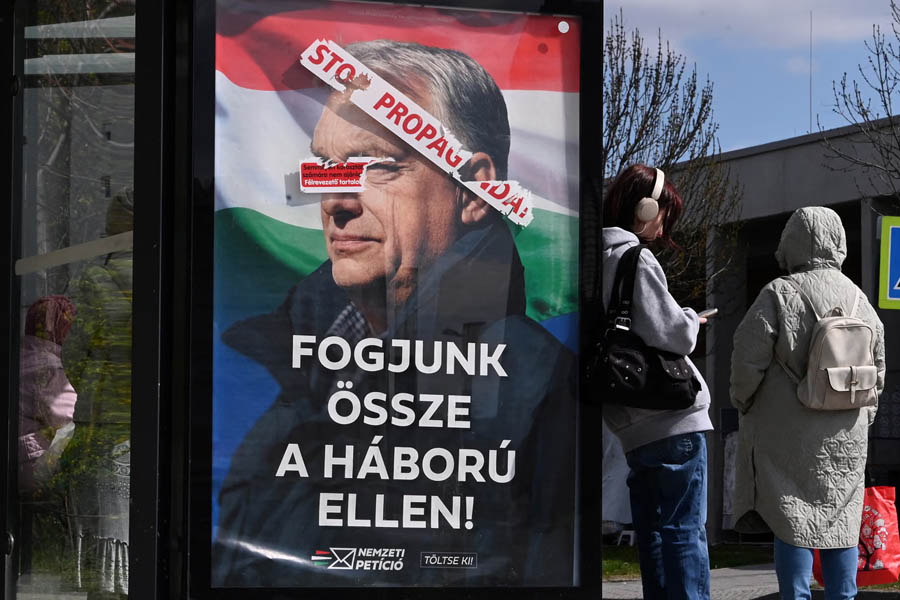
Budapest, Hungary – After 16 years of relentless EU-bashing, Viktor Orbán's message may have finally worn thin. Days before the most consequential election of his long rule, an exclusive poll reveals that an overwhelming majority of Hungarians want a new approach to Brussels – and even nearly half of his own voters agree.
The survey, conducted by the European Council on Foreign Relations (ECFR) thinktank, paints a portrait of a nation ready to turn the page. A nation that no longer sees the European Union as an enemy. A nation that craves change.
Key poll findings:
- 77% of Hungarian voters support EU membership
- 75% "trust" the European Union
- 68% want at least some degree of change in Hungary's EU engagement
- 91% of Tisza party supporters want a new approach to Brussels
- 45% of Fidesz voters also want a reset
- 65% of Fidesz voters support continued EU membership
- 64% of Fidesz voters trust the bloc
- 43% of Fidesz voters back joining the euro (compared to 66% overall)
The Poll That Changes Everything
For years, Orbán has painted the EU as an adversary. A foreign force meddling in Hungary's affairs. An enemy of the Hungarian people. His government has battled Brussels over justice, migration, LGBTQ+ rights, and aid for Ukraine – all while the EU suspended billions in funding.
But the ECFR survey reveals what Orbán may have refused to see: Hungarians do not share his vision.
"The poll shows most Hungarians do not share their prime minister's conception of the EU as an enemy, nor do they align consistently with his other preferences and grievances," said ECFR researchers Piotr Buras and Pawel Zerka.
The authors described a "different Hungary from the one Orbán sells to Europe and his friends around the world" – a Hungary that would give any new government a mandate to strike a "very different approach" to EU relations.
Orbán's Riskiest Election Yet
Sunday's election is unlike any Orbán has faced. His challenger, Péter Magyar of the centre-right Tisza party, leads Fidesz by a double-digit margin in recent polls. EU leaders have largely avoided commenting on the vote to steer clear of accusations of interference – but the stakes could not be higher.
Orbán, once a darling of European far-right movements, now risks becoming a cautionary tale. After 16 years, the man who remade Hungary in his image may finally be shown the door.
And if he goes, Brussels will be watching closely.
Domestic Issues Drive the Vote – Not Brussels
The poll, carried out between 26 March and 1 April, suggests that Hungarians are not voting primarily about the EU. They are voting about their lives.
Asked for the main reason behind their vote choice:
- 40% of Tisza voters said "a desire for change"
- 27% of Fidesz voters said "peace and security"
When asked to name the most important issues facing Hungary:
- Tisza voters chose corruption and governance (31%), public services (18%), and cost of living/inflation (17%)
- Fidesz voters chose energy security (22%) and cost of living/inflation (20%)
The EU was notably absent from their top concerns. But the desire for change – in how Hungary relates to Brussels – remains undeniable.
Ukraine: Where Consensus Breaks Down
If Orbán's anti-EU rhetoric has failed to mobilize his base, his anti-Ukraine messaging has been more effective. The poll reveals deep divisions – but also surprising overlaps.
On Ukraine's EU membership:
- 83% of Fidesz voters oppose Ukraine joining the EU
- Tisza voters are split: 50% oppose, 40% support
On further financial aid to Kyiv:
- 85% of Fidesz voters reject more support
- Tisza voters are divided: 48% in favour, 45% opposed
On perceptions of Russia:
- Only 6% of Fidesz voters see Moscow as an adversary
- 40% of Tisza voters see Russia as an adversary
These splits suggest that even a Tisza victory would not produce a clean break from Orbán's foreign policy legacy – especially on Ukraine.
What a Tisza Victory Would Mean for Brussels
If Péter Magyar emerges victorious, Budapest can be expected to be more cooperative with Brussels. The mandate for change is clear. The appetite for reset is real.
But the poll's authors urge caution.
"Hungary's EU partners would be wise not to expect a complete U-turn on foreign policy," Buras and Zerka warned. "Old habits may die hard concerning Ukraine, given their potential divisiveness among Tisza voters and generally negative opinions among Hungarians."
They also noted that a change of government would first and foremost require "Hungary's own house to be put in order." European leaders, they said, should "work with the new government to establish what the new normal should mean."
The Orbán Era: Sunset or Survival?
Sunday's election will determine whether Orbán's 16-year reign continues – or whether Hungary finally turns the page.
The polls suggest a nation exhausted by confrontation. A people tired of being told that Brussels is the enemy. A electorate that wants electricity, not ideology. Roads, not rhetoric. Healing, not hostility.
Orbán built his career on defiance. But defiance, the poll suggests, may no longer be what Hungarians want.
"The concept of revolutionaries giving up is not part of our vocabulary," Orbán has said in the past. But revolutions end. And voters, ultimately, have the final word.
On Sunday, Hungary will speak. The question is whether Brussels – and the world – will be ready to listen.
Stay updated with the latest world headlines on our World Headlines Page.