20 April 2026 | Tehran / Washington / Islamabad
Tehran, Iran – The ceasefire is gasping for air. And Iran may have just delivered the knockout blow.
State broadcaster IRIB announced Sunday that there are "currently no plans to participate in the next round of Iran-US talks" – a stunning snub to Washington just days before the fragile truce is set to expire.
The announcement came hours after a US destroyer fired on and seized an Iranian ship attempting to evade the American blockade. Tehran has vowed retaliation. The region is holding its breath.
Key developments:
- Iran talks status: "No plans to participate" – state broadcaster IRIB
- Ceasefire expires: Wednesday (just days away)
- US ship seizure: Destroyer fired on and seized Iranian vessel in Gulf of Oman
- Iran retaliation threat: "We will soon respond and retaliate" – Khatam al-Anbiya
- US blockade: Described by Iran as "war crime and crimes against humanity"
- Strait of Hormuz: 20+ vessels crossed Saturday (highest since 1 March)
- War death toll: 5,000+ killed across multiple countries
- Israel-Lebanon: IDF releases map of new deployment line inside Lebanon
"No Plans to Attend": Iran Shuts the Door
The message from Tehran was unambiguous. State broadcaster IRIB, citing Iranian sources, announced that "there are currently no plans to participate in the next round of Iran-US talks."
The Fars and Tasnim news agencies had earlier cited anonymous sources saying "the overall atmosphere cannot be assessed as very positive." They added that lifting the US blockade was a precondition for negotiations – a condition Washington has shown no sign of meeting.
President Donald Trump had ordered US negotiators to travel to Pakistan on Monday, just days before the ceasefire expires on Wednesday. But if Iran refuses to show up, there will be nothing to negotiate.
State-run IRNA pointed to the blockade and Washington's "unreasonable and unrealistic demands," stating that "in these circumstances, there is no clear prospect of fruitful negotiations."
Diplomacy, it seems, is dead. For now.
Ship Seizure: A Dangerous Escalation
The diplomatic collapse was precipitated by a dramatic naval confrontation. A US destroyer fired on and seized an Iranian commercial ship in the Gulf of Oman, according to Iranian state media. The vessel was en route from China to Iran, carrying what Tehran described as legitimate cargo.
Iran's top joint military command, Khatam al-Anbiya, accused the US of violating the ceasefire and vowed retaliation.
"We warn that the armed forces of the Islamic Republic of Iran will soon respond and retaliate against this armed piracy by the US military," a spokesperson said.
The word "piracy" was chosen deliberately. Iran is framing the seizure not as an act of war, but as lawlessness – a distinction that may shape its response.
Blockade: "War Crime and Crimes Against Humanity"
Iran's foreign ministry spokesman Esmail Baghaei escalated the rhetoric further, describing the US blockade of Iran's ports and coastline as an act of aggression that violates the shaky ceasefire.
"By deliberately inflicting collective punishment on the Iranian population, it amounts to war crime and crimes against humanity," Baghaei posted on social media.
The language was striking. "War crime." "Crimes against humanity." These are not terms Tehran uses lightly. They are signals – to the international community, to the UN, and to Washington – that Iran views the blockade as fundamentally illegitimate.
Baghaei's comments came after Iran's renewed threats on shipping, in response to the US blockade, fully reclosed the strategic Strait of Hormuz.
Pezeshkian's Complaint: "Bullying and Unreasonable Behavior"
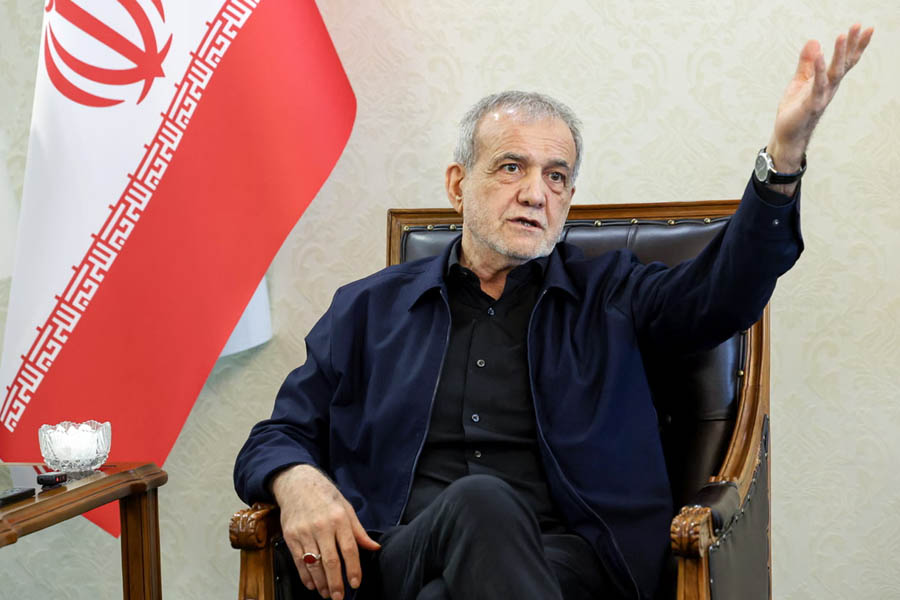
Minutes after the ship seizure was announced, Iranian state media reported on President Masoud Pezeshkian's phone conversation with Pakistani Prime Minister Shehbaz Sharif.
US actions, including "bullying and unreasonable behavior," have led to increased suspicion that the US will repeat previous patterns and "betray diplomacy," the reports cited Pezeshkian as saying.
Iran's foreign minister, Abbas Araghchi, told his Pakistani counterpart on another call that recent US actions, rhetoric, and contradictions were signs of "bad intentions and lack of seriousness in diplomacy."
Pakistan, which has served as the sole mediator between the two countries, did not confirm a second round of talks. However, authorities had begun tightening security in Islamabad – preparations that may now be unnecessary.
The Strait of Hormuz: A Trickle of Traffic
Despite the tensions, more than 20 vessels passed the Strait of Hormuz on Saturday – the highest number of ships crossing the waterway since 1 March, according to data from shipping analytics firm Kpler.
Among the vessels that made it through, five had last loaded cargoes from Iran ranging from oil products to metals. Three are liquefied petroleum gas carriers, with one each heading to China and India.
The strait remains partially open – but the situation is volatile. One military miscalculation could shut it completely, sending oil prices skyrocketing and triggering a global economic crisis.
Israel-Lebanon: New Map, New Tensions
On Israel's northern front, the Israeli military published for the first time a map of its new deployment line inside Lebanon, bringing dozens of mostly abandoned Lebanese villages under its control, days after a ceasefire with Hezbollah took effect.
Thousands of Lebanese have rushed back to their villages in south Lebanon despite the rubble-strewn roads and collapsed bridges, crossing dirt roads and even driving through the Litani River to return to what remains of their homes.
The ceasefire, brokered by the US and agreed to by Israel and Lebanon on Thursday, has held – barely. But the IDF's new map suggests Israel has no intention of withdrawing from captured territory anytime soon.
In a separate incident, the IDF confirmed the authenticity of a photo circulated on Sunday showing a soldier in southern Lebanon smashing a statue of Jesus with a sledgehammer. The military said it would take action against those involved, calling the conduct "wholly inconsistent with the values expected of its troops."
War Death Toll: 5,000 and Climbing
Now in its eighth week, the Iran war has killed more than 5,000 people across several countries, according to the Associated Press.
At least 3,000 people have been killed in Iran, more than 2,290 in Lebanon, 23 in Israel, and more than a dozen in Gulf Arab states. Fifteen Israeli soldiers in Lebanon and 13 US service members throughout the region have also been killed.
The numbers are staggering. And they are climbing.
Vance and the Pope: A Theological Clash?
In a quieter but telling development, US Vice President JD Vance responded to Pope Leo XIV's earlier comments about the Iran war.
"I am grateful to Pope Leo for saying this," Vance wrote on X. "While the media narrative constantly gins up conflict – and yes, real disagreements have happened and will happen – the reality is often much more complicated."
Vance, a recent adult convert to Catholicism, added: "Pope Leo preaches the gospel, as he should, and that will inevitably mean he offers his opinions on the moral issues of the day. The President – and the entire administration – work to apply those moral principles in a messy world."
The comments seemed to soften Vance's earlier criticism of the pope, made just days earlier at a Turning Point USA event, where he warned that "the pope needs to be careful when he talks about matters of theology."
The apparent contradiction suggests the administration is navigating carefully – unwilling to alienate Catholic voters, but also unwilling to cede moral authority to the Vatican.
US Oil Exports: A Wartime Boom
Amid the chaos, the US nearly turned into a net crude exporter last week for the first time since the Second World War, as shipments surged close to a record high to meet demand from Asian and European buyers scrambling to replace Middle East supplies cut by the Iran war.
The war has triggered the largest ever disruption to the global energy market. And American oil producers are cashing in.
The irony is brutal: a war started by the US has disrupted global supplies – and the US is profiting from the void.
What Comes Next?
The ceasefire expires Wednesday. Iran says it will not attend talks. The US has seized an Iranian ship. Tehran has vowed retaliation.
All the ingredients for a catastrophic escalation are now in place.
Diplomacy is not yet dead – but it is on life support. Pakistan's mediators are still working the phones. The UN is pleading for restraint. And ordinary Iranians, Lebanese, and Israelis are bracing for what comes next.
"We will soon respond and retaliate," Iran's military has warned. The question is not whether Iran will act – but how, and when.
Stay updated with the latest world headlines on our World Headlines Page.