6 May 2026 | Tehran / Washington / Beirut / Paris
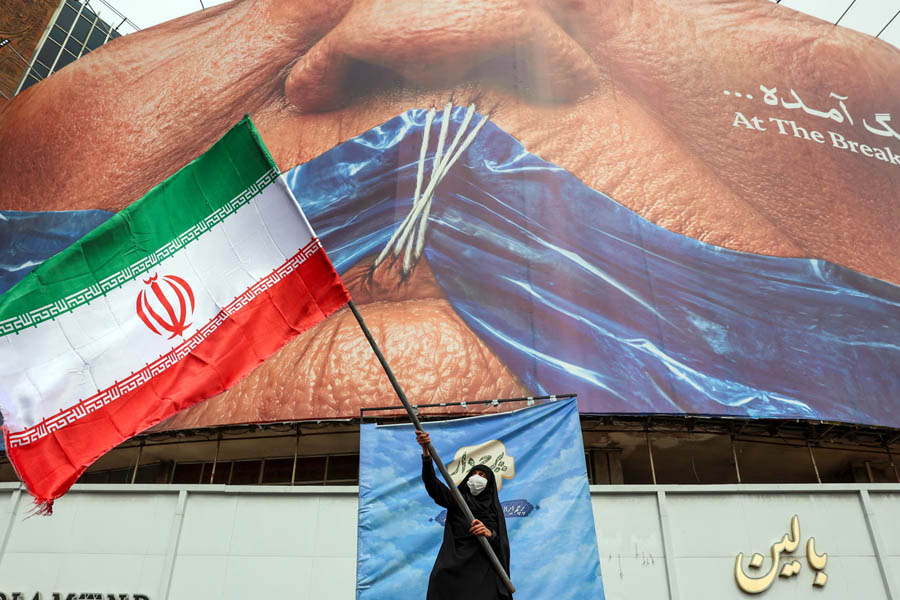
TEHRAN, Iran – The sword is hanging over the Strait of Hormuz. And Donald Trump has made clear who is holding it.
Iran's Islamic Revolutionary Guard Corps (IRGC) navy announced Wednesday that the Strait of Hormuz could reopen following the end of "threats from aggressors." The statement, carried by state media, said safe and stable transit through the key waterway could soon be possible.
But Trump has attached a string to that hope.
"If they don't agree, the bombing starts," the US president wrote on Truth Social. "It will be, sadly, at a much higher level and intensity than it was before."
⚡ THE NUMBERS: 48 hours for Iran to respond • One-page memorandum of understanding proposed • Charles de Gaulle carrier group moving into Red Sea • French vessel attacked in strait • Israeli strikes on Hezbollah continue
"If They Don't Agree, the Bombing Starts": Trump's Ultimatum
In a dramatic social media post, Trump expressed optimism that the Iran war "will be at an end" and the Strait of Hormuz "open to all" if Iran agrees to the US's truce proposal. But he also vowed that the US would resume its bombing campaign "at a much higher level and intensity" than before if Tehran refuses.
"Assuming Iran agrees to give what has been agreed to, which is, perhaps, a big assumption, the already legendary Epic Fury will be at an end, and the highly effective Blockade will allow the Hormuz Strait to be OPEN TO ALL, including Iran," Trump wrote.
Trump later told the New York Post that it was "too soon" to consider face-to-face talks with Tehran as the US waited for a response to its proposal.
— Donald Trump, on Truth Social
IRGC Announcement: "Safe Passage Will Be Ensured"
In a series of posts on social media in Persian and English, the IRGC navy thanked captains and shipowners in the Gulf for "complying with Iran's strait of Hormuz regulations and contributing to regional maritime security."
"With the aggressor's threats neutralised and new protocols in place, safe and stable passage through [the strait] will be ensured," it added.
The statement did not specify what the new protocols entailed, nor did it explicitly commit to reopening the strait. But the timing – coming just after Trump's announcement – was unmistakably significant.
It was the first reaction from Iran after Trump paused his "Project Freedom" military operation to help stranded ships pass through the strait.
One-Page Memorandum: Deal Within 48 Hours?
The US believes it is getting close to an agreement with Iran on a one-page memorandum of understanding to end the war, according to the American news website Axios, citing two US officials and two other sources briefed on the issue.
Axios also reported that both sides have set a framework for more detailed negotiations on Iran's nuclear programme – a key issue at the heart of deadlocked talks between Washington and Tehran.
The US reportedly expects Iran to respond to several key points in the next 48 hours. While nothing has yet been agreed, the sources told Axios this was the closest the parties had been to an agreement since the war began.
Among other provisions, the deal would involve Iran committing to a moratorium on nuclear enrichment, the US agreeing to lift its sanctions and release billions in frozen Iranian funds, and both sides lifting restrictions around transit through the Strait of Hormuz.
Pakistan and Saudi Arabia: Mediators Welcome Progress
Pakistani Prime Minister Shehbaz Sharif said he is "grateful" to Trump for his decision to pause "Project Freedom." Sharif said the decision will lead to a "lasting agreement that secures durable peace and stability" for the region.
"President Trump's gracious response to the request made by Pakistan and other brotherly countries, particularly the Kingdom of Saudi Arabia and my dear brother Crown Prince and Prime Minister of Saudi Arabia H.R.H Prince Mohammed bin Salman, will go a long way towards advancing regional peace," Sharif wrote on X.
Iran's Foreign Minister Abbas Araghchi also spoke on the phone with Saudi Arabia's Foreign Minister Prince Faisal bin Farhan Al Saud, discussing "the continuation of the path of diplomacy and cooperation between regional countries to prevent the emergence and escalation of tension."
French Carrier Deployed: Europe Prepares for Hormuz Mission
France's Charles de Gaulle aircraft carrier group is moving into the Red Sea and Gulf of Aden as part of efforts by France and Britain to prepare for a future mission to help freedom of navigation on the Strait of Hormuz, France's military said on Wednesday.
The French Armed Forces ministry said the aircraft carrier group had crossed the Suez Canal on Wednesday, en route to the south of the Red Sea. The strike group was deployed to the eastern Mediterranean shortly after the US and Israel launched air strikes on Iran, and it can stay at sea for between four to five months.
Meanwhile, French shipping giant CMA CGM confirmed one of its vessels was targeted in an attack while transiting the Strait of Hormuz on Tuesday.
"The CMA CGM San Antonio was the target of an attack yesterday while transiting the strait of Hormuz, resulting in injuries among crew members and damage to the vessel," the shipping company told AFP. The injured crew had been evacuated for medical care.
Israel Strikes Hezbollah: Ceasefire Holds – Barely
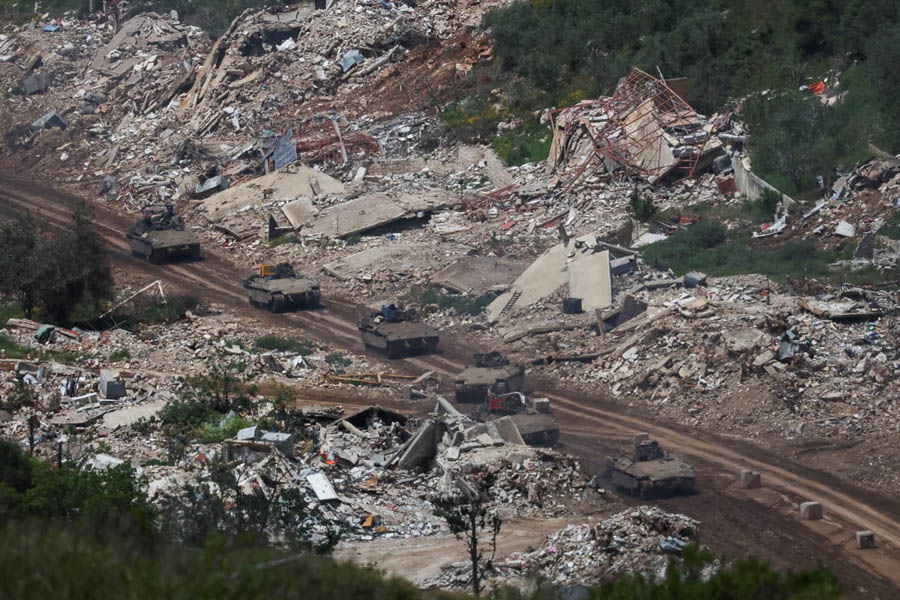
The Israeli military said it has begun striking what it described as Hezbollah infrastructure in several areas of southern Lebanon, despite a ceasefire intended to halt fighting with the Iran-backed militant group.
Earlier, the Israel Defense Forces (IDF) reported "several incidents" during which drones exploded near soldiers operating in Lebanon's south. The strikes also follow a new IDF order affecting a dozen towns and villages in southern Lebanon, forcing more families to flee their homes.
The ceasefire in Lebanon, brokered by the US, has been repeatedly violated by both sides. Israel says it is acting in self-defence; Hezbollah says it will not cease its attacks as long as Israeli troops remain on Lebanese soil.
Spain Seeks EU Action Against US ICC Sanctions
Spanish Prime Minister Pedro Sánchez has asked the European Commission to activate its blocking statute to prevent compliance with US sanctions on the International Criminal Court (ICC) over its investigation into Israel's actions in Gaza.
Spain does not look the other way. Sanctioning those who defend international justice puts the entire human rights system at risk," Sánchez wrote on X. "The EU cannot remain idle in the face of this persecution."
Trump signed an executive order in February last year authorising aggressive economic sanctions against the ICC, accusing the body of "illegitimate and baseless actions" targeting the US and Israel.
📊 MIDDLE EAST CRISIS AT A GLANCE
- Iran response timeline: 48 hours
- Proposed deal: One-page memorandum of understanding
- Key provisions: Nuclear moratorium, sanctions lifted, frozen assets released, strait reopened
- French carrier: Charles de Gaulle entering Red Sea/Gulf of Aden
- French vessel attacked: CMA CGM San Antonio – crew injured
- Israel-Lebanon: Strikes on Hezbollah infrastructure continue
- EU action: Spain seeks blocking statute against US ICC sanctions
What Comes Next?
The next 48 hours will determine whether the Middle East moves toward peace – or toward a deeper war.
Iran has signaled willingness to reopen the strait. Trump has issued his ultimatum. The outlines of a deal exist on paper. But trust between the two adversaries is non-existent, and the consequences of failure are catastrophic.
"If they don't agree, the bombing starts," Trump wrote.
The world waits for Tehran's answer.
Stay updated with the latest world headlines on our World Headlines Page.