Beirut / Tel Aviv – BREAKING
Israel has just carried out its largest attack on Lebanon since the war began. At least 254 dead. 837 wounded. The ceasefire with Iran is now in peril.
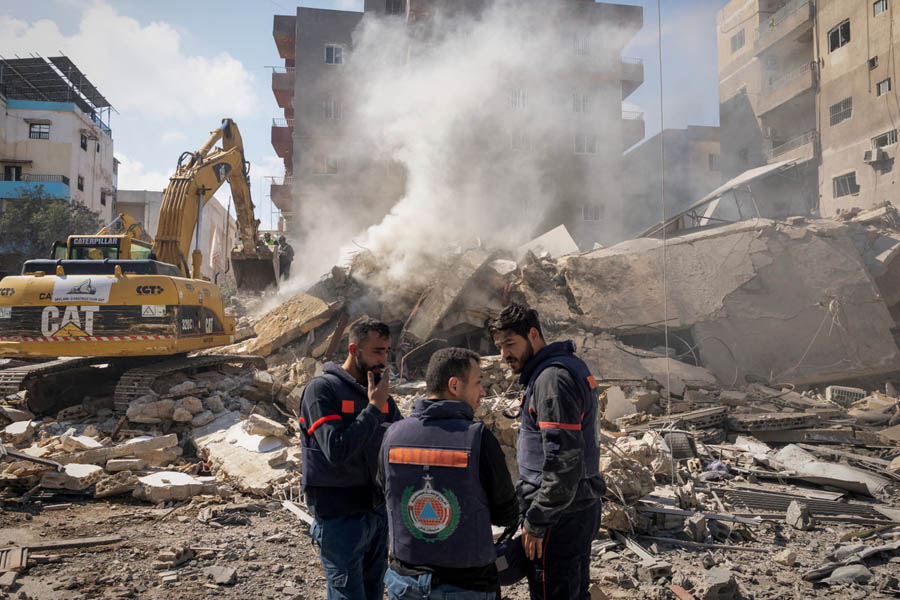
Warplanes levelled buildings in central Beirut. Smoke chokes the sky. Cars lie crushed in flaming streets. First responders are overwhelmed. More than 100 Hezbollah sites hit across Lebanon.
Israel's defence minister calls it "a surprise strike." The people of Beirut call it something else entirely.
Tehran is warning: this ceasefire may not survive the hour.
Key developments:
- At least 254 killed, 837 wounded in largest Israeli attack on Lebanon since war began
- Israel bombs more than 100 Hezbollah military sites across Lebanon
- Warplanes level several buildings in central Beirut
- Iran warns it could pull out of US ceasefire if Israel "persists in violating the truce in Lebanon"
- Netanyahu: Ceasefire does not include Lebanon; Trump calls it "a separate skirmish"
- Hospitals issue urgent calls for blood donations; ministry urges people to "clear the streets"
- UN human rights chief condemns "horrific carnage"
- Red Cross "outraged by devastating death and destruction"
- Israel threatens Hezbollah leader Naim Qassem: "His personal turn will come"
- More than 1.1 million displaced in Lebanon; 1,530+ killed since war began
Beirut Buildings Collapse as Strikes Intensify
The office of Israel's prime minister said the two-week Middle East ceasefire did not include Lebanon, contrary to a statement made by mediator Pakistan – while Trump, after initially remaining silent, said Lebanon was "a separate skirmish" and not part of the deal.
Hospitals in Lebanon put out urgent calls for blood donations, while the ministry of health urged people to "clear the streets" so ambulances could reach the injured. People rushed home to check on their families. A man was filmed as he ran towards a struck building in the Chiyah neighbourhood, screaming: "There are people inside!" Pictures of rubble-covered children circulated on social media as people tried to find their parents.
"I have a friend in this building – Mahmoud. I don't know where he is. He's not answering his phone. We need to stop this war, it's getting ridiculous," said Shaden Fakih, a 24-year-old calisthenics trainer who was present when an Israeli strike brought down a building in the Barbour neighbourhood of central Beirut.
Iran Threatens Ceasefire Withdrawal
Iranian sources told Iran's Tasnim news agency that the country was ready to exit the ceasefire agreement if Israel "persists in violating the truce in Lebanon," and the crisis was discussed by Iran's foreign minister and his Pakistani counterpart.
Israel Katz, the Israeli defence minister, said the two theatres – Iran and Lebanon – were separate and that the aim was to "change the reality in Lebanon and remove threats from the residents of the north."
The Israeli politician went on to directly threaten Hezbollah's leader. "We warned Naim Qassem that Hezbollah will pay a very heavy price for attacking Israel on Iran's behalf – and Naim Qassem's personal turn will come too," he said.
Israel Threatens Deeper Strikes in Beirut
The Israeli military's Arabic language spokesperson suggested Israel would begin striking deeper in Beirut, having previously confined most of its strikes to the southern suburbs, where support for Hezbollah is common. The spokesperson said Hezbollah was "repositioning itself" in mixed neighbourhoods of the city and vowed to pursue Hezbollah fighters no matter their location.
Shortly after the statement, Israel brought down another building in the Tallet al-Khayet neighbourhood of west Beirut, which had not yet been hit in this war.
The suggestion that strikes could hit anywhere in Beirut terrified the city's residents. "Where can I go? All of Lebanon is being struck. [Israel] finished with Iran and now they want to start with us," a resident present at the time of the Barbour strike said, asking not to be identified.
International Condemnation
The scale of Wednesday's strikes were condemned as "horrific" by the UN human rights chief, Volker Türk. "Such carnage, within hours of agreeing to a ceasefire with Iran, defies belief. It places enormous pressure on a fragile peace, which is so desperately needed by civilians," he said.
The Red Cross said it was "outraged by the devastating death and destruction" in densely populated areas across Lebanon, adding that the country had been once again plunged into "panic and chaos."
Trump said he was aware of the Israeli bombing, and said Lebanon was "not included in the deal" because of Hezbollah. Asked if the Israeli attacks were acceptable to him, the US president said it was "a separate skirmish."
Hezbollah Silent Since Ceasefire Announcement
Until the wave of airstrikes by Israel across Lebanon on Wednesday, Hezbollah had not announced any attacks against Israel since the ceasefire announcement – a first since the war between it and Israel began on 2 March.
Initially Shehbaz Sharif, the prime minister of Pakistan, said Iran, the US and their allies had "agreed to an immediate ceasefire everywhere including Lebanon and elsewhere" as he announced the ceasefire overnight.
Highways leading south in Lebanon were choked with traffic as dawn broke. Residents were attempting to return to their homes, though Hezbollah urged people not to return to certain villages because Israeli troops remained there.
Iran's 10-Point Plan and Netanyahu's Response
There were signs on Tuesday that the wider diplomatic conversation, mediated in Pakistan between the US and Iran, had come to a conclusion without Israel's immediate input. Trump called Netanyahu to inform the Israeli leader of his decision shortly before making his ceasefire announcement.
The Israeli opposition leader Yair Lapid said Netanyahu had failed politically and strategically. "There has never been such a political disaster in all of our history. Israel wasn't even at the table when decisions were made concerning the core of our national security," he posted in the morning.
Iran's 10-point peace plan, nominally accepted as a basis for negotiations by Trump, called for an end of the war against "all components of the 'axis of resistance'," which, for Tehran, includes Hezbollah.
Later on Wednesday Netanyahu said Israel remained prepared to confront Iran if necessary, as it still had "objectives to complete," with the military saying it continued to pursue the goal of "disarming" Hezbollah in Lebanon.
Lebanon at Breaking Point
The five-week war in Lebanon has brought the country to breaking point. More than 1.1 million people have been forcibly displaced, many of whom are left living on the streets. More than 1,530 people had been killed and 4,812 wounded by Israeli airstrikes, Lebanon's ministry of health said on Tuesday.
Several air raids on Israel took place in the first part of the night but stopped shortly before 3.30am, about 40 minutes after the Pakistani prime minister's ceasefire announcement. No incoming attacks have been reported since.
Stay updated with the latest world headlines on our World Headlines Page.