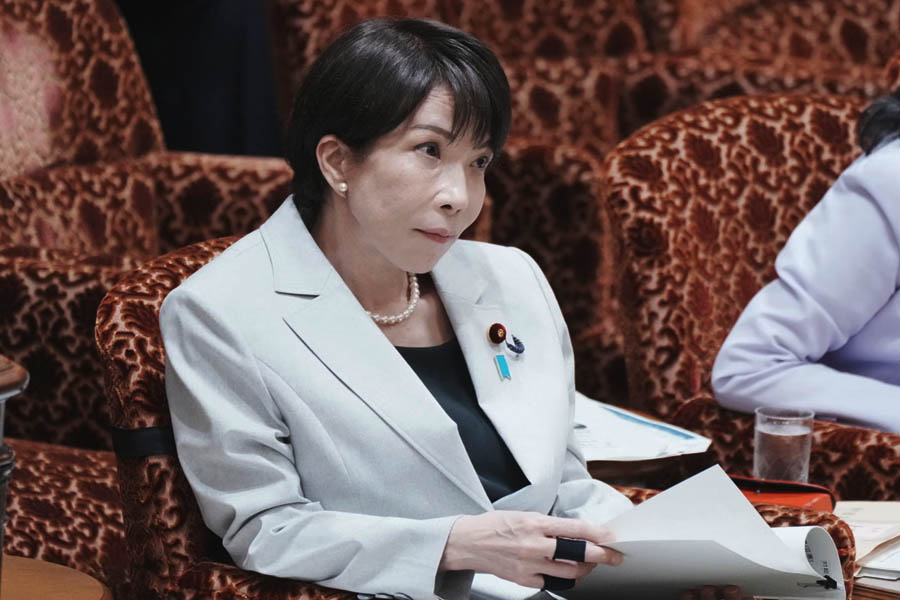
Tokyo, Japan – Japan will release an additional 20 days' worth of oil reserves starting in May, Prime Minister Sanae Takaichi announced Friday, as the Middle East war continues to choke global energy supplies. The move comes as the IMF warned it will slash global growth forecasts and prepare up to $50 billion in emergency aid – and as all eyes turn to high-stakes US-Iran talks in Islamabad this weekend.
Japan, which depends on the Middle East for roughly 95% of its oil, is scrambling to secure alternative supply routes. The new release is on top of existing reserves already being deployed under a 50-day plan that began March 16.
Key market developments:
- Japan: Additional 20-day oil reserve release from May
- Japan reserves: 230 days total (143 days in public stockpile)
- Brent crude: Up 1% to $96.83/barrel
- Asian stocks: Tokyo, Hong Kong, Seoul, Shanghai, Taipei all rose 1%+
- S&P 500: Rose 0.6% on Thursday
- IMF warning: Will lower global growth forecasts
- IMF aid estimate: $20-50 billion for affected countries
- Food insecurity: At least 45 million people affected
Japan Diversifies: From Malaysia to Brazil to Nigeria
Speaking after a cabinet meeting, Takaichi revealed that by May, Japan should be able to secure more than half of its oil imports via routes that avoid the Strait of Hormuz – the critical waterway that Iran has effectively blockaded since the war began.
She did not name specific alternative sources, but confirmed that Japan has contacted suppliers across the globe:
- North America: United States
- Asia: Malaysia
- Central Asia: Azerbaijan, Kazakhstan
- Latin America: Brazil, Argentina, Ecuador, Colombia, Mexico
- Africa: Nigeria, Angola
The government has also asked suppliers to sell fuel directly to critical sectors – including healthcare, transportation, agriculture, green tea producers, livestock, and fisheries.
As of 6 April, Japan had enough oil for 230 days in its reserves, including 143 days' worth in its public stockpile. The new 20-day release is designed to ensure stable domestic supply as the crisis deepens.
Markets Hold Their Breath: Stocks Rise, Oil Nudges Higher
Global markets extended their gains on Friday, with investors clinging to optimism about the fragile US-Iran ceasefire ahead of weekend talks in Islamabad.
In early trading across Asia:
- Tokyo rose 1%+
- Hong Kong rose 1%+
- Seoul rose 1%+
- Shanghai rose 1%+
- Taipei rose 1%+
- Singapore and Manila also posted strong gains
- Sydney slipped slightly
The gains followed a second healthy run on Wall Street, with the S&P 500 rising 0.6% on Thursday.
Brent crude climbed 1% to $96.83 a barrel as trading resumed in Asia – a sign that markets remain deeply nervous about supply disruptions despite the ceasefire.
IMF: "Scarring Effects" Ahead, Even in Best Case
The International Monetary Fund will slash its global growth forecasts due to the Middle East war, its managing director Kristalina Georgieva warned Thursday – even as a fragile ceasefire holds.
"Even in a best case, there will be no neat and clean return to the status quo ante," Georgieva said.
She warned that spiralling energy costs, infrastructure damage, supply disruptions, and a loss of market confidence meant growth would be lower than expected – even in the IMF's "most hopeful scenario."
The fund anticipates having to provide up to $50 billion in immediate financial assistance to countries affected by the war. Food insecurity is set to affect at least 45 million people.
"Given the spillovers from the war, we expect near-term demand for IMF balance-of-payments support to rise by somewhere between $20 billion and $50 billion, with the lower bound prevailing if the ceasefire holds," Georgieva said.
South Korea Sends Envoy to Iran as Hormuz Crisis Deepens
South Korea announced Friday that senior diplomat Chung Byung-ha will depart soon for Iran as a special envoy to discuss the safety of South Korean citizens and Iran's chokehold on the Strait of Hormuz.
The foreign ministry said Chung plans to push for freedom of navigation for all vessels, including those flying the South Korean flag. The ministry earlier said Iranian Foreign Minister Abbas Araghchi welcomed Seoul's plan to send a special envoy during a phone call with South Korean Foreign Minister Cho Hyun on Thursday.
The move underscores growing international alarm over Iran's blockade, which has strangled global energy supplies and sent governments scrambling for alternatives.
Ceasefire Strain: Trump Accuses Iran of Breach
The fragile ceasefire showed further strain on Friday, just one day before delegations from both countries are due to meet in Pakistan.
Donald Trump accused Iran of breaching promises on the Strait of Hormuz in a late-night social media post Thursday. "Iran is doing a very poor job of allowing oil to go through the strait," Trump wrote. "That is not the agreement we have!"
There is no sign Iran is lifting its near-total blockade. Tehran has cited Israel's ongoing attacks on Lebanon – including the heaviest strikes of the war on Wednesday – as a key sticking point.
In the first 24 hours of the ceasefire, which Trump announced Tuesday, just a single oil products tanker and five dry bulk carriers sailed through the strait. Before the war, the waterway typically carried a fifth of the world's oil and LNG flows – around 140 ships a day.
Trump Optimistic, Netanyahu "Low-Key"
Despite the tensions, Trump told NBC News he is "very optimistic" a peace deal with Iran is within reach. Iran's leaders "talk much differently when you're at a meeting than they do to the press," he said. "They're much more reasonable."
Trump also confirmed he had asked Benjamin Netanyahu to be "more low-key" in Lebanon to help ensure the success of the upcoming US-Iran negotiations.
"I spoke with Bibi and he's going to low-key it," Trump said. "I just think we have to be sort of a little more low-key." He added that he believed Israel was "scaling back" its operations in Lebanon.
Netanyahu, however, struck a different tone. He said he had instructed his cabinet to begin direct negotiations with Lebanon aimed at disarming Hezbollah – while insisting that "there is no ceasefire" in Lebanon and that Israel will "continue to strike Hezbollah with force."
Hours later, Israel launched a fresh wave of strikes against what it called "Hezbollah launch sites" in Lebanon. Hezbollah responded with a rocket salvo toward northern Israeli settlements.
Iran: "Lebanon Is Inseparable" from Ceasefire
Iran's President Masoud Pezeshkian said Israeli strikes on Lebanon violate the ceasefire agreement and would render negotiations meaningless, adding that Iran would not abandon the Lebanese people.
Parliament speaker Mohammad Bagher Ghalibaf went further, declaring that Lebanon forms "an inseparable part of the ceasefire" deal. In a post on X, he said "there is no room for denial and backtracking."
UK Prime Minister Keir Starmer also weighed in, saying Israel's continued attacks on Lebanon "shouldn't be happening." He dismissed Vance's suggestion of "a legitimate misunderstanding," calling the issue "a matter of principles as far as I'm concerned."
Khamenei Vows "Revenge" and Hormuz Escalation
In a dramatic statement read on state TV, a statement attributed to Mojtaba Khamenei – Iran's acting supreme leader after his father's assassination on the first day of the war – said Iran will take management of the Strait of Hormuz into a "new phase," without elaborating.
He also vowed that Iran remains determined to "take revenge" for his father and all those killed in the war.
"We will certainly demand compensation for each and every damage inflicted, and the blood price of the martyrs and the compensation for the wounded of this war," he said.
What Comes Next?
All eyes now turn to Islamabad, where JD Vance will lead the US delegation into high-stakes talks with Iran on Saturday. The ceasefire holds – barely. Markets are watching. The IMF is bracing. And Japan is stockpiling oil from every corner of the globe.
One thing is certain: the next 48 hours will determine whether the world edges back from the brink – or plunges deeper into crisis.
Stay updated with the latest global markets headlines on our Business Headlines Page.