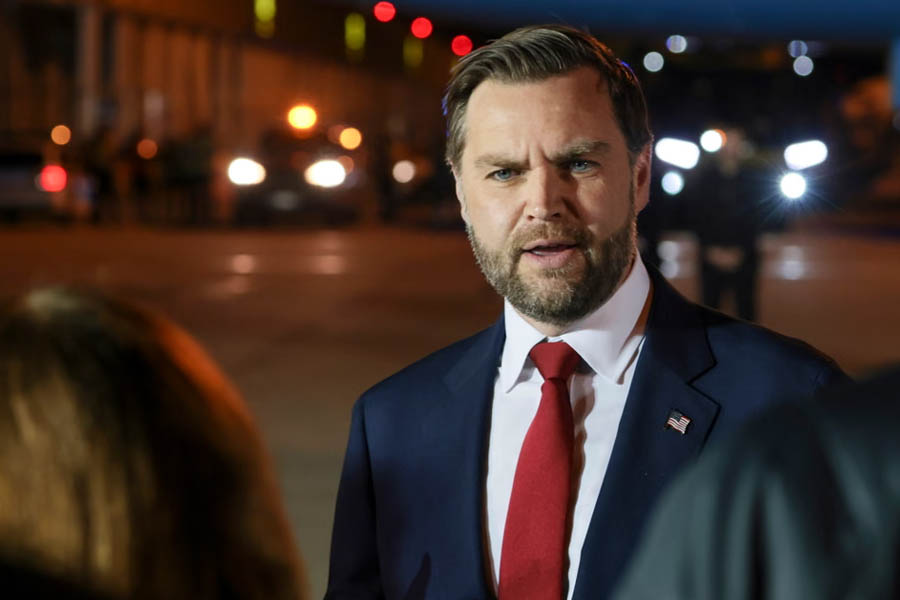
Islamabad, Pakistan – The streets of Islamabad are empty. The army controls every major intersection. A public holiday has been declared. And at the center of it all, Vice President JD Vance is about to step onto the biggest stage of his political life.
With orders from Donald Trump, the 41-year-old vice president arrives in Pakistan this week with a single mission: turn the shaky, two-week Iran ceasefire into a lasting peace deal. The man widely regarded as a leading contender for the 2028 Republican presidential nomination now finds himself as Trump's diplomatic closer – a role no vice president in modern history has ever played.
"I cannot think of a case where the vice president ran formal negotiations like this," Aaron Wolf Mannes, a lecturer at the University of Maryland School of Public Policy and an expert on the American vice presidency's role in foreign policy, told AFP. "This is high risk, high reward."
Key developments:
- Vance leads US delegation to Islamabad for historic Iran peace talks
- Talks begin Saturday as two-week ceasefire hangs by a thread
- Pakistan on lockdown: army deployed, public holiday declared, streets empty
- Vance built brand as anti-interventionist – now he must close a war deal
- New York Times: Vance argued against Iran war behind closed doors
- Iran insists Lebanon must be included; US says it's "separate"
- Pakistan claims it stopped Iran retaliating against Israeli strikes on Lebanon
- Serena hotel cleared; 3km security cordon around potential venues
The Anti-War VP Turned Diplomatic Closer
JD Vance built his political brand as an avowed anti-interventionist. He wanted to keep America out of foreign wars. He argued against military action. But then Trump launched the Iran war – and Vance found himself in an impossible balancing act.
The New York Times reported this week that in closed-door discussions before the war, Vance argued forcefully against military action, warning it could cause regional chaos and split Trump's Maga coalition. Yet now, he is Trump's man in Islamabad.
"If he can get something that papers it over without dealing with real issues, that's probably enough," Mannes said. "But if nothing good comes of this, it raises questions about his competence, which is not going to help him electorally. And of course Rubio's right there as a potential rival for 2028."
Vance will be accompanied by special envoy Steve Witkoff and Trump's son-in-law Jared Kushner – both familiar faces in Middle East diplomacy. But the spotlight belongs to Vance.
Why Vance? Iran May See a Partner
One theory explains why Trump chose Vance for this mission: the Iranians may view him as a more likely partner for diplomacy. His widely reported opposition to the war and his general skepticism about US interventionism could make him palatable to Tehran.
If true, it is a remarkable twist. The man who tried to stop the war is now responsible for ending it.
Islamabad on Lockdown: A Capital Held Hostage by Hope
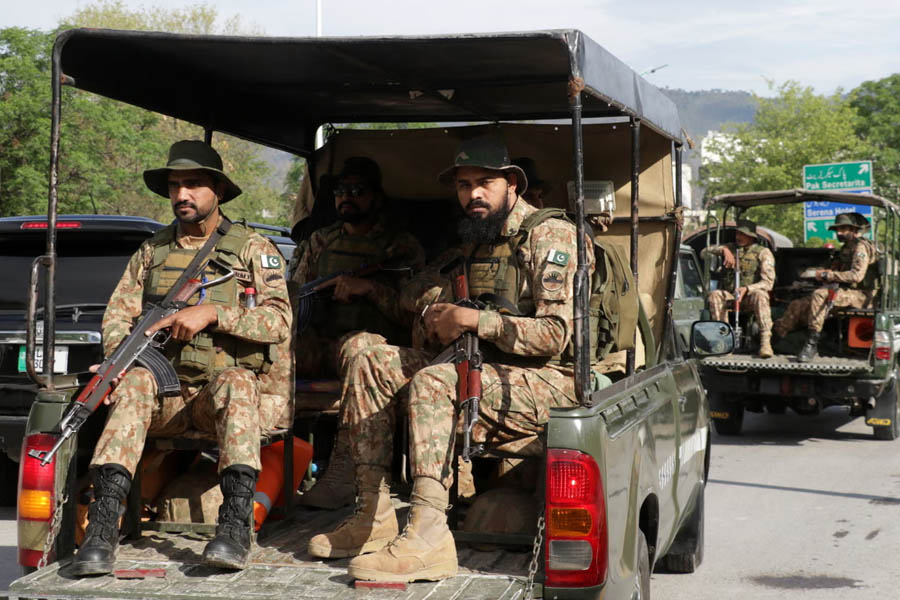
In Pakistan's capital, preparations are nothing short of extraordinary. Army personnel and paramilitary rangers have been deployed across the city. A public holiday was declared for Thursday and Friday. The streets are eerily empty – a ghost town under the shadow of history.
Officials have lined up three to four possible venues for the talks, citing high security risks. The most likely location: the exclusive five-star Serena Hotel, which has been cleared of all guests. A 3-kilometer perimeter around the hotel has been shut off to cars and placed under army control. Other potential venues include the prime minister's secretariat, Islamabad's convention centre, or a secure military location.
Guests evicted from the Serena on Wednesday were told the hotel would remain occupied until Sunday night. There is no set timeline for how long the talks will last.
The Ceasefire That Almost Wasn't
The conflict began when Israel and the US attacked Iran in late February. Thousands are dead. Global economies have been devastated. Iran's retaliatory blockade of the Strait of Hormuz – the world's most critical shipping route – triggered a global shortage of oil and gas and unleashed the worst energy crisis in history.
It was Pakistan's mediation efforts on Tuesday night that finally pushed the two warring countries to agree to a two-week ceasefire. Trump had threatened that a "whole civilisation will die" if Iran did not meet his demands. Then, at the 11th hour, Pakistan brokered a truce.
But the ceasefire is fragile. Critically, Iran and Pakistan stated that the ceasefire included Lebanon. The US and Israel insist it does not. While Vance prepares for talks, Israeli bombs continue to fall on Beirut. At least 254 people have been killed in Lebanon since the ceasefire was announced.
Iran's president, Masoud Pezeshkian, has said that any peace negotiations would be "meaningless" if they took place as bombs continued to fall on Lebanon.
Pakistan: The Unlikely Mediator
According to Iran's deputy foreign minister Saeed Khatibzadeh, Pakistan's interventions have continued behind the scenes. Khatibzadeh claimed that Pakistan had intervened to stop Iran retaliating against the Israeli strikes on Lebanon – a stunning assertion that underscores Islamabad's growing diplomatic weight.
"Our priority is that the talks go smoothly," one Pakistani official involved in the arrangements told reporters. "We don't want to be seen as a spoiler. Our role is as a facilitator and mediator. We will leave it to both parties, Iran and the US, to share any developments with the media if they want."
The official confirmed that key delegations were due to arrive on Thursday night and Friday morning.
Who Is Coming: The Delegations
United States:
- Vice President JD Vance (lead negotiator)
- Special Envoy Steve Witkoff
- Jared Kushner (Trump's son-in-law and senior adviser)
Iran:
- Foreign Minister Abbas Araghchi
- Parliament Speaker Mohammad Bagher Ghalibaf
- Senior figures from Iran's Revolutionary Guard
Also attending (sideline talks):
- Delegations from Gulf countries including Qatar and Saudi Arabia
The Stakes Could Not Be Higher
For Vance, this is a career-defining moment. Success could cement his status as Trump's heir apparent and a formidable 2028 contender. Failure could raise questions about his competence – and open the door for rivals like Marco Rubio.
For the world, the stakes are even higher. The war has already caused catastrophic human and economic damage. A lasting peace could restore stability to global energy markets. A collapse could mean a return to all-out war – with Lebanon as the immediate flashpoint.
For Pakistan, hosting these talks is a diplomatic triumph – but also a tremendous risk. Islamabad has positioned itself as the indispensable mediator. If the talks fail, that reputation could crumble.
In a meeting on Thursday between Prime Minister Shehbaz Sharif and Pakistan's army chief Asim Munir – the man credited with helping broker the ceasefire – the pair "expressed satisfaction over the de-escalation achieved so far."
What Happens Next?
Talks begin Saturday in Islamabad. No one knows how long they will last. The ceasefire is set for two weeks – but the clock is already ticking.
Vance will walk into the Serena Hotel with Trump's orders, his own anti-war conscience, and the weight of a region on his shoulders. Behind him: a capital on lockdown, a world watching, and a 2028 election that may hinge on what happens in the next few days.
"High risk, high reward," Mannes said. For JD Vance, there is no middle ground.
Stay updated with the latest world headlines on our World Headlines Page.