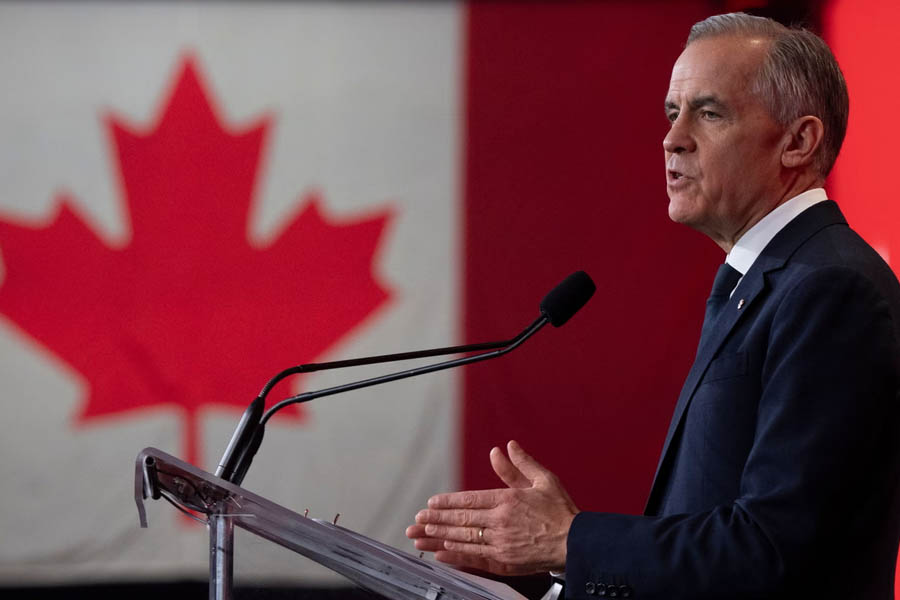
14 April 2026 | Ottawa, Canada
Ottawa, Canada – When Mark Carney took office leading a minority government, political observers predicted a short, turbulent tenure. Minority governments in Canada rarely last two years. They are fragile creatures, dependent on opposition goodwill, vulnerable to collapse at any moment.
But Carney, the former central banker who never held elected office before becoming prime minister, has done something extraordinary. He has secured a parliamentary majority.
Following key special election victories, Carney's Liberal Party now holds 172 seats in the 343-seat House of Commons – enough to govern alone, without opposition support. The win marks a significant political milestone, allowing his administration to govern decisively and plan for the long term.
Key Outcome:
- Liberal seats: 172 of 343 (majority control)
- Opposition defections: 5 MPs joined Liberals in past 5 months
- Latest defector: Marilyn Gladu (longtime Conservative)
- Government stability: Can now govern until 2029
- Historical precedent: Only Macdonald and Chrétien saw more crossovers
Special Elections Deliver Crucial Victory
Three special elections were held across Ontario and Quebec, with two districts traditionally favoring the Liberal Party. Among them, the Liberals successfully retained the important riding of University–Rosedale – a seat with symbolic and strategic weight.
This riding was previously held by former Deputy Prime Minister Chrystia Freeland, who stepped down after taking on a new advisory role in Ukraine. Freeland's departure had left a vacancy that could have been vulnerable. Instead, the Liberals held firm.
The remaining two election results were still being finalized at the time of reporting, but the majority was already secured. The math was done. The milestone was reached.
Stronger Legislative Power: No More Opposition Dependency
With a majority government in place, Carney can now pass legislation without needing votes from opposition parties. This represents a seismic shift from the past year, during which the Liberals relied on selective support from the Conservatives for economic and trade policies.
Every bill required negotiation. Every budget was a battlefield. Every opposition party held leverage over the government's survival. That era is now over.
Political analysts note that this majority significantly enhances Carney's governing flexibility and long-term planning capacity. "He is no longer looking over his shoulder," said one Ottawa-based commentator. "He can actually govern."
Leadership Stability Until 2029
A majority government also gives Carney the authority to determine the timing of the next federal election, potentially allowing his administration to remain in power until 2029. In Canadian politics, that is an eternity.
Minority governments in Canada often face instability and risk early elections, typically lasting less than two years. Carney has now removed that uncertainty entirely. The prime minister who was supposed to be a caretaker is now building a legacy.
Political Momentum and Party Defections: The Carney Magnet
Carney's leadership has been further strengthened by a wave of political defections that has stunned Ottawa. Over the past five months, five opposition legislators have crossed the floor to join the Liberal Party.
"Pulling people from such diverse political origins while leading a minority parliament is almost unprecedented," one political commentator said. The only historical precedents for such crossover support are the administrations of Sir John A. Macdonald – Canada's first prime minister – and Jean Chrétien, who led the Liberals through the 1990s.
Most recently, longtime Conservative politician Marilyn Gladu joined the Liberals, citing the need for strong leadership amid economic uncertainty and rising tensions linked to US tariffs. Gladu, a respected voice in Conservative circles, called Carney "the steady hand Canada needs right now."
Her defection sent shockwaves through the Conservative Party, already reeling from its inability to capitalize on Liberal minority fragility.
Economic Challenges and Trade Tensions
Carney has emphasized that a majority government is essential to address ongoing economic challenges – particularly the trade tensions with the United States that began during Donald Trump's administration and have continued to simmer.
As a former Governor of the Bank of Canada and the Bank of England, Carney brings economic credentials that no other Canadian prime minister has ever possessed. Experts suggest that his background and leadership style have reassured many Canadians during this period of uncertainty.
"When markets are volatile and trade wars threaten, you want a banker in charge," said one financial analyst. "Carney is uniquely qualified for this moment."
Shifting Political Priorities: From Trudeau to Carney
Unlike his predecessor Justin Trudeau, whose government focused on social reforms such as Indigenous reconciliation, minority rights, and immigration, Carney is taking a more centrist approach.
His administration is prioritizing economic stability and national resilience in the face of global disruptions. The shift reflects not just Carney's personal priorities, but a broader recalibration of Canadian politics after nearly a decade of Trudeau-era progressivism.
"Trudeau governed from the left," said one political scientist. "Carney is governing from the center. And so far, Canadians seem to appreciate the balance."
Public Support and Future Outlook
Recent polling indicates strong public confidence in Carney's leadership. More than half of Canadians prefer him as prime minister, significantly ahead of Conservative leader Pierre Poilievre – a deficit that has Conservative strategists deeply worried.
"Carney has shown Canadians he's a competent manager of both the economy and the country," noted a political analyst from the University of Toronto. "In uncertain times, that competence matters more than ideology."
For Poilievre, the path to power has suddenly become much steeper. The Conservatives had been preparing for a potential snap election triggered by minority collapse. That scenario is now off the table. Instead, Carney controls the calendar – and he has every reason to wait.
A New Era in Canadian Politics
Mark Carney's majority government marks a turning point in Canadian politics. The former central banker who entered politics as a novice has proven to be a surprisingly adept political operator.
With strengthened authority, increased political stability, and growing public support, his administration is well-positioned to navigate economic turbulence and shape Canada's future through the remainder of the decade.
The minority government that was supposed to collapse has not only survived – it has thrived. And Mark Carney, the unelected prime minister who became elected, then minority, then majority, has written one of the most remarkable chapters in modern Canadian political history.
Stay updated with the latest world politics headlines on our Politics Headlines Page.