16 May 2026 | Berlin / Washington / Würzburg
WÜRZBURG, Germany – The man who was supposed to be Europe's Trump-whisperer has finally snapped. And the fallout is shaking the transatlantic alliance to its core.
Friedrich Merz, the German chancellor, has said he would not advise his children to study or work in the United States in the current climate – a stunning rebuke from a conservative leader long viewed as a transatlanticist.
"I am a great admirer of America. At the moment my admiration is not growing," Merz told a conference of young Catholics in Würzburg, citing the quickly changing "social climate" in the deeply polarised country.
"I would not advise my children today to go to the US, get educated there or work there, simply because a certain social climate has suddenly developed there."
⚡ THE NUMBERS: 36,000 US troops in Germany (5,000 to be withdrawn) • 25% tariff on EU cars • 5% GDP defence spending pledge • 1 year anniversary of Merz's chancellorship • 1,000+ Patriot interceptors used against Iran
"Trump Derangement Syndrome": The Furious Response
The remarks immediately drew a furious response from Trump's camp. Richard Grenell, a longtime Republican foreign policy adviser who served as ambassador to Germany during Trump's first term, posted on X: "@_FriedrichMerz has become the European President of the TDS Society," referring to so-called Trump derangement syndrome.
Grenell said that when Merz met Trump at the White House, most recently in March, he was "completely soft and complimentary," and said Friday's comments contradicted that conciliatory approach. "Germans have a leader who has no strategy – and is completely controlled by the German woke media."
The German far-right leader Alice Weidel, whose anti-immigration, pro-Kremlin Alternative für Deutschland party has been supported by members of Trump's Maga movement, also commented. "Merz advises against travelling to the US due to the 'political climate'. Ironically, it is a chancellor who is deliberately leading his own country towards social and economic ruin who is now pointing the finger in warning," she wrote. "This is not in Germany's interests."
— Friedrich Merz, German Chancellor
The Rupture: How We Got Here
What began as a spat over the Iran war is rapidly turning into a historic rupture between Germany and the US. The conflict started when Merz remarked to an audience of secondary school students that the Iranians "are obviously very skilled at negotiating, or rather, very skilful at not negotiating, letting the Americans travel to Islamabad and then leave again without any result."
"An entire nation," he concluded, "is being humiliated by the Iranian leadership."
It was an unexpected moment of truth-telling – one that may turn out to be rather costly. Merz has replaced Pope Leo as the favourite target of Trump's late-night social-media invective. The chancellor, Trump posted, "doesn't know what he is talking about", is "totally ineffective", is presiding over a "broken country" and presumably "thinks it's OK for Iran to have a nuclear weapon."
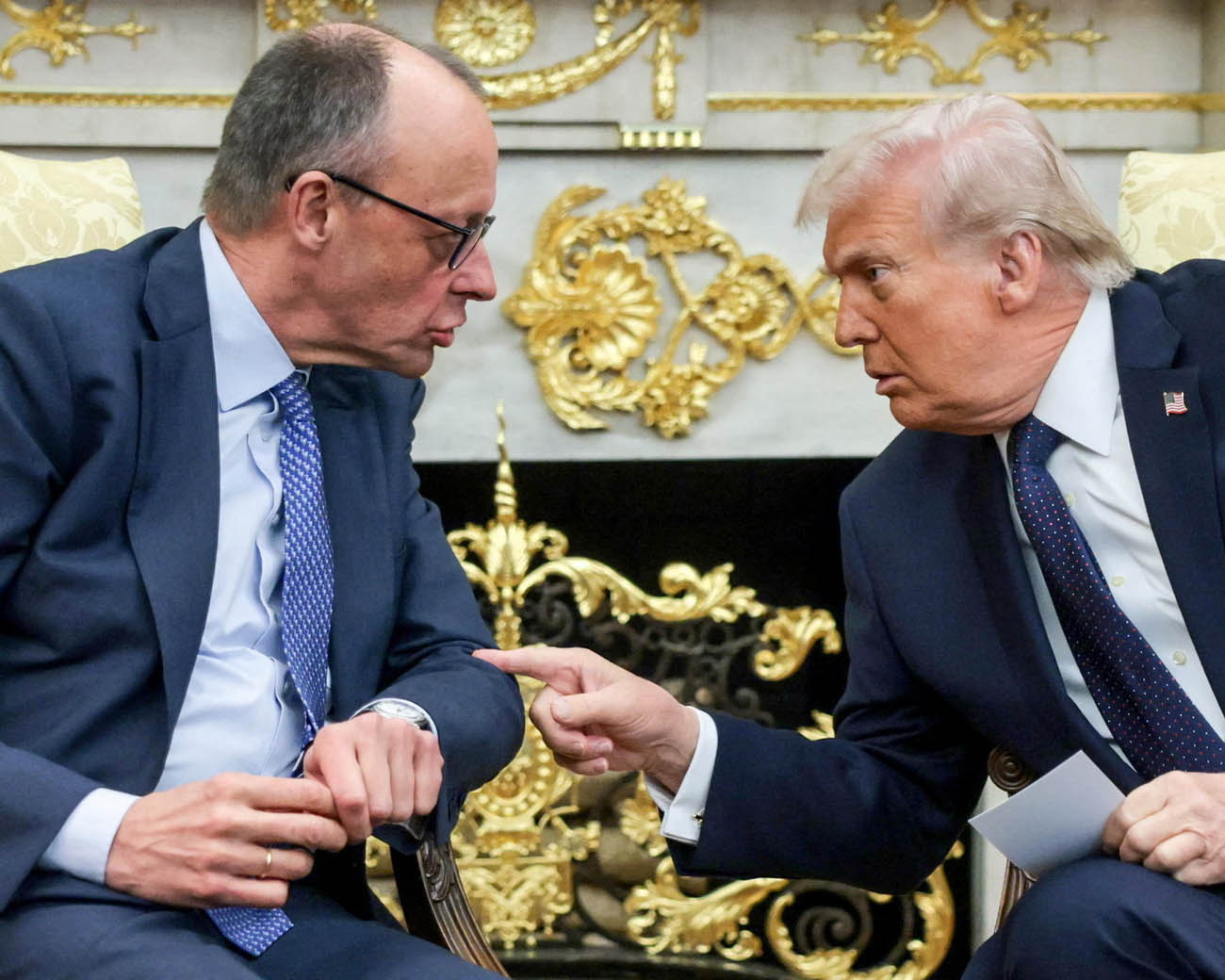
To state the obvious, Merz does not think that would be OK. In the Oval Office with Trump in March, Merz had explicitly agreed with Trump's war aim of getting rid of the Iranian regime. He declared it was "not the time to lecture our partners and allies" on international law.
The Punishment: Troops, Tariffs, and Tomahawks
Severe punishments are incoming. Washington announced a partial troop withdrawal from Germany, where it has about 36,000 military service members – 5,000 to be pulled out, maybe even "many more," a furious Trump hinted. No Tomahawks and other mid-range missile systems will be stationed in Germany, despite a standing agreement dating back to 2024. That deal was supposed to close a dangerous deterrence gap with Russia, which has stationed nuclear-capable missiles in Kaliningrad, threatening European capitals.
On top of all that, European carmakers are being saddled with a 25% import tariff, effective immediately – which obviously will harm German industry most.
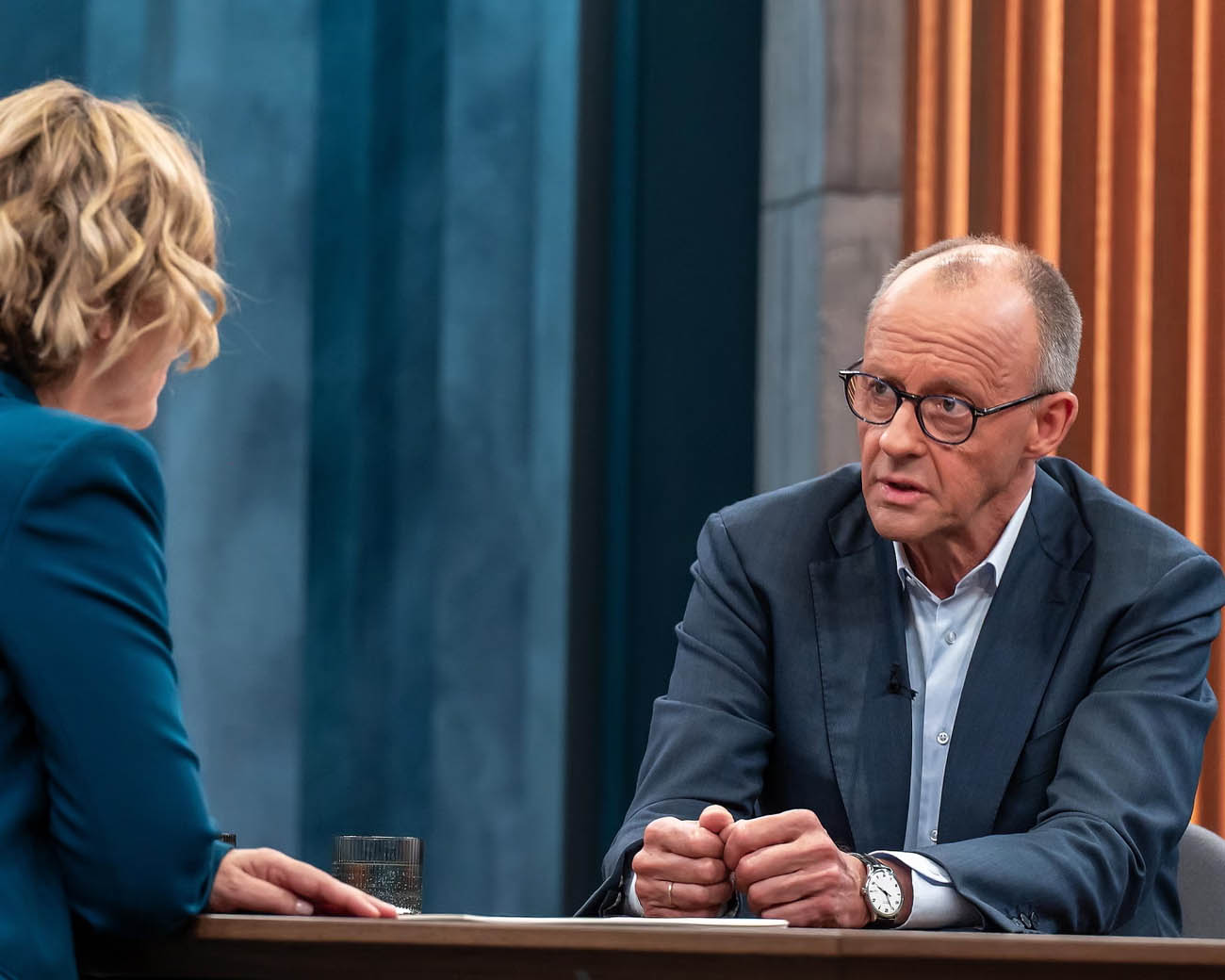
Merz sought to downplay any tensions, arguing that the troop withdrawal announcement was not surprising and should not be seen as retaliation. "It may be being exaggerated a bit, but it's not new," he told ARD talkshow host Caren Miosga.
"Objectively speaking, there is hardly any possibility from the US of relinquishing weapons systems of this kind," he said, citing depleted arsenals because of the wars in Iran and Ukraine. But he said the "train has not departed" for possible cooperation in the future.
The German Economy: Sinking Under the Weight of War
The consequences of the US-Israel "excursion" also threaten to sink the German economy, and with it Merz's urgent domestic reform agenda. The already meagre growth forecast for 2026 has been slashed by half because of the war. This adds stress to the already fraying coalition of conservatives and Social Democrats.
Merz, whose popularity ratings are plumbing record depths in German polls, has since said he was "not giving up on working on the transatlantic relationship," while declining opportunities to retract his criticism of Trump.
On Friday he posted on X that he had spoken with Trump by telephone while the US president was travelling home from China and that they had discussed Iran, Ukraine and the upcoming NATO summit in Ankara. "The US and Germany are strong partners in a strong NATO," Merz said.
What Merz Really Thinks: The Strategy Behind the Spat
So why did Merz suddenly decide to go straight for the jugular of Trump's narcissistic self-image – his supposed dealmaking prowess? Was it just one of the impulsive comments the chancellor is notorious for?
There may be more to it. Merz is not backing down. In a long interview on primetime TV, the chancellor tried a more conciliatory tone, but he did not walk back his remarks, despite being pressed several times.
The folly of the war against Iran has turned out to be the last straw. Soft-pedalling is no longer possible. This war is undermining European security. Air defence systems urgently needed by Ukraine (and on NATO's eastern flank) are diverted to the Middle East. While Kyiv has to beg for every single Patriot interceptor, more than 1,000 have been used against Iranian attacks.
For a year now, Merz has tried to manage Trump through concessions and appeasement. The failure of this policy is the real reason Merz snapped in front of the students.
One thing has become even clearer from Trump's angry retribution: dependence on a US administration that punishes its allies while accommodating Europe's enemies is untenable.
More than a year ago, on the night of his party's victory in Germany's general election, Merz said he wanted to create unity in Europe as quickly as possible, "so that, step by step, we can achieve independence from the US." Those words ring even truer today.
📊 GERMANY-US TRANSATLANTIC RUPTURE – KEY FACTS
- US troops in Germany: ~36,000 (5,000 to be withdrawn)
- Tariff on EU cars: 25% (effective immediately)
- Tomahawk missile deployment: Cancelled
- Germany's defence spending pledge: 5% of GDP (NATO summit 2025)
- Patriot interceptors used against Iran: 1,000+
- Germany's 2026 growth forecast: Slashed by half due to war
- Merz's chancellorship anniversary: 1 year (May 17)
- Merz approval rating: Record lows in German polls
🔍 Germany-US Transatlantic Rupture: Q&A / Vizual Guide
❓ What did Friedrich Merz say about the US?
Merz said he would not advise his children to study or work in the US, citing a "deeply polarising" social climate. "I am a great admirer of America. At the moment my admiration is not growing," he said. He urged Germans not to fall into "disaster mode" about the state of the world.
❓ How did Trump's camp respond?
Richard Grenell, former US ambassador to Germany, accused Merz of "Trump derangement syndrome," saying he was "completely controlled by the German woke media." Alice Weidel, leader of the far-right AfD, said Merz was "deliberately leading his own country towards social and economic ruin." Trump himself has called Merz "totally ineffective" and presiding over a "broken country."
❓ What triggered the transatlantic rupture?
Merz remarked that the Iranians were "humiliating" the Americans at the negotiating table. Trump responded angrily, and the dispute escalated. Merz has since refused to walk back his comments, despite severe repercussions including troop withdrawals, tariff hikes, and the cancellation of missile deployments.
❓ What punishments has the US imposed on Germany?
The US announced the withdrawal of 5,000 troops from Germany (Trump hinted at "many more"). The planned deployment of Tomahawk cruise missiles – meant to counter Russian missiles in Kaliningrad – has been cancelled. And a 25% tariff on EU cars, devastating for German industry, has been imposed.
❓ How has the Iran war affected Germany?
The war has severely damaged the German economy. Growth forecasts for 2026 have been slashed by half. Air defence systems urgently needed by Ukraine have been diverted to the Middle East. More than 1,000 Patriot interceptors have been used against Iranian attacks, while Kyiv has to beg for every single one.
❓ What is Merz's strategy now?
Merz says he is "not giving up on working on the transatlantic relationship." He spoke with Trump by phone on Friday, discussing Iran, Ukraine, and the upcoming NATO summit. But he has also reiterated his long-term goal: "step by step, we can achieve independence from the US."
📅 TIMELINE OF THE GERMANY-US TRANSATLANTIC RUPTURE
👥 KEY PLAYERS IN THE TRANSATLANTIC CRISIS
Friedrich Merz
German Chancellor • Criticized US Iran policy • Refuses to back down
Donald Trump
US President • Imposed tariffs, troop withdrawals • Calls Merz "ineffective"
Richard Grenell
Former US ambassador to Germany • Accused Merz of "TDS"
Alice Weidel
AfD leader • Supported by Trump's Maga movement • Criticised Merz
⚖️ US PUNISHMENTS VS GERMANY'S CONCESSIONS
🇺🇸 WHAT GERMANY LOST
- 5,000+ US troops (withdrawal)
- Tomahawk missile deployment (cancelled)
- 25% tariff on car exports
- Political trust in NATO alliance
🇩🇪 WHAT GERMANY GAVE
- 5% GDP defence spending pledge
- Rearmament of Bundeswehr
- Majority of Ukraine military financing
- Acceptance of unfair trade deal
🔄 MERZ'S TRANSATLANTIC EVOLUTION
🌉 BEFORE (March 2026): "The Transatlanticist"
"It is not the time to lecture our partners and allies on international law. Germany will not restrict US bases."
💥 THE BREAKING POINT (April 2026)
"An entire nation is being humiliated by the Iranian leadership." – Merz on US negotiations with Iran
🎯 NOW (May 2026): "The Realist"
"I would not advise my children to go to the US. Step by step, we can achieve independence from the US."
🇪🇺 MERZ'S VISION FOR EUROPEAN INDEPENDENCE
5%
GDP Defence Spending (NATO pledge)
€100bn+
Bundeswehr rearmament fund
2030+
European missile capabilities online
"So that, step by step, we can achieve independence from the US" – Friedrich Merz, election night 2025
Stay updated with the latest world headlines on our World Headlines Page.