27 April 2026 | Beijing / Menlo Park / Singapore
BEIJING, China – Mark Zuckerberg wanted to buy the future. China just told him: not on our watch.
China has blocked Meta's $2 billion acquisition of Manus, a developer of autonomous AI agents, in a stunning move that signals an escalating tech cold war between Beijing and Washington. The National Development and Reform Commission (NDRC) announced Monday that it had cancelled the takeover – and warned that domestic tech firms must now seek explicit government approval before accepting any US investment.
The decision, announced without fanfare but with devastating finality, represents one of the most significant regulatory rejections of a US tech acquisition in years. For Zuckerberg, who has been pouring billions into Meta's AI drive, it is a painful setback. For the global AI race, it is a declaration that the rules have changed.
⚡ Breaking: China's NDRC has blocked Meta's $2bn acquisition of AI agent developer Manus, requiring "the parties involved to withdraw the acquisition transaction." The move comes as Beijing tightens controls on US investment in domestic tech firms.
The Deal That Died: Meta's $2 Billion Bet on Autonomous AI
In December, Meta announced its acquisition of Manus, a Beijing-born, Singapore-based startup specializing in autonomous AI agents. These are not chatbots. They are digital workers – capable of planning holidays, handling customer queries, drafting research presentations, and executing complex tasks without human intervention.
For Meta, Manus represented a shortcut to leadership in one of AI's most promising frontiers. For Manus, the deal was described as "validation of our pioneering work with general AI agents."
But behind the scenes, Chinese regulators were watching. And they did not like what they saw.
"Prohibit the foreign investment in the acquisition of the Manus project," the NDRC said in its terse statement. "Requires the parties involved to withdraw the acquisition transaction."
The message was unambiguous. The deal was dead.
The New Rules: Beijing's Iron Grip on US Investment
The Manus block is not an isolated incident. Bloomberg reported last week that Chinese regulators are planning to block tech firms, including leading AI startups, from accepting US investment without government approval.
Several private firms have reportedly been warned in recent weeks that they should reject US funding unless it receives explicit approval from Beijing. The policy move was triggered by the Manus deal itself – a case of the regulatory hammer falling on the very transaction that prompted the crackdown.
"This is a clear signal that China is drawing a line in the sand," said one technology analyst familiar with the matter. "They don't want US dollars shaping the future of Chinese AI. And they're willing to kill a $2 billion deal to make that point."
The Boss You Can Talk To: Zuckerberg's Digital Clone
But even as Meta's expansion into China was being blocked, something stranger was happening inside the company itself.
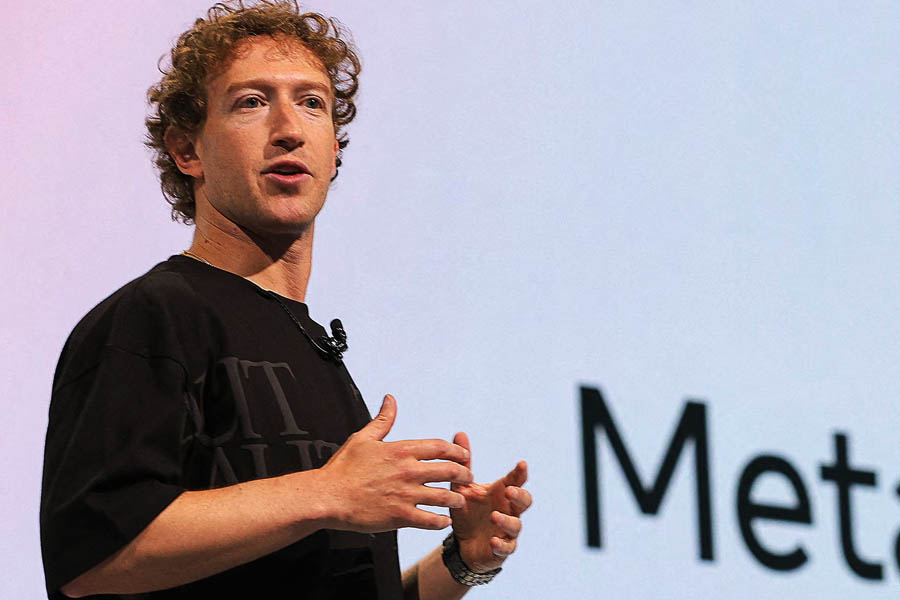
Meta is creating an AI version of Mark Zuckerberg – a digital clone being trained on his thoughts, tone and mannerisms – so that employees can "talk to the boss."
The project, which has been quietly developing for months, is designed to help workers feel more connected to leadership. Employees will be able to interact with the Zuckerberg AI, asking questions, receiving guidance, and perhaps even hearing motivational speeches from a machine that sounds exactly like their CEO.
It is, by any measure, a bizarre development. But in the world of Meta, where Zuckerberg has staked the company's future on the metaverse and AI, the digital clone may be the logical endpoint of his vision: a CEO who never sleeps, never tires, and can be everywhere at once.
— Source familiar with the project
The AI Cold War: Washington vs Beijing
The Manus block comes against the backdrop of an intensifying AI superpower rivalry. China and the United States are the undisputed leaders in artificial intelligence, with all of the top 20 best-performing models produced by developers from one of those two countries.
President Donald Trump has claimed that "we're leading China by a tremendous amount" in what the White House has billed as a straight race for AI dominance. But China's regulatory move suggests Beijing is not willing to cede the field – and is willing to use its economic leverage to keep US competitors at bay.
"The AI race is not just about technology," said one geopolitical analyst. "It's about who controls the supply chains, the investment flows, and the regulatory environment. China just demonstrated that it can weaponize all three."
What Manus Does: The Rise of AI Agents
To understand why China blocked the deal, it helps to understand what Manus actually does. The startup develops "autonomous AI agents" – software that can perform complex tasks across multiple domains without human intervention.
Unlike traditional chatbots, which respond to prompts, AI agents can:
- Plan and book entire holidays, from flights to hotels to restaurant reservations
- Handle customer service inquiries across multiple channels simultaneously
- Draft research presentations by synthesizing information from dozens of sources
- Coordinate with other AI agents to complete multi-step projects
For tech executives, AI agents represent the next frontier – a way to automate knowledge work at scale. Meta, which is pouring billions into its AI drive, has made clear that agents are central to its long-term strategy.
"This deal would bring a leading agent to billions of people," Meta said of the Manus acquisition. "And unlock opportunities for businesses across our products."
Now, those billions will have to wait.
The Stakeholders: Who Wins, Who Loses?
📊 Deal Breakdown:
- Buyer: Meta (owner of Facebook, Instagram, WhatsApp)
- Target: Manus (autonomous AI agent developer)
- Value: $2 billion
- Status: Blocked by China's NDRC
- Manus location: Founded in Beijing, now based in Singapore
- New rule: Chinese AI firms must seek government approval for US investment
What Comes Next?
For Meta, the blocked acquisition is a setback – but not a fatal one. The company has billions to spend and other targets to pursue. But the broader implications are more troubling: if China can block deals for companies based outside its borders, what else can it block?
For Manus, the Singapore-based startup now finds itself in an impossible position. The deal that would have made its founders wealthy and its technology global is dead. Whether it can find another buyer – or survive as an independent company – is an open question.
For the global AI industry, the Manus block is a warning shot. The era of free-flowing US investment in Chinese tech is over. The regulatory walls are going up. And the AI cold war is getting hotter.
And somewhere in Menlo Park, an AI version of Mark Zuckerberg is learning to talk like the boss. Whether it will ever get to negotiate with China – or whether that job is better left to a human – is a question for another day.
Stay updated with the latest tech trends headlines on our Tech Trends Page.