9 May 2026 | Budapest, Hungary
BUDAPEST, Hungary – The gates of regime change have swung open. And the man who pushed them is now standing at the podium, ready to rewrite Hungary's future.
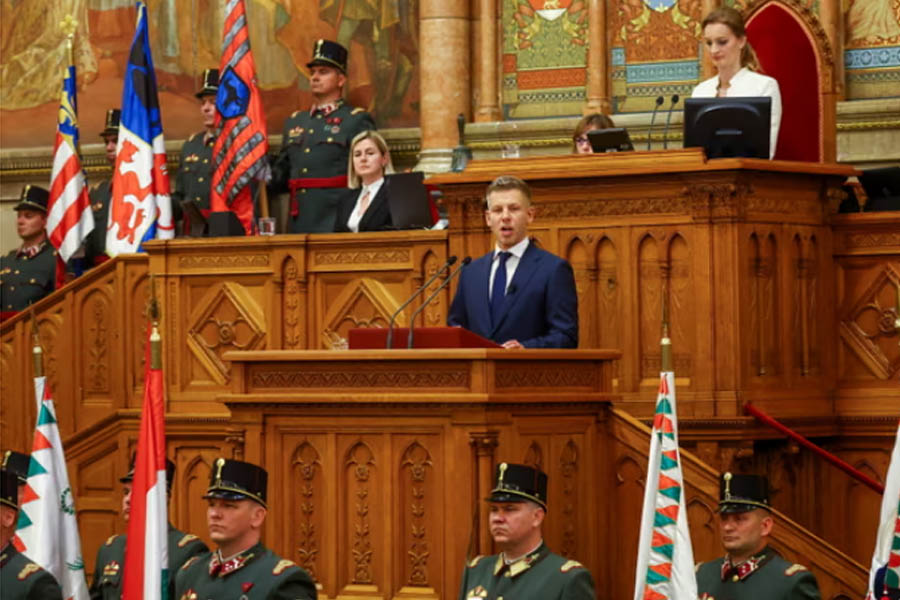
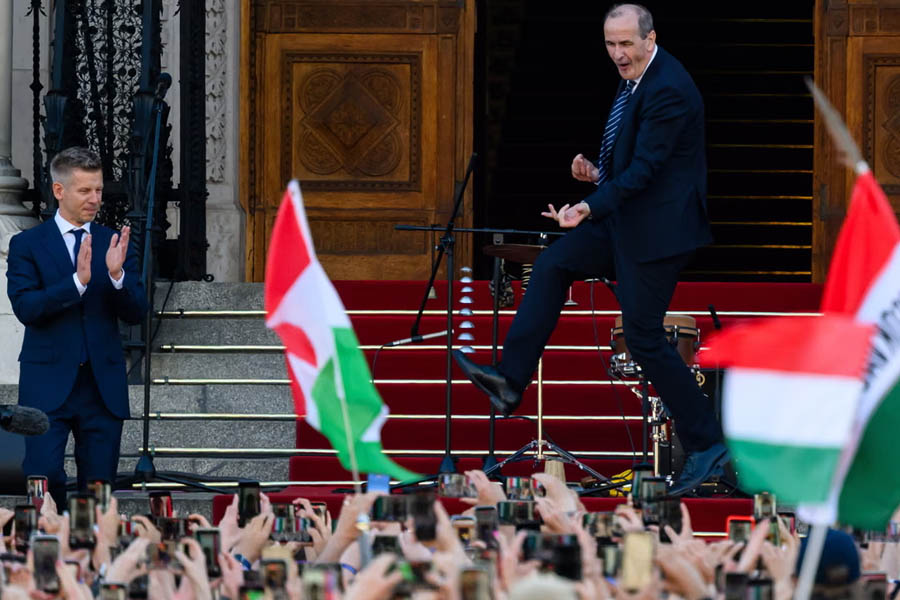
Péter Magyar was sworn in as Hungary's prime minister on Saturday, marking the official end to Viktor Orbán's 16 years in power. Tens of thousands of jubilant supporters gathered outside the neo-Gothic parliament building, their cheers echoing across the Danube as a new era began.
"Today, every freedom-loving person in the world wants to be a little Hungarian," Magyar declared, his voice carried by loudspeakers to the crowds below.
⚡ THE NUMBERS: 141 seats (Tisza) • 199-seat parliament • 16 years of Orbán ended • 45-year-old new PM • First time since 1990 Orbán not in parliament • Europe Day swearing-in • Record high women lawmakers (25%+)
"A Mandate Not Just to Change the Government, But to Change the System"
Earlier, Magyar had told parliament that Hungarians had given his party a mandate to launch a "new chapter" in the country's history. "A mandate not only to change the government, but to change the system as well. To start again."
The landslide victory, in which Tisza won 141 seats in the 199-seat parliament, was a stunning outcome for Magyar – who until recently had been a little-known former member of Fidesz's elite. He burst into public view in early 2024, after he turned on the party, laying bare the inner workings of a system he described as rotten and accusing officials of expanding their power and wealth at the expense of ordinary Hungarians.
Under Orbán's watch, Magyar said, Hungary had become the most corrupt country in the EU. "Orbán's associates and the elite have a long way to go until they are confronted with what they have done," he vowed, promising that his government would seek justice against those who, even in the last hours, were trying to "steal everything."
— Péter Magyar, newly sworn-in prime minister
Europe Day: A Deliberate Choice of Symbolism
It was not by coincidence that Saturday's swearing-in took place on Europe Day, which commemorates the proposal that gave rise to the modern-day EU. Anita Orbán, Tisza's incoming foreign minister – no relation to the former prime minister – said: "The message is clear: Hungary's place is in Europe. Naturally, firmly, and without question."
Hints of this pro-European shift were symbolically laced through the day's plans: several anthems rang out, paying tribute to Hungary's EU membership, its sizeable Roma minority and ethnic Hungarians in neighbouring countries. The lawyer Vilmos Kátai-Németh became the country's first visually impaired minister, taking on the portfolio of social and family affairs.
After years of Orbán's Hungary lagging behind most of the EU when it came to women's representation in parliament, more than a quarter of lawmakers will be women – a record high in the country's post-communist history.
The Road to Change: "Long and Often Quite Bumpy"
Speaking to the tens of thousands of supporters who had heeded his call to gather outside parliament, Magyar described the road to change as very long and often quite bumpy. But Hungarians could finally rejoice, he added.
"You have taught the country and the world that it is the most ordinary, flesh-and-blood people that can defeat the most vicious tyranny," Magyar said to roaring applause.
He reiterated his earlier calls for Orbán-era appointees to resign, asking them to do so by the end of the month. The first should be Tamás Sulyok, he said – a pointed reference to the president who had, moments earlier, nominated Magyar to form a government. The crowd roared its approval.
A New Hungary: More Free, More Humane, More Hopeful
Magyar pledged to build a more inclusive Hungary, one that would be more free, humane and hopeful than under Orbán's populist nationalist movement.
"What connects us will be stronger than what divides us," he said. "Hungary will be home for every Hungarian, and everyone can feel like they have a place in the Hungarian nation. Family, friends and communities will be able to speak to each other again."
Beyond the country's borders, Magyar vowed to rebuild Hungary's long-strained relationship with the EU and work with the bloc to unlock billions in frozen EU funds – money that Orbán's confrontational approach had kept out of reach.
The Orbán Era Ends: A New Chapter Begins
This new parliament marks the first time since the country's democratisation in 1990 that Orbán – whose decades-long career saw him shift from pro-democracy campaigner to a Russia-friendly figure lauded by the US Maga movement – will not sit in parliament. Late last month, Orbán, 62, said he would instead focus on the reorganisation of his movement.
Magyar, 45, has vowed to use his large majority to undo the systems built by Orbán, who had stacked the country's judiciary, media and state with loyalists as he sought to turn Hungary into a "petri dish for illiberalism."
Early on Saturday, people started pouring into the square outside parliament to follow the inaugural session broadcast on large screens. At each glimpse of Magyar, the crowd cheered, while some booed lawmakers from Fidesz and the extreme right Our Homeland party.
📊 HUNGARY'S NEW GOVERNMENT AT A GLANCE
- Prime Minister: Péter Magyar (age 45)
- Party: Tisza (pro-European centre-right)
- Parliament seats: 141 of 199 (landslide majority)
- Orbán's tenure: 16 years (ended)
- First time Orbán not in parliament since: 1990
- Women lawmakers: Record high (25%+)
- First visually impaired minister: Vilmos Kátai-Németh (social and family affairs)
- Foreign minister: Anita Orbán (no relation to Viktor)
- Key pledges: Rebuild EU ties, unlock frozen funds, confront Orbán-era corruption
The Challenges Ahead: A Huge Task
The task Magyar and his government face is huge. His promises to fix the country's crumbling public services will come up against Hungary's stagnating economy and a stubbornly high budget deficit. Meanwhile, it remains to be seen how the many Orbán loyalists in media, academia and the judiciary will react to change.
Even so, the mood on Saturday was celebratory. At a Tisza booth, crowds lined up to buy party swag. Others milled around waving Hungarian flags. Budapest's liberal mayor, Gergely Karácsony – who has long clashed with Orbán – called on Hungarians to come together to mark the end of Fidesz's grip on power.
"Teachers fired, civilians and journalists humiliated, small churches torn apart," Karácsony wrote on social media. "We can finally leave this era behind us – but first, let us remember the everyday heroes and express our gratitude with a farewell to the system."
What Comes Next?
Magyar has promised to suspend broadcasts from state media that functioned as Orbán mouthpieces. He has called on Orbán-era appointees to resign by month's end. He has met twice with EU officials and sent back millions of Hungarian forints donated to him by an Orbán-linked supporter.
The work of dismantling Orbán's system has begun. But the road ahead is long – and the former prime minister's loyalists are unlikely to disappear quietly.
"What connects us will be stronger than what divides us," Magyar said. For now, Budapest is celebrating. But the real test of Hungary's new prime minister has only just begun.
Stay updated with the latest politics headlines on our Politics Page.