4 May 2026 | Kathmandu / Upper Mustang, Nepal
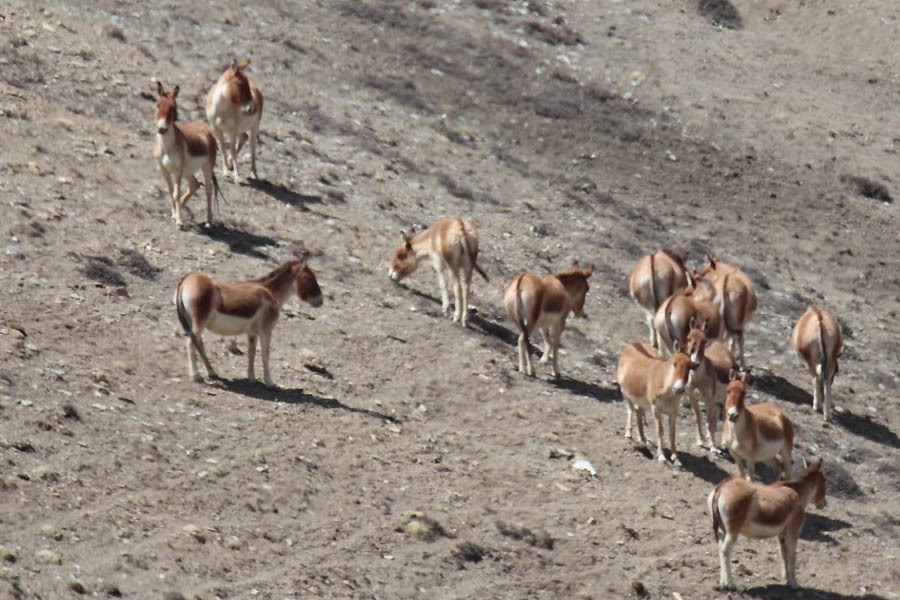
UPPER MUSTANG, Nepal – On the windswept grasslands of Dhalung, nearly five kilometers above sea level, a rare spectacle unfolded. A herd of 116 wild asses – Asia's largest equid – grazed calmly against the backdrop of the Tibetan Plateau.
This was not a mirage. This was a record.
Conservation officials in Nepal have recorded an unusually large herd of rare wild asses, known as Kiangs (Equus kiang), in the remote Himalayan district of Mustang near the Chinese border – raising fresh interest among researchers studying wildlife migration and climate-linked habitat changes.
A total of 116 Kiangs were spotted grazing in the high-altitude pastures of Dhalung and Setara in Upper Mustang, at elevations of nearly 5,000 meters (16,400 feet), according to officials from the Annapurna Conservation Area Project (ACAP).
⚡ THE NUMBERS: 116 Kiangs counted • 102 in Dhalung • 14 in Setara • 5,000m elevation • Only 37 recorded in 2004 • Asia's largest wild equid
A Sign of Shifting Ecosystems in the Roof of the World
"We counted 102 in Dhalung and another 14 in Setara during field observation," said Umesh Paudel, chief of ACAP's Lomanthang office, who has been conducting field research on the species.
The Kiang, the largest wild equid in Asia, is native to the Tibetan Plateau and surrounding Trans-Himalayan ecosystems, including parts of Nepal's Upper Mustang bordering Tibet. Researchers say the species typically spends most of the year on the Tibetan Plateau but migrates seasonally into Nepal's high mountain grasslands during warmer months in search of fresh grazing grounds.
The migration usually peaks between April and June, when snow begins to recede and alpine vegetation becomes accessible. This year, the herd arrived early – a possible indicator of changing climate patterns.
A previous wildlife survey conducted in 2004 recorded only 37 Kiangs in the same region, suggesting either population growth, improved observation methods, or – more significantly – shifting migration patterns driven by environmental change.
— Conservation researcher, Annapurna Conservation Area Project
Climate Change and the Trans-Himalayan Corridor
Conservation experts say climate change could be altering the seasonal movement of wildlife across the fragile Himalayan ecosystem. Changing snowfall patterns, rising temperatures, and vegetation shifts have increasingly affected grazing species and predator-prey dynamics across the Trans-Himalayan belt.
Upper Mustang, one of Nepal's most ecologically sensitive mountain regions, serves as an important seasonal habitat for several rare high-altitude mammals, including the elusive snow leopard, Tibetan wolf, and blue sheep.
Wildlife officials say continued monitoring will be necessary to determine whether the larger herd reflects a long-term population trend or a temporary ecological response.
The Kiang, recognized for its reddish-brown coat, white underbelly, and powerful running ability, is considered an important indicator species for the health of high-altitude grassland ecosystems. When Kiangs thrive, the ecosystem thrives. When they shift their ranges, scientists take note.
Beyond the Himalayas: Artificial Scents in the Terai
The Kiang sighting comes as Nepal expands conservation efforts across its lowland ecosystems, where authorities are also testing innovative technologies to reduce human-wildlife conflict.
In Nepal's southern Terai plains, conservation teams under the World Wide Fund for Nature (WWF)-supported Terai Arc Landscape Program have begun testing artificial scent technology designed to prevent predators such as tigers and leopards from entering villages – creating invisible territorial boundaries without fences or violence.
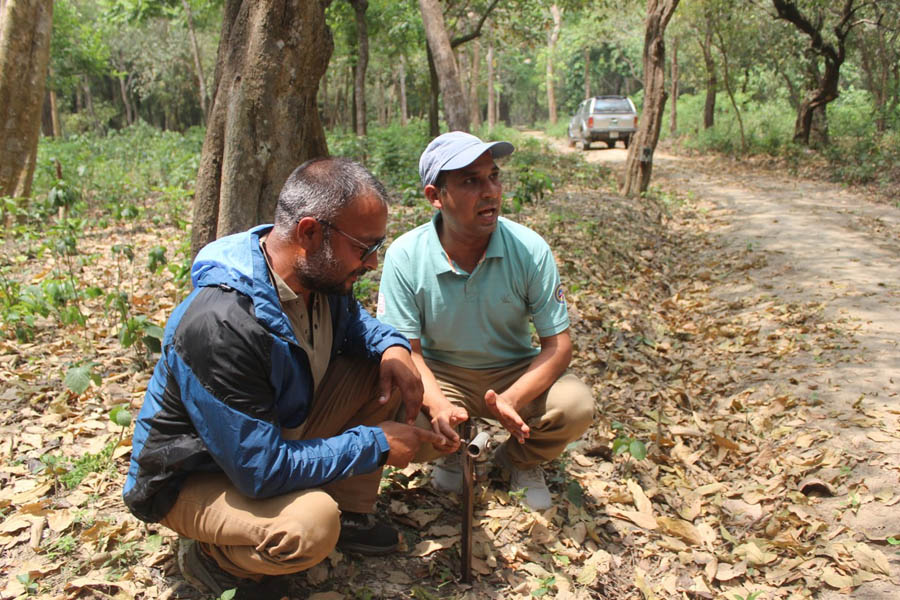
The system uses artificial scent signals designed to mimic the territorial markings of predators. By replicating the scents that tigers and leopards use to mark their territories, animals perceive that another competitor has already claimed the area and avoid crossing the invisible boundary.
"To prevent wildlife from entering human settlements, cameras and special dispensers have been installed at 30 strategic locations," said Bharat Bhatt, program manager. "These devices spread specific scents that force animals to retreat."
Promising Results: Invisible Boundaries, Real Solutions
Initial studies have shown promising results. Last year's testing found that:
- Two types of scent effectively repelled leopards
- Two types repelled tigers
- One type worked against both species
According to Bhatt, the scents used are completely harmless and do not negatively affect humans or wildlife. The chemical scent, placed inside a T-shaped pipe, remains active for up to one month.
Program officer Pratik Shah said this research-based project has been launched for five years. "The main goal is to keep tigers and leopards at a safe distance from human settlements. If successful, this technology could establish a permanent invisible boundary between humans and wildlife."
Wildlife activities and responses are being continuously monitored through automated cameras installed at 30 sites in the Khata Corridor – a critical wildlife passage connecting Nepal and India.
The Bigger Picture: Nepal's Dual Conservation Front
For Nepal, these two developments highlight the country's growing role in protecting biodiversity across two of Asia's most critical ecological zones – the Himalayas and the Terai.
In the mountains: rare species like the Kiang are sending signals about climate change. In the plains: innovative technology is offering non-lethal solutions to human-wildlife conflict.
Conservationists say both efforts are interconnected. A healthy ecosystem requires intact corridors from the highest peaks to the lowest grasslands. If Kiangs can migrate freely and tigers stay safely in the forests, Nepal's biodiversity future looks brighter.
"Damage caused by wildlife entering settlements will decrease, and investments in physical barriers like fencing could also be reduced," Shah said. "If successful, this model could be expanded to other affected regions across Nepal and beyond."
📊 HIMALAYAN & TERAI CONSERVATION AT A GLANCE
- Kiang population (2004): 37
- Kiang population (2026): 116
- Elevation of habitat: ~5,000 meters
- Scent technology sites: 30 locations in Khata Corridor
- Scent effectiveness: 2 scents repel leopards, 2 repel tigers, 1 repels both
- Scent duration: Up to 30 days per application
- Project duration: 5 years (research-based)
What Comes Next?
The Kiang sighting opens new questions about Himalayan wildlife corridors and climate adaptation. Conservation researchers are planning expanded camera trapping and satellite collar studies to track migration patterns more precisely.
Meanwhile, the artificial scent technology will continue to be tested and refined over the coming years. If proven successful, the model could be adopted by other countries facing similar human-wildlife conflicts – from India to Southeast Asia.
For Nepal, the message is clear: conservation innovation is not just about protecting animals. It is about protecting people, livelihoods, and the fragile ecosystems that sustain life across the roof of the world.
Stay updated with the latest environment news on our Environment Page.