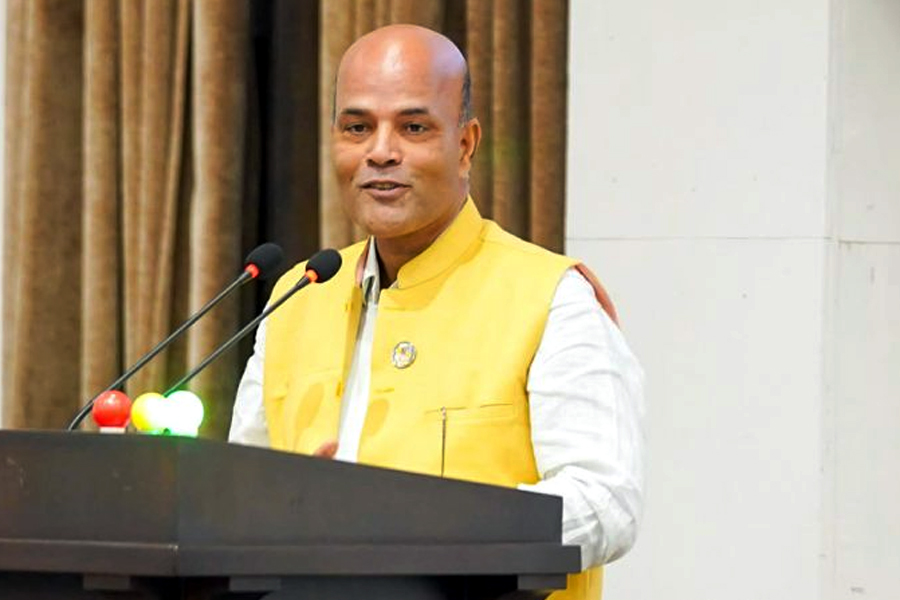
Kathmandu, Nepal – Rastriya Swatantra Party (RSP) lawmaker Dr. Amaresh Kumar Singh launched a scathing critique of Finance Minister Dr. Swarnim Wagle's new national budget during parliamentary discussions, questioning how many Nepali citizens are truly satisfied and accusing the government of imposing taxes on constitutional rights to education and healthcare.
Singh objected to the government's decision to impose taxes on education and healthcare, stating that the Finance Minister, who studied at Budhanilkantha School, had placed a tax burden on citizens' constitutional rights. He argued that taxing education and healthcare violates the Constitution, emphasizing that these are fundamental rights, and that the burden ultimately falls on students and patients using private schools and hospitals.
While acknowledging some positive aspects of the budget – including the increase in the personal income tax threshold, support for startups, and provisions for the IT sector – Singh questioned how much of Nepal's workforce would actually benefit from these measures.
Key developments from Parliament:
- RSP MP Dr. Amaresh Kumar Singh criticizes budget's taxes on education and healthcare as unconstitutional
- Finance Minister Dr. Swarnim Wagle challenges critics: "If anyone can prove wrongdoing worth even two rupees, I will resign from public life"
- Singh questions what percentage of Nepali population is satisfied with new budget
- Budget size at 32-33% of GDP called "unrealistic and unsustainable"
- Government borrowing nearly Rs. 250 billion domestically, Rs. 150 billion for debt repayment
- Singh warns AI and IT advances could worsen Nepal's unemployment crisis
- Lawmakers raise issues including Rohingya refugees, health equipment, corruption investigations, and religious site protection
- MP Laxmi Prasad Pokharel demands cancellation of two-day weekend system
- MP Samiksha Baskota demands investigations into past corruption scandals
- MP Gyanu Poudel calls for release of investigation report into Nepali student Prakriti Lamsal's death in India
'Fear May Sustain a Government, But It Cannot Create Development'
According to Singh, although bankers may be pleased with the budget, the large volume of deposits in banks reflects the fact that people are unwilling or unable to take loans due to the lack of a favorable business environment.
"Fear may sustain a government, but it cannot create development," he said in a pointed remark directed at the administration.
Singh also expressed disappointment that the budget did not include plans to establish quality schools similar to Budhanilkantha School in all seven provinces – a measure he had hoped would help develop future national leaders.
Farmers, Inflation, and the Trade Deficit
Speaking about farmers and poor communities in his constituency, Singh noted that farmers often sell vegetables for as little as Rs. 5 per kilogram, while consumers in Kathmandu pay around Rs. 50 per kilogram. He criticized the budget for failing to create mechanisms that would allow farmers to receive fair prices for their produce.
He further identified unemployment and lack of domestic production as Nepal's biggest challenges. He warned that advances in artificial intelligence and information technology could worsen unemployment if adequate jobs are not created. Referring to youth dissatisfaction, he said that failure to provide employment opportunities could lead to serious social problems.
Singh argued that Nepal's heavy trade deficit stems from insufficient production and highlighted the struggles of ordinary citizens facing rising inflation. He questioned what benefits the budget provided for marginalized communities, including Musahar, Dalit, and Chepang populations.
Debt Trap Criticism: 'Like a Village Moneylender'
Singh also criticized the size of the budget, noting that Nepal's budget amounts to approximately 32–33 percent of GDP, which he described as unrealistic and unsustainable. He expressed skepticism about the government's ability to implement the budget, pointing to a deficit of nearly Rs. 700 billion.
Comparing the country's debt management to a village moneylender who repeatedly borrowed money to repay previous loans, Singh argued that the government was taking on new debt primarily to repay old debt rather than to finance development projects.
He pointed out that the Finance Minister had openly stated that the government would borrow around Rs. 250 billion domestically, with about Rs. 150 billion going toward principal and interest repayments. "This means loans are being taken simply to repay old loans, not to support development," he said.
According to Singh, a country where capital expenditure remains around 20 percent and development spending is limited cannot achieve prosperity. He argued that only increased capital spending can generate jobs, attract investment, and drive economic growth.
Finance Minister Wagle: 'Prove Wrongdoing, I Will Resign'
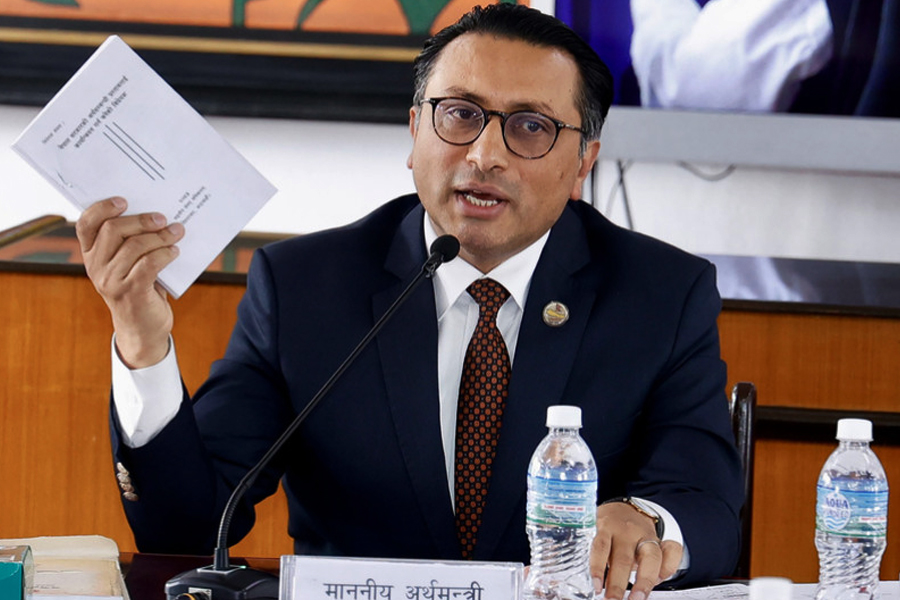
Meanwhile, at a meeting of Parliament's Public Accounts Committee, Finance Minister Dr. Swarnim Wagle issued a dramatic challenge to his critics, daring them to provide evidence supporting allegations that information about upcoming tax increases – particularly on electric vehicles – was leaked in advance.
Wagle dismissed such allegations as "nonsense" and said anyone claiming that individuals rushed to import vehicles or caused significant revenue losses due to leaked information should present concrete proof.
"If anyone can prove that Swarnim Wagle has committed wrongdoing worth even two rupees, not two billion, I am prepared to resign not only as Finance Minister and Member of Parliament but also from public life altogether. This is my challenge," he said.
Wagle emphasized that all public officials should maintain high standards of ethics and accountability. He reiterated that decisions regarding the budget and tax policies were made with Nepal's long-term economic interests in mind and challenged opponents to substantiate their accusations with documentary evidence.
Lawmakers Raise Diverse Issues During Zero Hour
During the zero hour of today's House of Representatives meeting, lawmakers raised a wide range of contemporary issues and urged the government and relevant ministries to address them.
🔄 Border & Migration
MP Lalita Kumari called for the return of Rohingya refugees who have entered Nepal from Bangladesh.
📅 Work Schedule
MP Laxmi Prasad Pokharel demanded the cancellation of the two-day weekend system.
🏠 Housing Rights
MP Lima Adhikari Acharya said the Biratnagar Integrated Settlement Project exists largely in name only and called for proper housing rights for landless people.
🏥 Health Infrastructure
MP Shobha Khanal requested health equipment for the Provincial Hospital in Gorkha.
🌿 Environmental Protection
MP Sandeep Rana highlighted environmental problems caused by industrial development in Palpa.
💊 Health Insurance
MP Samina Miya called for strengthening the health insurance program.
⚖️ Anti-Corruption
MP Samiksha Baskota demanded investigations into past corruption scandals and legal action against those responsible.
🛕 Religious Sites
MP Saraswati Lama opposed the demolition of temples, monasteries, and religious sites during informal settlement removal and called for proper management of landless communities.
📚 Education & Agriculture
MP Sujata Tamang advocated integrating education with nature and agriculture.
🏭 Industry Revival
MP Sushila Dhakal advocated reviving struggling industries and MP Smriti Century called for reopening the Kharidhunga Magnesite Industry.
🚸 Border Crossing
MP Smriti Century also requested opening the Falak border crossing in Dolakha.
🏫 Teacher Concerns
MP Harinadevi Kami urged the government to address the concerns of early childhood development teachers.
🌊 Disaster Displacement
MP Kshitij Thebe demanded the rehabilitation of families displaced by the 2023 Taplejung floods.
🕊️ Student Death Investigation
MP Gyanu Poudel called for diplomatic efforts to make public the investigation report into the death of Nepali student Prakriti Lamsal in Odisha, India.
👩 Women's Safety
MP Shraddha Kunwar Kshetri stressed the importance of creating a safe environment for women.
Several other lawmakers from different political parties also raised contemporary issues and urged government attention. MPs including Bipin Kumar Acharya called for immediate action on issues raised by lawmakers, while Sunil KC objected to language used by an opposition leader and requested that it be removed from parliamentary records.
MP Sundar Kharel urged members to maintain decorum in parliamentary discussions, while MP Sushil Khadka called for additional staff and equipment for Baglung Hospital. MP Sushma Swarnakar emphasized the promotion of local tourism, and MP Som Sharma requested improvements to police post buildings.
A Familiar Cycle: Promises Without Delivery
Concluding his remarks, Singh stated that he had heard similar promises from finance ministers for the past two decades. Every year, leaders claim the budget will transform Nepal into a country like Singapore, the United States, South Korea, Dubai, or Japan – but in reality, debt continues to grow while meaningful change remains elusive.
"Every year, we hear the same promises. Every year, we see the same results. Debt grows, development lags, and the people wait," Singh said.
🇳🇵 The Big Picture
As Nepal's Parliament debates the new national budget, fundamental questions about the country's economic direction remain unanswered. RSP MP Dr. Amaresh Kumar Singh's critique – questioning budget satisfaction, condemning taxes on constitutional rights, and warning of a deepening debt trap – reflects growing frustration among lawmakers and citizens alike. Finance Minister Dr. Swarnim Wagle's dramatic challenge to his critics – offering to resign from public life if any wrongdoing can be proven – has raised the political stakes considerably. With capital expenditure stuck around 20 percent, unemployment rising, and AI threatening to displace workers, Nepal faces a critical juncture. Whether this budget represents a genuine path to prosperity or merely another chapter in the cycle of unfulfilled promises will be measured not in parliamentary speeches, but in the lived experiences of Nepali citizens.
🇳🇵 For more breaking news from Nepal and around the world: Visit NewsOrbit - World Breaking News for the latest headlines from the Himalayas and beyond.