16 April 2026 | Tehran / Islamabad / Washington / Beirut / Tel Aviv
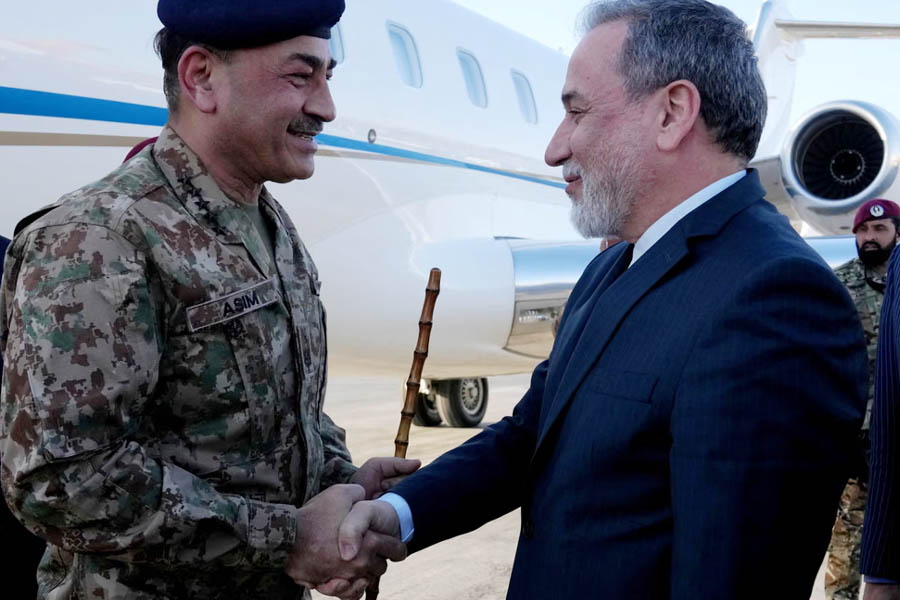
Tehran, Iran – The clock is ticking. The ceasefire between the US and Iran expires next week. And Pakistan's army chief is racing through Tehran's corridors of power, trying to stop the region from plunging back into all-out war.
General Asim Munir, Pakistan's most powerful military figure, met with Iran's Foreign Minister Abbas Araghchi in Tehran on Wednesday – the latest diplomatic gambit to arrange a second round of US-Iran negotiations and extend the fragile truce.
The news is cautiously optimistic. But the obstacles remain monumental.
Key developments:
- Ceasefire deadline: Expires next week
- Munir's visit: "Effective in reducing differences" – senior Iranian official
- Second round of talks: "Very likely" in Islamabad, says White House
- Nuclear dispute: Fate of highly enriched uranium remains unresolved
- Israel-Lebanon-US: Marco Rubio to join historic call between Netanyahu and Aoun
- US blockade: 10 vessels stopped in first 48 hours
- Asian stocks: Nikkei +2.4%, Kospi +2% on ceasefire hopes
- Iran threat: "We will sink all US ships" – military adviser
"More Hopes Have Been Created"
A senior Iranian official, speaking to Reuters on condition of anonymity, offered a measured but meaningful assessment of Munir's mission.
"Munir's visit was effective in reducing differences in some areas," the official said. But fundamental disagreements remain – specifically over Iran's nuclear programme.
"More hopes have been created for extending the ceasefire and holding a second round of talks," the official added.
The key sticking points are as stark as they are familiar: "The fate of Iran's highly enriched uranium and the duration of Iran's nuclear restrictions are among the highly disputed issues for which no solution has yet been found."
Iran has hundreds of kilograms of highly enriched uranium – enough fissile material for a dozen nuclear warheads. The US wants it destroyed or removed. Iran wants to keep it. Neither side is blinking.
Trump: "Amazing Two Days" Ahead
Donald Trump, never one for understatement, told the world to watch out for an "amazing two days" in comments aired Wednesday. The war with Iran, he suggested, could end soon.
The White House confirmed that a second round of US-Iran talks would "very likely" take place in Islamabad again – and that Pakistan remains "the only mediator" in the discussions.
Press Secretary Karoline Leavitt said the talks were "productive and ongoing" and that the US "feels good about the prospects of a deal." She also denied reports that the US had requested an extension to the ceasefire, insisting that progress was being made toward a permanent resolution.
Meanwhile, the US tightened sanctions against Iran's oil industry, targeting oil transport infrastructure and more than two dozen people, companies, and ships operating within the network of petroleum shipping magnate Mohammad Hossein Shamkhani.
Rubio to Join Historic Israel-Lebanon Call
In a dramatic parallel track of diplomacy, Lebanese TV channel Al Jadeed reported that efforts are under way to arrange a three-way call between Israel, Lebanon, and the United States.
According to diplomatic sources cited by Al Jadeed, mediators are attempting to connect Israeli Prime Minister Benjamin Netanyahu with Lebanese President Joseph Aoun – with US Secretary of State Marco Rubio joining the discussion.
Rubio hosted the first face-to-face talks in decades between Israeli and Lebanese officials in Washington on Tuesday. That meeting broke a diplomatic freeze that had lasted more than 30 years. Now, the US is pushing for the first direct leader-to-leader conversation.
In a statement shared on social media, Aoun said the ceasefire that Lebanon is "demanding with Israel" will serve as a "natural entry point for direct negotiations between the two countries." He did not directly address reports about a call with Netanyahu – but the message was unmistakable: Lebanon is open to dialogue.
An Israeli minister told local media that Netanyahu will speak to Aoun today. However, Lebanese officials have said privately that they were unaware of any such call – a sign that the diplomatic machinery may still be catching up to the announcement.
Trump, who has been pushing for a breakthrough, posted on Truth Social: "Trying to get a little breathing room between Israel and Lebanon. It has been a long time since the two leaders have spoken, like 34 years. It will happen tomorrow."
War Continues Even as Diplomacy Accelerates
The contradiction is glaring: even as diplomats reach for peace, the guns refuse to fall silent.
Despite the optimistic rhetoric about a potential Israel-Lebanon breakthrough, the Israeli military continues to strike Lebanon. Netanyahu said Israel was about to "overwhelm" the southern Lebanese town of Bint Jbeil, calling it a Hezbollah stronghold.
Four Lebanese rescue workers were killed in consecutive Israeli strikes in the southern Lebanon village of Mayfadoun on Wednesday. Six others were wounded. The strikes came just hours after reports of the potential Netanyahu-Aoun call surfaced.
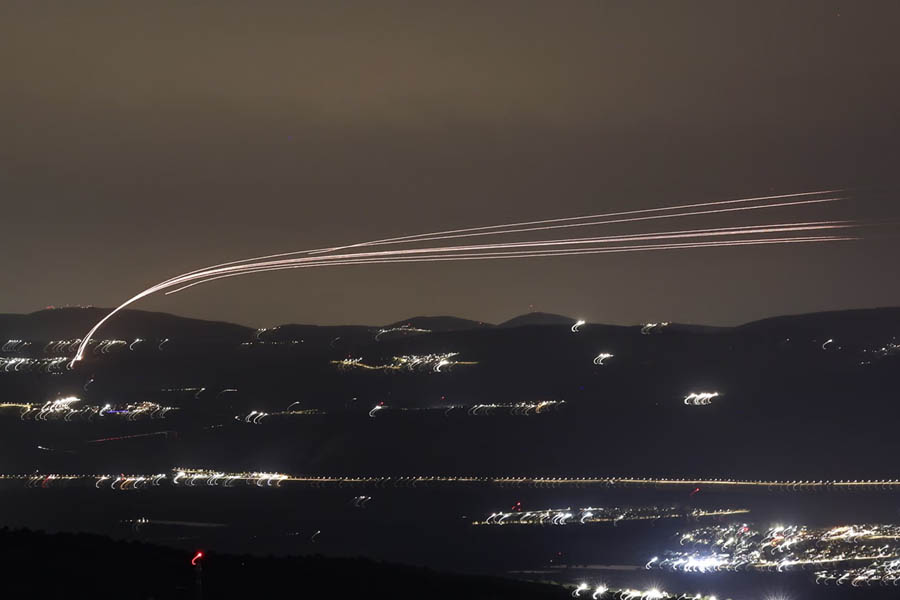
Over the Upper Galilee region in northern Israel, air defence systems lit up the night sky as they intercepted projectiles fired from Lebanese territory. The Iron Dome – and other systems – worked as designed. But the fact that they were needed at all was a reminder: the ceasefire between Israel and Hezbollah does not exist. Not yet.
"After so many years of a total disconnect in the dialogue between the two states, this move will hopefully, in the end, lead to prosperity," said Galia Gamliel, a member of Israel's security cabinet.
But prosperity seems distant when the bombs are still falling.
The Nuclear Abyss: No Solution Yet
The core of the US-Iran conflict has not changed. Iran wants sanctions relief and recognition of its right to enrich uranium. The US wants Iran's nuclear programme dismantled – or at least frozen for decades.
The ceasefire bought time. It did not buy agreement. And with the deadline looming, the question is whether another round of talks can bridge a gap that has proven unbridgeable for years.
Iran's military adviser to the supreme leader, Mohsen Rezaei, struck a characteristically aggressive tone. "Extending the ceasefire is not in our favour at all," he told state TV. "The pressures must be intensified. Our launchers are now locked onto the ships and we will sink them all."
Rezaei, a former commander-in-chief of the IRGC, also threatened to take American soldiers hostage if they came ashore and "demand one billion dollars for each captive."
His words were a reminder: behind the diplomacy, the guns are still loaded.
The US Blockade: 10 Ships Stopped
On the water, the US blockade of Iranian ports is now in effect. US Central Command (Centcom) said it stopped 10 vessels from sailing out of Iranian ports during the first 48 hours of the blockade.
But ship tracking data told a more complicated story. At least three ships sailing from Iranian ports crossed the Strait of Hormuz – though some vessels that took the route later turned back.
The blockade is Trump's answer to Iran's near-total closure of the strait since the war began. It is a high-risk strategy, one that could escalate into direct naval confrontation. For now, both sides are posturing. But posturing can turn into shooting in seconds.
Markets Rally on Ceasefire Hopes
Asian stocks mostly gained on Thursday, fueled by expectations of a ceasefire extension and hopes for more US-Iran talks.
Tokyo's Nikkei 225 jumped 2.4%. South Korea's Kospi climbed 2%. Hong Kong's Hang Seng rose. The Shanghai Composite index was up 0.6%. Taiwan's Taiex traded 0.9% higher.
Oil prices steadied – a rare moment of calm in a market that has been volatile for weeks. But the calm may be temporary. If the ceasefire collapses, oil will spike again. If it holds, prices could retreat.
China reported 5% economic growth for the January-March quarter – an acceleration from the previous quarter. Economists say China has largely shrugged off the initial impacts of the Iran war, but some warn that its massive export engine could be hit more significantly in the coming months on slower global economic growth.
Jet Fuel Crunch: Europe Braces for Summer Chaos
The European Union is drafting plans to tackle a looming jet fuel supply crunch. European airlines have warned of jet fuel shortages within weeks – a crisis that could disrupt summer travel.
Europe is more dependent on jet fuel imports – with some 75% from the Middle East – than for any other transport fuel. The Strait of Hormuz blockade has choked supply. Prices have soared. Airlines are warning of price hikes, cancellations, and grounded planes if the war does not end soon.
From next month, the European Commission will introduce EU-wide mapping of refining capacity for oil products and take measures "to ensure that existing refining capacity is fully utilised and maintained."
The EC is also working on measures targeting jet fuel supply, but those are still in development. The draft plans are due to be published on 22 April – just days before the ceasefire expires.
Global Finance: 11 Countries Call for IMF Emergency Support
The finance ministers of 11 countries – including the UK and Japan – called for "coordinated emergency support" from the IMF and World Bank to help countries hit by disruptions from the Middle East war.
The request reflects the growing recognition that the war is not just a regional crisis. It is a global economic emergency. Food insecurity, energy shortages, and supply chain fractures are spreading.
The IMF has already warned it will lower global growth forecasts and prepare up to $50 billion in aid. The finance ministers' letter adds political weight to that warning.
What Comes Next?
The next few days will determine the trajectory of the Middle East – and the global economy.
If Pakistan's mediation succeeds, a second round of US-Iran talks will begin in Islamabad. The ceasefire will be extended. The world will breathe again – temporarily.
If the talks fail, the ceasefire expires. The blockade tightens. The war resumes. And the consequences will be catastrophic.
Asim Munir is in Tehran, carrying the hopes of a region on his shoulders. Abbas Araghchi is listening. Marco Rubio is dialing into a historic call between Israel and Lebanon. Donald Trump is watching. And the world is holding its breath.
"More hopes have been created," the Iranian official said. But hope is not a plan. And the clock is still ticking.
Stay updated with the latest world headlines on our World Headlines Page.