5 May 2026 | Kyiv / Vienna / Yerevan / Washington
KYIV, Ukraine – The streets of Kramatorsk are burning. The diplomats of Vienna are expelling spies. And in the halls of European power, the ceasefire duel continues – with the dead as witnesses.
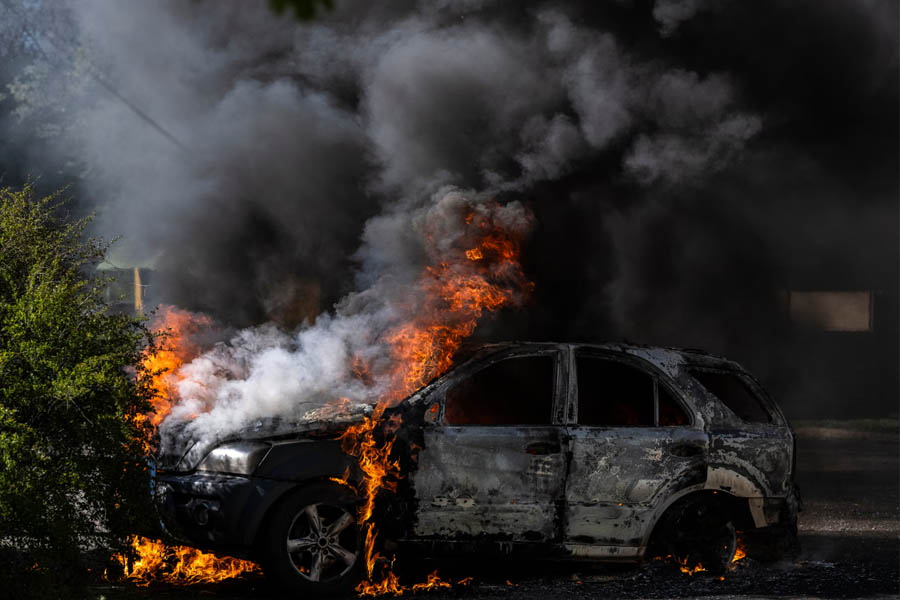
A Russian fiber-optic FPV drone struck a residential area of Kramatorsk in the Donetsk region, setting a parked civilian car ablaze. The attack – using technology immune to electronic jamming – came as President Volodymyr Zelenskyy condemned the "utter cynicism" of Russian attacks amid dueling ceasefire proposals.
The overnight attacks were primarily aimed at Ukraine's energy infrastructure, but killed four people and injured more, Zelenskyy said.
⚡ BREAKING: Fiber-optic drone strike in Kramatorsk • 4 killed overnight • Zelenskyy: "utter cynicism" • Russia demands 2-day truce for Victory Day • Threatens "massive strike on Kyiv" • Austria expels 3 Russian diplomats over spy antennae • Trump raises EU car tariffs to 25%
"Not Serious": Zelenskyy's Truce Counteroffer
Earlier, Zelenskyy said that holding a ceasefire between 8 and 9 May so Moscow could hold the Victory Parade despite fears of a Ukrainian attack was "not serious," and suggested an earlier truce starting already midnight (9pm GMT) on Tuesday.
"It is time for Russian leaders to take real steps to end their war, especially since Russia's defence ministry believes it cannot hold a parade in Moscow without Ukraine's goodwill."
There is nothing to suggest that Russia will abide by the proposed ceasefire. The Russian defence ministry has threatened that if its truce demand was not met there would be a "massive missile strike on the centre of Kyiv" – a threat that has drawn international condemnation as a potential war crime.
— Volodymyr Zelenskyy
The Fibre-Optic Threat: Drones That Cannot Be Jammed
The Kramatorsk strike highlights a new technological frontier in the war. Fibre-optic FPV drones are immune to electronic warfare – they cannot be jammed because they are physically tethered to the operator by a thin, spooling cable. The technology allows Russian forces to strike targets that previously were protected by Ukrainian jamming systems.
The burning civilian car in Kramatorsk is the latest evidence that Russia is adapting, innovating, and continuing to kill – even as diplomats speak of ceasefires.
"Forest of Antennae": Austria Expels Three Russian Diplomats
Austria has expelled three Russian embassy staff on suspicion of spying after determining that a "forest of antennae" on the diplomatic mission in Vienna – Europe's espionage capital since the Cold War – was being used for illicit data collection.
"It is unacceptable that diplomatic immunity be used to commit espionage," Austria's foreign minister, Beate Meinl-Reisinger, said on Monday. She added that the three embassy staff – whose expulsions bring the number of Russian diplomats sent home by Vienna to 14 since 2020 – had already left the country.
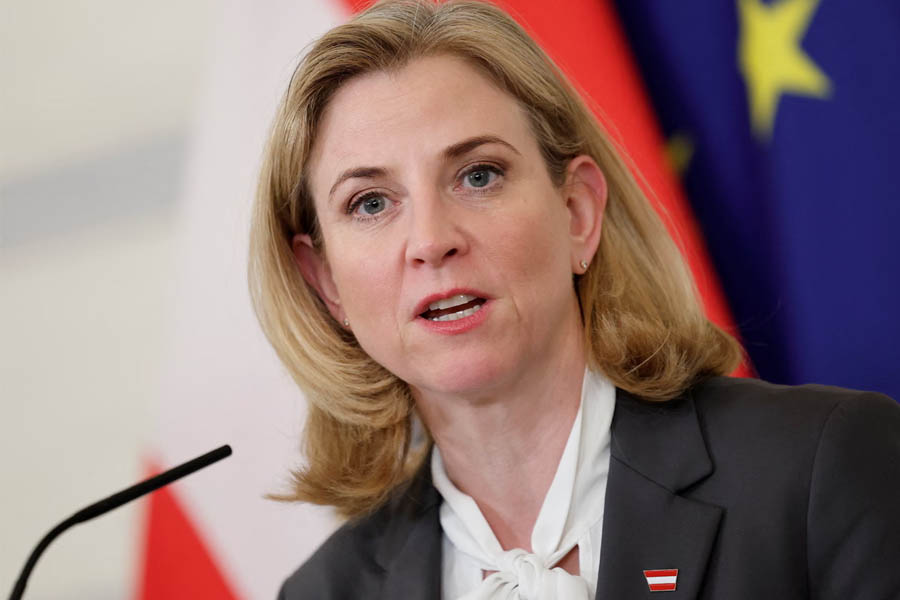
"We have communicated this to the Russian side in no uncertain terms, including as regards the forest of antennae at the Russian mission," Meinl-Reisinger said. Spying was a problem for Austria, she continued, but the government had embarked on a "change of course" and was "taking consistent action."
The Russian embassy in Vienna described the decision as "outrageous," "unjustified," "politically motivated," and "categorically unacceptable." It promised "harsh" retaliation in return.
According to a report by the Austrian public broadcaster ORF, data from international and national organisations using satellite internet was being systematically siphoned off by equipment installed on the roofs of the embassy and diplomatic compound. Leading multilateral institutions hosted by Vienna include OPEC, the International Atomic Energy Agency (IAEA), and the Organization for Security and Co-operation in Europe (OSCE).
The Austrian government has promised to take steps to tackle its longstanding espionage problem by closing a loophole in Austria's criminal code that in effect allows spies to operate freely in the country as long as their activities are not directly targeting Austria's interests. Estimates put the number of secret agents among Vienna's 17,000 accredited diplomats as high as 7,000.
Trump Tears Up Tariff Deal: Cars and Lorries to 25%
Donald Trump has said he is tearing up part of the tariff deal he struck with EU leaders at his golf course in Scotland last summer, criticising Brussels for taking so long to ratify the deal.
Blindsiding Brussels late on Friday – a public holiday in much of Europe – he announced that he would be increasing tariffs on cars and lorries imported into the US from the EU from 15% to 25% from next week. Vehicles made in the US by EU companies would be exempt from the increase, he wrote on Truth Social.
— Bernd Lange, German MEP, chair of EU parliament's international trade committee
The EU parliament's international trade committee chair, the German MEP Bernd Lange, said: "This latest move demonstrates just how unreliable the US side is. This is no way to treat close partners. Now we can only respond with the utmost clarity and firmness, drawing on the strength of our position."
Although the European parliament voted at the end of March to progress the deal, it still has not been formally signed off. The EU is likely to launch an intense diplomatic campaign to bring the deal back from the brink.
The latest tariff development comes as Trump threatened to withdraw US troops from Italy and Spain, a day after saying he was looking at reducing the number deployed in Germany. Asked late on Thursday if he would consider pulling US troops out of Italy and Spain, he told reporters: "Probably … look, why shouldn't I? Italy has not been of any help to us and Spain has been horrible, absolutely horrible."
Von der Leyen: "A Deal Is a Deal"
Speaking from Yerevan, where the EU-Armenia summit is taking place, European Commission President Ursula von der Leyen struck a measured but firm tone.
"A deal is a deal, and we have a deal, and the essence of this deal is prosperity, common rules and reliability. Now we are both implementing this deal while respecting the different democratic procedures we have on both sides."
"We want from this work mutual gain, cooperation and reliability, and we are prepared for every scenario."
Romania's Government at Risk
A vote of no confidence in Romania's Prime Minister Ilie Bolojan could see his government collapse this afternoon, adding to the political turbulence in Eastern Europe as the war in Ukraine continues.
📊 ESPIONAGE & DIPLOMACY AT A GLANCE
- Russian diplomats expelled (Austria, since 2020): 14
- Accredited diplomats in Vienna: ~17,000
- Estimated intelligence officers in Vienna: Up to 7,000
- US auto tariff increase (EU): 15% → 25% (effective next week)
- US troop withdrawal threats: Germany (5,000), Italy & Spain (under consideration)
What Comes Next?
The ceasefire duel remains unresolved. Russia's Victory Day parade approaches. Zelenskyy's counteroffer sits on the table. And the drones continue to fly.
In Vienna, the "forest of antennae" has been dismantled – but the espionage networks they served remain. In Washington, Trump's tariff war with Europe escalates. And in Brussels, von der Leyen prepares for "every scenario."
One thing is certain: the war in Ukraine is no longer just about Ukraine. It has become a theatre for technological innovation, espionage, economic warfare, and diplomatic brinkmanship.
And in Kramatorsk, a burned-out car is still smoking.
Stay updated with the latest world headlines on our Russia-Ukraine War Page.