WASHINGTON TO BEIJING — Under the polished lights of global stages and behind the guarded walls of data centers, Apple's story over the last decade has been one of contradiction, conviction, and calculated compromise. As Tim Cook prepares to step down after 15 years at the helm, the world is left asking a powerful question: did Apple truly protect privacy—or redefine it?
The Architect of Apple's Privacy Identity
Since taking over in 2011, Tim Cook positioned Apple as a fierce defender of user privacy. He famously described privacy as a "fundamental human right," setting Apple apart from competitors reliant on data-driven advertising models.
This stance became globally visible in 2015, when Apple refused to comply with FBI demands to unlock an iPhone connected to the San Bernardino shooting. Cook drew a hard line against creating a "backdoor," arguing it would endanger millions of users.
Apple reinforced this image with bold initiatives like App Tracking Transparency in 2021, giving users control over how apps track their activity. The company even took legal action against spyware firms, further strengthening its pro-privacy narrative.
Cracks Beneath the Surface
Yet, as Apple expanded globally, especially into China—its second-largest market—the company's privacy stance became increasingly complex.
To comply with Chinese cybersecurity laws, Apple moved user data to state-backed servers in Guizhou. Critics argue this made it easier for authorities to access sensitive user information, raising alarms among human rights organizations.
Apple also removed apps such as encrypted messaging platforms from its Chinese App Store under government pressure, and certain privacy features—like Private Relay—were never introduced in regions like China and Saudi Arabia.
Cook defended these decisions pragmatically, stating that companies must follow local laws when operating internationally. But critics argue this approach compromises the very principles Apple claims to uphold.
A Delicate Balancing Act
Cook's leadership can be defined as a constant negotiation between ideals and realities. In the United States and Europe, Apple championed privacy rights. Abroad, it adapted—sometimes controversially—to regulatory demands.
This duality has led experts to question whether Apple's privacy model is a universal principle or a market-dependent strategy.
The Transition: Enter John Ternus
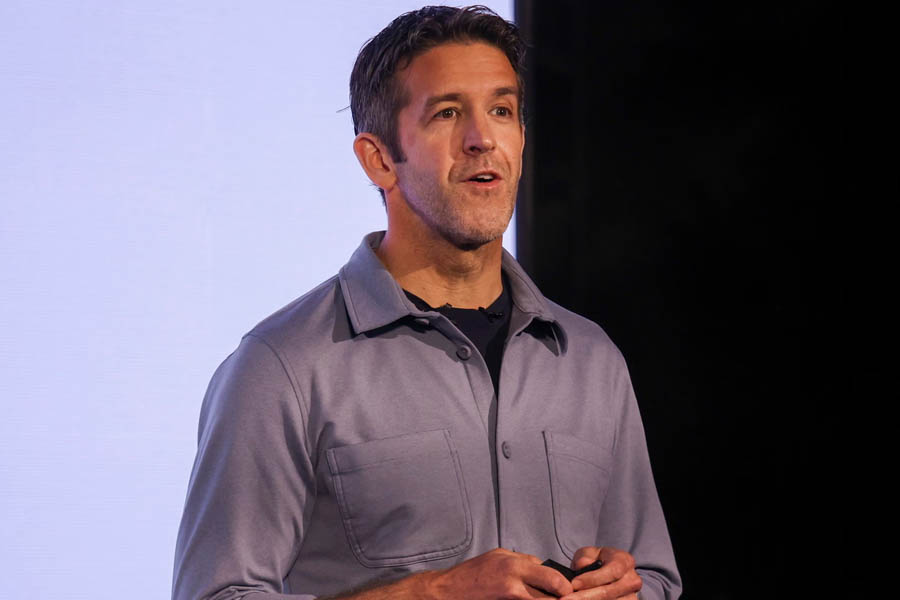
As Cook steps aside in September, Apple will be led by longtime insider John Ternus, a hardware engineering veteran who joined the company in 2001.
Ternus has played a key role in some of Apple's most significant product innovations, including the transition to proprietary silicon chips, the expansion of Apple Watch and AirPods, and advancements in Mac technology.
His leadership style is described as calm, methodical, and deeply technical—closer to Cook's steady approach than Steve Jobs' visionary intensity.
What Lies Ahead for Apple?
Ternus inherits a company at the peak of financial success, with annual profits exceeding $100 billion. However, new challenges loom large.
- Growing scrutiny over global privacy practices
- Rising geopolitical tensions affecting tech operations
- Increasing competition in artificial intelligence
- Pressure to innovate beyond hardware dominance
Perhaps most critically, he must define Apple's next chapter in privacy—whether to double down on Cook's philosophy or reshape it for a rapidly evolving digital world.
A Legacy Written in Paradox
Tim Cook leaves behind a company stronger, richer, and more influential than ever. Yet his legacy on privacy remains layered and debated.
He stood firm when it mattered most—challenging governments and defending encryption. But he also adapted when necessary, navigating complex international landscapes where ideals met reality.
In the end, Cook's Apple may be remembered not as a perfect guardian of privacy, but as a company that defined the modern conversation around it.
And now, as the curtain falls on one era and rises on another, the world watches closely—because the future of privacy at Apple is no longer just a promise. It's a test.
Stay Ahead of Global Power Moves & Tech Shifts
From Apple's leadership transition to global economic turning points. Get insights, analysis, and breaking updates.
Explore Global Markets →