12 April 2026 | Islamabad / Washington
Islamabad, Pakistan – After 21 hours of marathon negotiations, the most direct US-Iran talks in decades have ended in failure. Vice President JD Vance boarded Air Force Two on Sunday and departed Islamabad without a deal, as Donald Trump declared from the White House that reaching an agreement with Iran makes "no difference" to him.
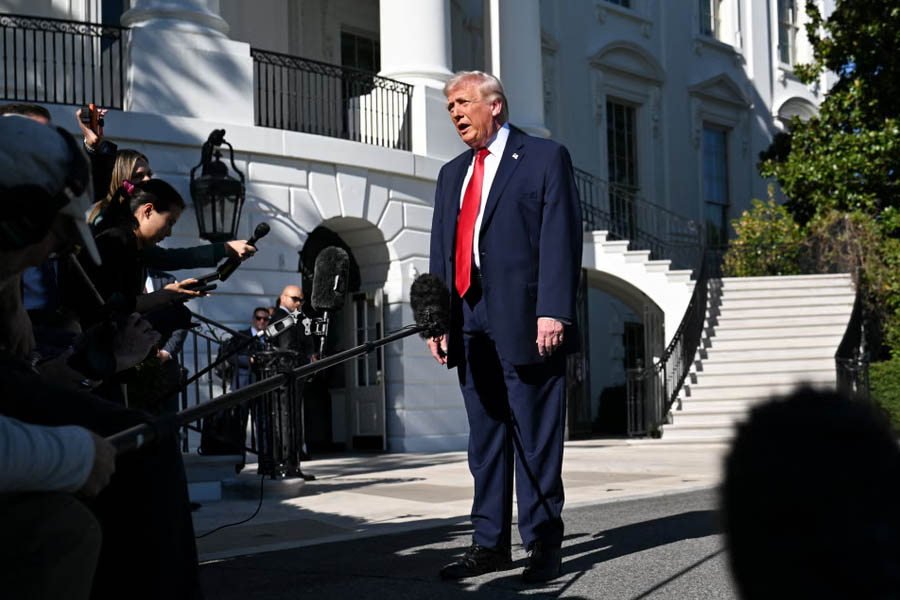
"Regardless of what happens, we win," Trump told reporters outside the White House on Saturday. "Whether we make a deal or not, makes no difference to me."
The collapse of talks leaves the fragile two-week ceasefire hanging by a thread – and the Strait of Hormuz, a chokepoint for 20% of global oil supplies, remains mined and blocked.
Key developments:
- Talks failed: 21-hour marathon ends without agreement
- Vance departs: Boarded Air Force Two at 7:08am local time
- Trump: "Makes no difference to me" if deal reached
- Iran blames: "Unreasonable" and "excessive" US demands
- US red line: Iran must commit to no nuclear weapons
- Hormuz crisis: Iran can't find its own mines, US officials say
- US military: "Setting conditions" to clear mines in strait
- Lebanon death toll: Over 2,000 killed, 6,300+ wounded
- Trump threatens China: "Big problems" if arms shipped to Iran
"We Have Defeated Them Militarily": Trump's Defiant Stance
Trump was characteristically blunt when asked about the prospects of a deal. He dismissed the idea of unfreezing Iran's assets with a wave of his hand.
"We've defeated them militarily," Trump said. "They've dropped a couple of water mines ... We've defeated all of their water boats, too. We've totally defeated that country and so let's see what happens. Maybe they make a deal, maybe they don't, it doesn't matter. From the standpoint of America, we win."
The president acknowledged that the US is currently undergoing "very deep negotiations" with Iran, even as Vance was engaged in talks in Islamabad. He also issued a stark warning to China: if it ships arms to Iran, the country will have "big problems."
Vance: "Bad News for Iran, Not for America"
Speaking to reporters before boarding Air Force Two, Vance struck a similar tone to his boss – but with a note of disappointment.
"The bad news is that we have not reached an agreement, and I think that's bad news for Iran much more than it's bad news for the United States of America," Vance said. "So we go back to the United States having not come to an agreement. We've made very clear what our red lines are."
Vance revealed that he had spoken with Trump at least half a dozen times during the 21-hour negotiation marathon, and that the core sticking point was Iran's nuclear ambitions.
"We need to see an affirmative commitment that [Iran] will not seek a nuclear weapon, and they will not seek the tools that would enable them to quickly achieve a nuclear weapon," Vance said. "That is the core goal of the president of the United States, and that's what we've tried to achieve through these negotiations."
The vice-president said the US delegation left behind a "final and best offer." Whether Iran accepts it remains to be seen.
Iran: "Unreasonable Demands" Sank the Talks
Iranian state broadcaster IRIB offered a starkly different version of events, blaming the US for the collapse.
"The Iranian delegation negotiated continuously and intensively for 21 hours in order to protect the national interests of the Iranian people," IRIB said on Telegram. "Despite various initiatives from the Iranian delegation, the unreasonable demands of the American side prevented the progress of the negotiations. Thus the negotiations ended."
Iran's semi-official Tasnim news agency described US demands as "excessive." The Iranian foreign ministry's spokesperson, Esmaeil Baqaei, warned ahead of the talks that success depended on Washington avoiding "excessive demands" and "unlawful requests."
Among the issues discussed, according to Iranian officials: the strategic Strait of Hormuz, nuclear development, war reparations, the lifting of sanctions, and a complete end to the war – including a ceasefire in Lebanon.
The Nuclear Red Line That Could Not Be Crossed
The divide over nuclear weapons proved insurmountable. The US demands an "affirmative commitment" from Tehran to never seek a nuclear weapon – and to abandon the tools needed to build one quickly. Iran has long insisted on its right to enrich uranium for civilian purposes.
Before the talks began, a senior Iranian source told Reuters the US had agreed to release frozen assets in Qatar and other foreign banks. A US official denied agreeing to release the money – another point of sharp divergence.
Tehran's demands also include control of the Strait of Hormuz, payment of war reparations, and a regional ceasefire that includes Lebanon – where Israeli strikes have killed more than 2,000 people.
Strait of Hormuz: A Minefield No One Can Clear
Perhaps the most extraordinary development of the weekend came not from the negotiating table, but from the water. The New York Times reported that Iran is unable to find the mines it laid in the Strait of Hormuz – and does not have the capacity to remove them.
US officials told the Times that Iran dropped explosives erratically throughout the waterway using small boats. The US was mostly unable to monitor the operation, leaving both countries uncertain about the exact location and number of mines in the water. Some mines have drifted or moved from their original positions.
Neither Iran nor the US has the capacity to quickly demine the strait – particularly after the US destroyed much of Iran's navy.
Iran's foreign minister, Abbas Araghchi, previously said the strait would be opened "with due consideration of technical limitations" – which US officials now interpret as a reference to the demining nightmare Iran has created for itself.
US Military: "Setting Conditions" to Clear the Strait
As the talks unfolded, the US military announced it had "begun setting conditions for clearing mines in the strait." Two navy guided-missile destroyers conducted operations, according to an update released Saturday afternoon.
However, a spokesperson for Iran's joint military command denied the US claim that any navy destroyers had transited the waterway – another sign of the deep mistrust between the two sides.
Maritime traffic through the strait has ground almost to a standstill. A senior Revolutionary Guards official said on 2 March that Iran would set ships "ablaze" if they tried to traverse the strait. A small number of vessels have continued to pass – but only after receiving Iranian approval and paying tolls.
Lebanon: The Other Battlefield
While the world focused on Islamabad, the bombs continued to fall on Lebanon. The latest Israeli attacks have pushed the death toll past 2,000, with more than 6,300 wounded, according to the health ministry.
Iranian negotiators demanded a ceasefire in Lebanon as part of any peace deal – a condition the US and Israel have rejected. Israel was not present at the Islamabad talks, and Prime Minister Benjamin Netanyahu made clear on Saturday that Israel remains committed to fighting Iran.
"Israel under my leadership will continue to fight Iran's terror regime and its proxies," Netanyahu wrote on social media.
Iran and mediator Pakistan insist the US knew that stopping Israeli strikes in Lebanon was part of the ceasefire deal. Vance has claimed there was a "misunderstanding." The dead don't care about the semantics.
A Historic Failure
The Islamabad talks were the first direct US-Iranian meeting in more than a decade and the highest-level discussions since the 1979 Islamic Revolution. The outcome could have determined the fate of the ceasefire and the reopening of the Strait of Hormuz.
Instead, Vance is flying home. The Iranian delegation is packing up. And the world is left to wonder: what comes next?
For his part, Trump seemed unbothered. "We've totally defeated that country," he said. "Let's see what happens."
But with global oil prices soaring, inflation worsening, and a humanitarian catastrophe unfolding, the stakes could not be higher. The ceasefire holds – for now. But without a deal, and with mines still floating in the strait, the clock is ticking toward something far worse.
Stay updated with the latest world headlines on our World Headlines Page.