13 April 2026 | Washington / Tehran / Global Markets
Washington, D.C. – The ceasefire is hanging by a thread. And Donald Trump just took a match to it.
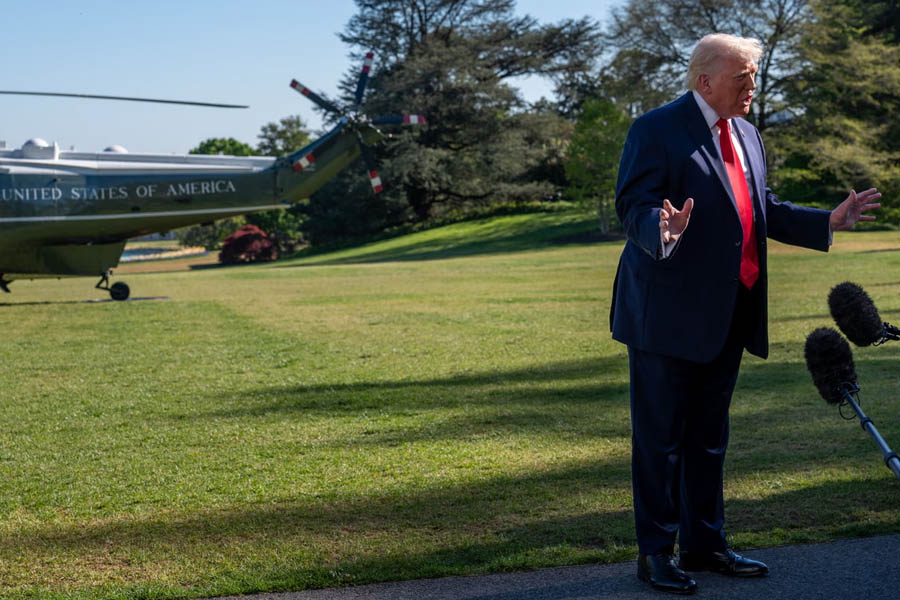
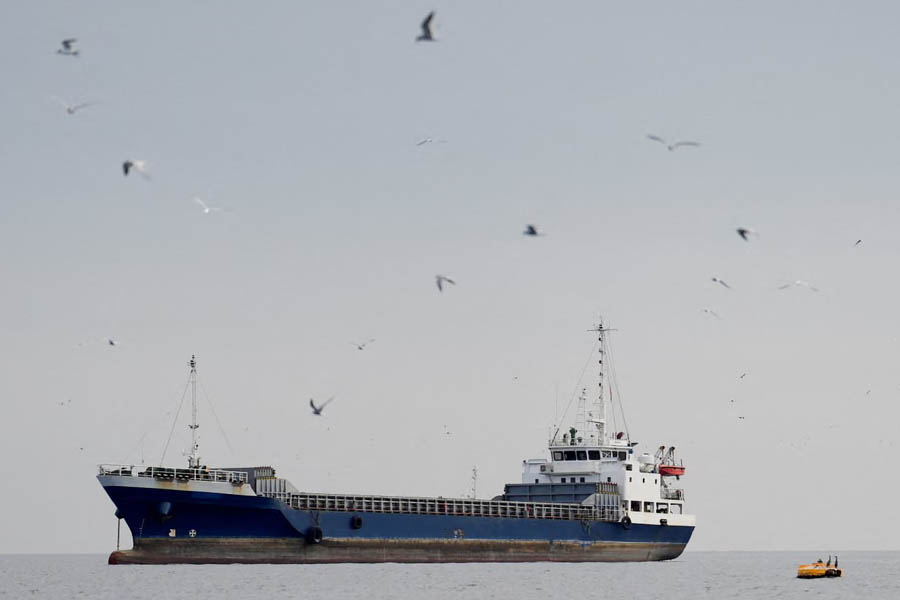
The president announced Sunday that the US Navy will begin blockading the Strait of Hormuz – the most critical chokepoint for global oil supplies – starting Monday morning. In a lengthy, all-caps post on his Truth Social platform, Trump declared the US would be "BLOCKADING any and all Ships trying to enter, or leave, the Strait of Hormuz."
Oil prices exploded. US crude jumped 8% to $104.24 a barrel. Brent crude, the international standard, rose 7% to $102.29. Australia's share market dropped sharply. And in the strait itself, two vessels that were already leaving turned around immediately.
Lloyd's List Intelligence confirmed: "All traffic" through the waterway has stopped.
Key developments:
- US blockade begins: Monday, April 13 at 10am ET (1400 GMT)
- Oil price surge: US crude +8% to $104.24; Brent +7% to $102.29
- Traffic halted: All vessels stopped; two ships turned around
- Iran warning: "Approaching military vessels violates the ceasefire"
- Trump threatens: Could bomb water treatment plants, power plants, bridges
- Military strikes considered: WSJ reports limited strikes on table
- Haley: "This is a game of chicken. Who caves first?"
- Warner: Seizing Iran's uranium would be "very, very dangerous"
- Iran taunt: "Enjoy $4–$5 gas. You'll be nostalgic."
"This Is a Game of Chicken": Blockade Begins Monday
US Central Command (Centcom) made it official: "Centcom forces will begin implementing a blockade of all maritime traffic entering and exiting Iranian ports on April 13 at 10am ET [1400 GMT], in accordance with the president's proclamation."
Iran's Revolutionary Guard responded swiftly, warning that "approaching military vessels to the Strait of Hormuz is considered a violation of the ceasefire." The same ceasefire that Trump announced just days ago. The same ceasefire that was supposed to bring two weeks of calm.
It lasted less than a week.
Trump also claimed Iran had "knowingly failed" to make good on its promise to open the strait, causing "anxiety" and "pain" for many countries around the world. Tehran has indicated it wants to retain control of the waterway after the war – and even charge fees of up to $2 million per ship to transit.
Oil Shock: 2 Million Barrels Off the Market
Michael Lynch, a distinguished fellow at the Energy Policy Research Foundation, estimated the blockade would take roughly 2 million barrels of oil per day off the market. Combined with the war's existing supply disruptions – about 10 million barrels a day – the global economy is facing an unprecedented energy crisis.
"This is a pretty big insult to a pretty big injury, I guess, is the way to put it," Lynch said.
But he added that the blockade might be short-lived, as Trump would face immense pressure to walk it back. "I wouldn't be surprised to see him give it up by midweek, especially if oil prices keep going up."
Brent crude has already skyrocketed from roughly $70 a barrel before the war began in late February to more than $119 at its peak – and now $102 after the blockade announcement.
Military Strikes Still on the Table
The Wall Street Journal reported that Trump and his advisers are looking at resuming limited military strikes in Iran in addition to the blockade. The president also reiterated his threat to destroy Iran's water treatment facilities, power plants, and bridges – repeating an earlier threat – if Tehran does not abandon its nuclear weapons programme.
"I could take out Iran in one day," Trump told Fox News on Sunday.
He also claimed the US doesn't need the strait. "We don't get our oil from there. We have so much oil. We have boats pouring up to the United States … We don't need the strait."
Iranian parliamentary speaker Mohammad Bagher Ghalibaf, who led Tehran's negotiating team in Islamabad, was unflinching in his response: "If you fight, we will fight, and if you come forward with logic, we will deal with logic. We will not bow to any threats."
He later taunted Trump on X, posting: "Enjoy the current pump figures. With the so-called 'blockade', soon you'll be nostalgic for $4–$5 gas."
Washington's Partisan War: "Finish the Job" vs "Very Dangerous"
The failure of negotiations has unleashed a barrage of starkly partisan political responses in the US.
Nikki Haley, Trump's former UN ambassador, led the Republican charge. "This is like a game of chicken," she told CNN on Sunday. "It's who caves first. The Iranian regime is hoping that Trump will cave. Today, he showed he's not."
Haley suggested the US could launch a relatively quick special forces operation to seize Iran's stash of enriched uranium – roughly 1,000lb (454kg) of highly volatile material – to prevent it from acquiring nuclear weapons.
But Mark Warner, the top Democrat on the Senate's intelligence committee, fiercely rebutted Haley. "Attempting to seize Iran's 1,000lb canisters of highly volatile enriched uranium would be very, very dangerous," Warner told CNN.
"It would take 10,000 troops on the ground guarding a perimeter. We'd have to send special operators in, and the Iranians could then bomb their own facility, potentially trapping our troops."
Australia Urges Restart of Talks
Australian Prime Minister Anthony Albanese urged Washington and Tehran to return to negotiations in Pakistan, calling the lack of a resolution over the weekend "disappointing."
"We want to see the Strait of Hormuz opened and with freedom of navigation taking place," Albanese said. "We want to see de-escalation and we want to see those negotiations resumed."
Navy chief Vice Admiral Mark Hammond, named the Australian Defence Forces' new chief starting in July, said Australian forces would be ready to contribute to an international effort to reopen the strait if the government decided to assist. "The navy is ready as it ever has been," Hammond said.
Trump has name-checked Australia as among countries not assisting with the US war effort – even as he insisted no help was required. Albanese stressed that the Australian government's view was that the ceasefire should extend to Israel's fighting with Hezbollah militants in southern Lebanon.
How Will the Blockade Work?
The US military has not offered many details yet: how many warships will enforce it, whether warplanes will be used, or whether any Gulf allies will assist.
Experts say it's unlikely the US military will fire missiles or other weapons at vessels, given the risk of an environmental disaster. The most likely option: the US Navy will try to force ships to change course through threats – and if that doesn't work, they will launch armed boarding parties to take physical control.
"Trump wants a quick fix," said Dana Stroul, a former senior Pentagon official during the Biden administration and now at the Washington Institute for Near East Policy. "The reality is, this mission is difficult to execute alone and likely unsustainable over the medium to long-term."
Pope Leo XIV Attacked by Trump
In a separate but striking development, Trump launched a scathing attack on Pope Leo XIV, saying he was "weak on crime and terrible for foreign policy" and was hurting the Catholic church. "Leo should get his act together as Pope," the president posted on Truth Social.
The attack came after the Pope denounced the "delusion of omnipotence" as fuelling the US-Israel war in Iran and demanded political leaders stop and negotiate peace.
What Comes Next?
The blockade begins Monday morning. Oil markets are already reeling. Iran has warned it will consider any military approach a violation of the ceasefire. And Trump has made clear: he is not backing down.
"This is a test of nerves," Haley said. "Who caves first?"
The world is about to find out.
Stay updated with the latest world headlines on our World Headlines Page.