14 May 2026 | Beijing / Washington / Taipei
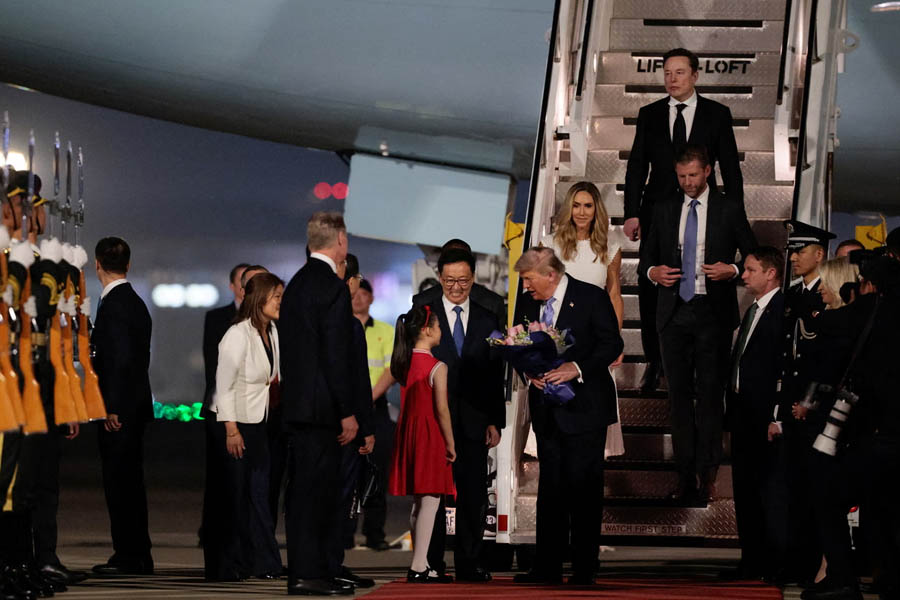
BEIJING, China – Donald Trump arrived in Beijing to military pageantry, booming cannon fire and one of the most politically sensitive summits in years, as Chinese president Xi Jinping warned that mishandling Taiwan could push the United States and China into direct conflict.
The high-stakes summit between the world’s two largest powers opened inside Beijing’s Great Hall of the People amid escalating tensions over Taiwan, artificial intelligence competition, trade disputes and the widening conflict in the Middle East.
Xi Jinping delivered a blunt message during opening talks, according to Chinese state media, warning that the Taiwan issue remained the “most important issue in China-US relations” and cautioning that any mishandling could push the relationship into “a very dangerous place”.
⚡ SUMMIT AT A GLANCE: Taiwan tensions dominate talks • Xi warns of possible conflict • Trade and AI disputes remain unresolved • Iran war crisis overshadows diplomacy • Trump says ties with China will be “better than ever” • Heightened security across Beijing
Xi Warns Taiwan Could Trigger Direct Conflict
Chinese state broadcaster CCTV reported that Xi told Trump the Taiwan issue represented the core flashpoint in bilateral relations.
“The Taiwan question is the most important issue in China-US relations,” Xi reportedly said during the summit discussions.
Chinese state news agency Xinhua quoted Xi as warning that if the Taiwan issue was not properly handled, “the two countries would clash or even come into conflict”, pushing relations into “a very dangerous place”.
The warning reflects Beijing’s growing frustration over Washington’s continued political and military support for self-ruled Taiwan, which China claims as part of its territory.
Analysts say Beijing is likely pressuring the Trump administration to soften its stance on Taiwan during the talks, although few expect Washington to dramatically alter its policy.
— Xi Jinping during summit talks with Donald Trump
Xi Invokes Ancient Greece and the “Thucydides Trap”
In one of the summit’s most striking moments, Xi referenced ancient Greek history while discussing the future of US-China relations.
The Chinese leader urged both countries to avoid what political scientists call the “Thucydides Trap” — the theory that conflict often erupts when a rising power threatens an established superpower.
The phrase originates from the ancient Greek historian Thucydides, who described how the rise of Athens and Sparta’s fear of losing dominance made war inevitable during the Peloponnesian War.
Xi said the modern world stood at a crossroads marked by “turbulence and uncertainty” and questioned whether China and the United States could work together to maintain global stability.
“Whether the two countries can work together to meet challenges and bring greater stability to the world,” Xi said, was now the defining question facing both nations.
Trump Praises Xi Amid Grand Beijing Welcome
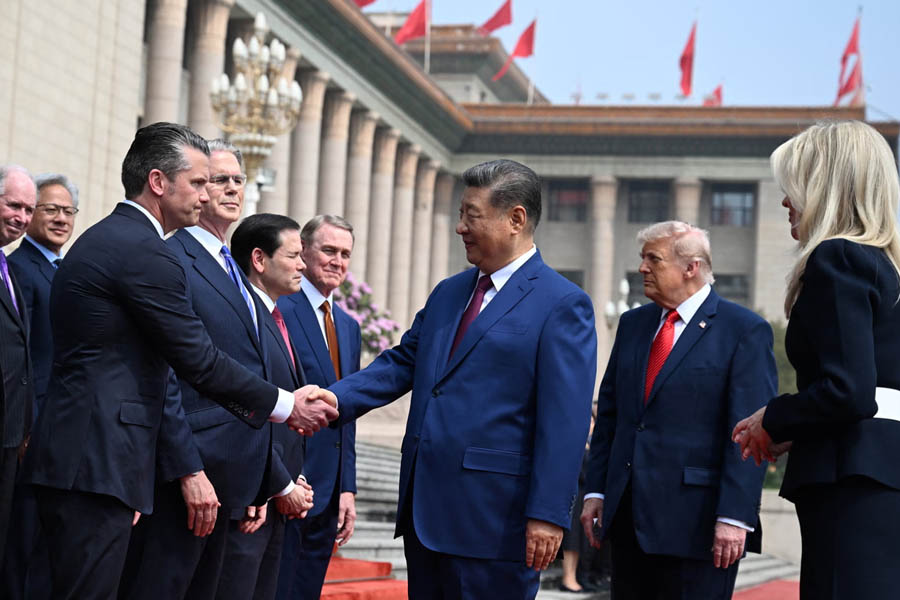
Trump appeared visibly impressed by the lavish state ceremony organised by Beijing.
The US president walked across red carpets lined with ceremonial troops carrying bayoneted rifles while martial music echoed through the Great Hall of the People.
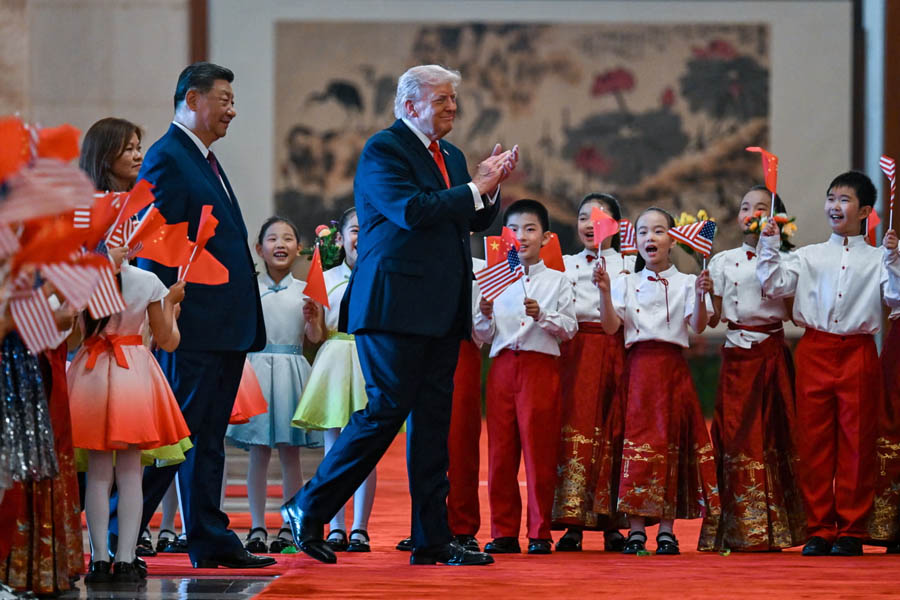
Children waving flowers and Chinese and American flags greeted the delegation as Xi warmly welcomed Trump alongside members of his family and senior advisers.
“That was an honour like few have ever seen before,” Trump reportedly told Xi after the ceremony.
The US president again praised Xi personally, calling him a “great leader” and saying their relationship would become “better than ever”.
— Donald Trump speaking to Xi Jinping in Beijing
Iran War, Trade and AI Dominate Closed-Door Talks
Although Taiwan overshadowed the summit, negotiators also faced mounting pressure over the war in Iran, deteriorating trade relations and the global race for artificial intelligence dominance.
US secretary of state Marco Rubio said Washington would urge Beijing to become more “active” in helping resolve the Iran conflict.
Meanwhile, financial markets closely monitored the summit for signs of easing tensions between the world’s two biggest economies.
Asian markets traded cautiously on Thursday. Hong Kong, Tokyo and Seoul recorded gains while Shanghai and Singapore slipped amid concerns over persistent inflation and geopolitical uncertainty.
Brent crude oil remained above $105 per barrel as the Strait of Hormuz stayed effectively shut, intensifying fears of broader global economic disruption.
📊 KEY ISSUES AT THE TRUMP-XI SUMMIT
- Taiwan: China warns against stronger US support
- Trade War: Discussions on tariffs and commercial disputes
- Artificial Intelligence: Competition over AI dominance and technology restrictions
- Iran Conflict: Washington seeks Beijing’s diplomatic involvement
- Global Stability: Both nations stress importance of avoiding direct confrontation
- Markets: Investors watching for signs of reduced tensions
- Oil Prices: Brent crude remains above $105 per barrel
- Diplomatic Goal: Establishing more predictable US-China relations
China’s Public Mood Has Changed Since Trump’s Last Visit
Trump’s return to Beijing comes nearly nine years after his first state visit in 2017 — but China today is dramatically different.
Despite slower wage growth and economic challenges, nationalism has intensified across China, fuelled by state propaganda and perceptions of American political instability.
For many ordinary Chinese citizens, Trump is no longer viewed merely as an unconventional entertainer but as a potentially dangerous geopolitical rival.
Liu Chunlei, a 36-year-old Beijing taxi driver, said tensions surrounding Taiwan were widening divisions between the two superpowers.
Still, he welcomed Trump’s willingness to visit Beijing.
“It will definitely help ease China-US relations a little,” Liu said. “It shows that his attitude towards China is not hostile.”
Others were more sceptical. One user on Chinese social media platform Weibo wrote:
Heavy Security Across Beijing During Summit
Security measures across Beijing were visibly intensified ahead of Trump’s arrival.
The historic Temple of Heaven complex was closed to tourists before Trump’s planned visit, reflecting the sensitivity surrounding the summit.
The site holds deep symbolic importance in US-China diplomatic history. Former US secretary of state Henry Kissinger visited the Temple of Heaven during his secret 1971 trip to China — a journey that paved the way for formal diplomatic relations between Beijing and Washington.
What Happens Next?
The Trump-Xi summit may last less than 48 hours, but its consequences could shape the geopolitical balance for years.
Both leaders publicly insist cooperation is still possible. Yet behind the carefully choreographed smiles lies a relationship increasingly defined by strategic rivalry, military tensions and competing visions for global leadership.
Whether the summit produces meaningful breakthroughs remains uncertain. But Xi’s warning over Taiwan made one reality unmistakably clear: the stakes could hardly be higher.
Follow the latest global developments and diplomatic headlines on our Live World News Headline page.
Frequently Asked Questions (Q&A)
❓ 10 KEY QUESTIONS ABOUT THE TRUMP-XI SUMMIT
- 1. Why is Taiwan such a major issue between China and the US?
Taiwan is claimed by China as part of its territory, while the United States supports Taiwan’s self-governance and provides military assistance. - 2. What did Xi Jinping warn Donald Trump about?
Xi warned that mishandling Taiwan could push China and the US into direct conflict. - 3. What is the “Thucydides Trap” mentioned by Xi?
It is a political theory suggesting war often occurs when a rising power challenges an established global power. - 4. What are the main issues discussed at the summit?
Taiwan, trade disputes, artificial intelligence competition, the Iran conflict and global stability. - 5. Why is the Iran war affecting US-China talks?
Washington wants Beijing to help reduce tensions and use its influence diplomatically in the Middle East. - 6. How did Trump describe Xi Jinping?
Trump repeatedly called Xi a “great leader” during the summit. - 7. Why are financial markets closely watching the summit?
Investors hope reduced tensions could improve global trade stability and economic confidence. - 8. What role does artificial intelligence play in the rivalry?
Both countries are competing for dominance in advanced AI technologies and semiconductor industries. - 9. Why was security tightened in Beijing?
Chinese authorities increased security to ensure the summit proceeded smoothly without disruptions. - 10. Could this summit improve US-China relations?
It could reduce tensions temporarily, but major disagreements over Taiwan, trade and security remain unresolved.