20 May 2026 | London, United Kingdom — Updated 15:30 GMT
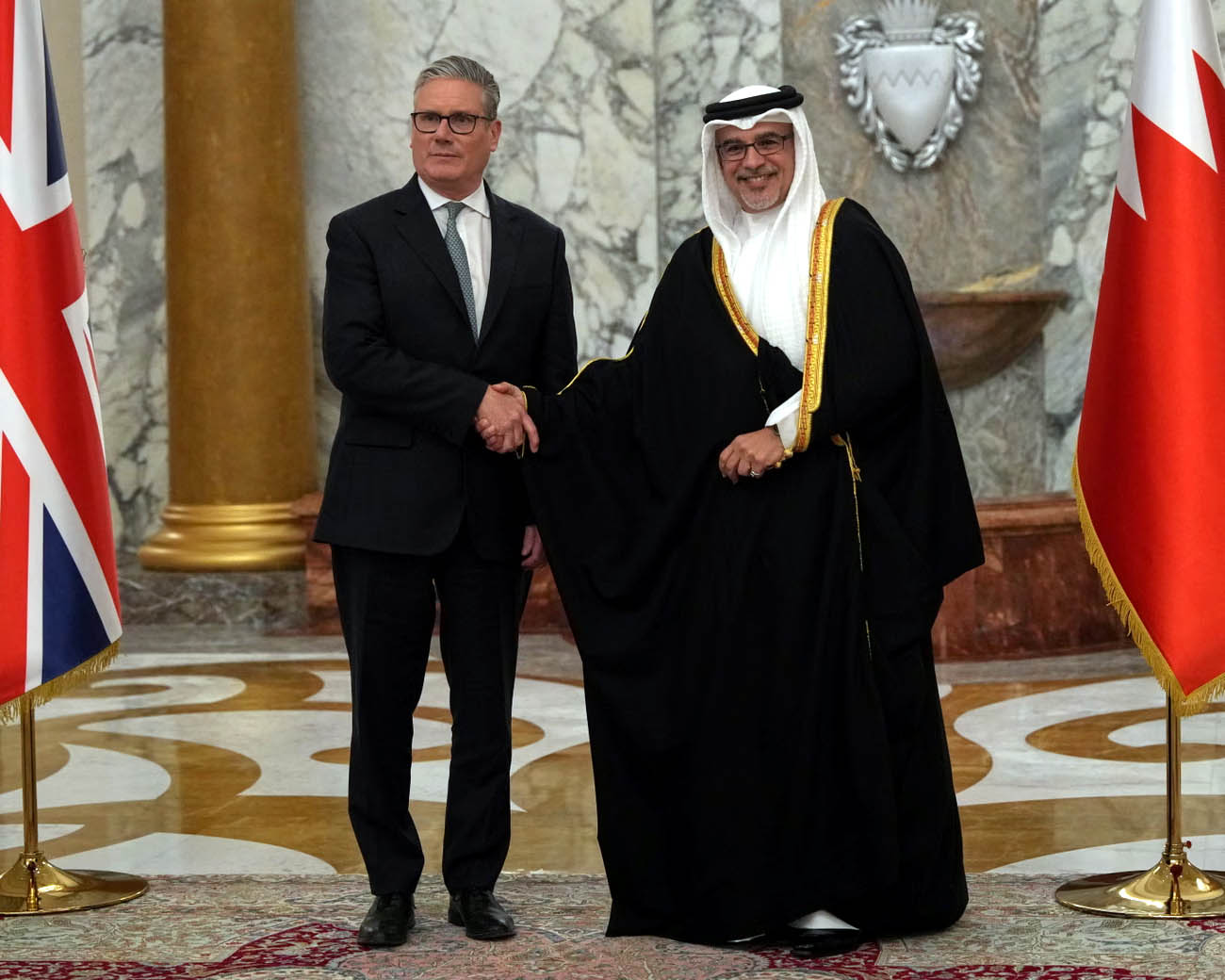
LONDON – Keir Starmer has finally struck a trade deal with six Gulf states after four years of on-off negotiations led by four different prime ministers, sealing a £3.7bn agreement that he hailed as a "huge win" for British businesses – but which critics have condemned as "values free" for its conspicuous omission of a human rights chapter.
The deal with the Gulf Cooperation Council (GCC) – comprising Saudi Arabia, Kuwait, Oman, Qatar, the United Arab Emirates and Bahrain – will remove tariffs from 93% of British goods sold into the region, offering new opportunities for exporters in food, luxury cars, defence, aerospace, hospitality and other services. The government said the value of the deal had doubled original estimates.
⚡ DEAL AT A GLANCE: £3.7bn value • 93% of UK goods tariff-free • Cheddar cheese (6% tariff removed) • Chocolate (15% removed) • Cars (5% removed) • First G7 country to seal modern deal with GCC • No human rights chapter • Third major trade deal for Starmer (after India & South Korea).
Four Years, Four Prime Ministers: A Deal Finally Done
The agreement provides Starmer with a much-needed political win amid turbulent weeks following poor local election results and speculation about his leadership. It is the third trade deal concluded by Starmer, following pacts with India and South Korea.
"Today's agreement is a huge win for British business, and for working people, who will feel the benefits in the years ahead through higher wages and more opportunities," Starmer said.
Peter Kyle, the business secretary, said he was proud that the UK was the first G7 country "to secure a modern and ambitious trade deal with the GCC."
The deal will also underline the importance of Gulf investment in the UK – from Heathrow airport, which is part-owned by Qatar, to Newcastle United Football Club, which is part-owned by Saudi Arabia.
What's in the Deal: From Cheddar to Cars
Exporters into the GCC previously faced a blanket tariff of 5%, with some products facing even higher duties. Under the new agreement:
- Cheddar cheese – previously taxed at 6% – will now face zero tariffs
- Chocolate and biscuits – taxed at 15% and 10% respectively – will be tariff-free
- Cars – previously taxed at 5% – will see tariffs removed
- Medical equipment, defence, aerospace and advanced manufacturing – all zero tariffs
UK services, which account for 80% of the UK economy, will get "guaranteed access" to business in the six states, the government said. Gulf states have also agreed to allow UK firms to store data outside the region for the first time – a significant concession that will benefit tech and financial services companies.
— Keir Starmer, UK Prime Minister
The Missing Chapter: Human Rights Omission Sparks Outrage
But the deal was met with immediate criticism over its failure to include a human rights chapter – despite complaints a year ago about a "values free" approach to trade negotiations.
Tom Wills, director of the Trade Justice Movement, said the omission was "especially alarming given the severe human rights abuses across the Gulf region, including torture, forced labour, discrimination and the silencing of dissent."
The Bahrain Institute for Rights and Democracy condemned the deal, saying it legitimised repression. Paul Scriven, a Liberal Democrat peer who advocates for human rights in Bahrain, said: "We are witnessing a complete collapse of moral leadership from this Labour government."
Paul Nowak, general secretary of the Trade Unions Congress (TUC), which had raised concerns about human rights provisions a year ago, said it was "disappointing" a deal had been signed "despite their appalling record of human rights and workers' rights."
It is understood the government did not seek a human rights chapter as it views political channels – rather than trade agreements – as the best place to raise these issues. Downing Street has not commented directly on the criticism.
Farming Victory: NFU Hails 'Best Agricultural Deal Since Brexit'
One sector celebrating the agreement is British farming. The National Farmers' Union (NFU) of England and Wales said it was the best agricultural deal since the UK left the EU, after successfully seeing off demands to lower poultry standards.
NFU President Tom Bradshaw, who had been concerned the government would make concessions on poultry standards from the Gulf, welcomed the outcome.
"We think this is probably the best negotiation we have had for agriculture. We are really happy," Bradshaw said.
The deal protects British farmers from competition with Gulf poultry producers that operate under lower welfare standards – a key red line for the NFU throughout the four years of negotiations.
📊 UK-GCC TRADE DEAL – KEY NUMBERS
- Total deal value: £3.7 billion (double original estimates)
- UK goods with zero tariffs: 93%
- GCC countries: Saudi Arabia, UAE, Qatar, Kuwait, Oman, Bahrain
- Previous tariff on cheddar cheese: 6% → now 0%
- Previous tariff on chocolate: 15% → now 0%
- Previous tariff on cars: 5% → now 0%
- UK services share of economy: 80% (now guaranteed access)
- Negotiation duration: 4 years (4 different prime ministers)
- Starmer's trade deals to date: 3 (India, South Korea, GCC)
Business Cheers, Investors Smile
The British Chambers of Commerce (BCC) said the deal would create new business for firms in financial services, energy, construction, professional services, education, hospitality and technology.
William Bain, head of trade policy at the BCC, said the deal offered "great potential to expand trade in the region" and would be "vital for tens of thousands of UK firms."
Gulf states export few goods outside petrochemicals to the UK, which are already sold into the country duty-free. But the deal will be seen as a huge political affirmation for the Gulf countries, encouraging investment in both directions.
Existing Gulf investments in the UK are already substantial. Qatar owns a significant stake in Heathrow Airport, while Saudi Arabia's Public Investment Fund owns a controlling interest in Newcastle United. The deal is expected to accelerate further Gulf investment in UK infrastructure, technology and real estate.
Concerns Over Investor Protection Clause
However, Tom Wills of the Trade Justice Movement also raised concerns about the inclusion of chapters on investor protection. He warned this could pave the way for lawsuits against the UK should government policy change – for example, on environmental regulations or a third runway at Heathrow.
"The inclusion of investor protection chapters is concerning as it could allow Gulf corporations to sue the UK government if policies change," Wills said.
The government has not responded to these concerns, but trade experts note that such provisions are standard in modern trade agreements and are designed to protect British companies operating in the Gulf as much as the other way around.
— Tom Bradshaw, NFU President
Political Context: A Much-Needed Win for Starmer
The deal comes at a crucial moment for Starmer, who has faced political turbulence following poor local election results and internal party tensions. Securing a major trade agreement after four years of stalled negotiations – under four different prime ministers – provides a tangible achievement to point to amid leadership speculation.
But the human rights controversy threatens to overshadow the economic benefits. Labour's traditional alliance with human rights campaigners and trade unions means the criticism carries particular sting, coming from within the party's own supporter base.
For now, Starmer is focusing on the economic argument. "This deal will deliver higher wages and more opportunities for working people," he said. Whether voters – and human rights advocates – agree remains to be seen.
🔍 UK-GCC Trade Deal: Q&A / Vizual Guide
❓ What is the value of the UK-GCC trade deal?
The deal is worth £3.7 billion – double original estimates – in new opportunities for UK exporters. It removes tariffs on 93% of British goods sold into the six Gulf states.
❓ Which countries are in the Gulf Cooperation Council (GCC)?
The GCC comprises Saudi Arabia, Kuwait, Oman, Qatar, the United Arab Emirates (UAE), and Bahrain.
❓ How long did negotiations take?
Four years, under four different prime ministers. The deal was finally sealed by Keir Starmer.
❓ What tariffs are being removed?
Previous tariffs included 5% on most goods (blanket), 6% on cheddar cheese, 15% on chocolate, 10% on biscuits, and 5% on cars. All these will now face zero tariffs.
❓ Why is the deal controversial?
The deal does not include a human rights chapter. Critics say it legitimises repression in Gulf states known for severe human rights abuses, including torture, forced labour, and silencing of dissent.
❓ Who has criticised the omission of human rights?
The Trade Justice Movement, Bahrain Institute for Rights and Democracy, Liberal Democrat peer Paul Scriven, and TUC general secretary Paul Nowak have all condemned the deal's lack of human rights provisions.
❓ How has the NFU reacted?
The NFU is very positive, calling it "the best agricultural deal since Brexit." They successfully fought off demands to lower UK poultry standards, protecting British farmers.
❓ What does the British Chambers of Commerce say?
The BCC says the deal will create new business for tens of thousands of UK firms across financial services, energy, construction, professional services, education, hospitality and technology.
❓ What does the deal mean for UK services?
UK services, which account for 80% of the economy, will get "guaranteed access" to business in the six Gulf states. Gulf states have also agreed to allow UK firms to store data outside the region for the first time.
❓ What existing Gulf investments exist in the UK?
Qatar part-owns Heathrow Airport. Saudi Arabia's Public Investment Fund part-owns Newcastle United Football Club. The deal is expected to accelerate further Gulf investment.
❓ What other trade deals has Starmer concluded?
This is Starmer's third trade deal, following agreements with India and South Korea.
❓ Why did the government not include a human rights chapter?
The government did not seek a human rights chapter as it views political channels – rather than trade agreements – as the best place to raise these issues.
❓ What did the Bahrain Institute for Rights and Democracy say?
The group condemned the deal, saying it "legitimises repression" and represents a "complete collapse of moral leadership" from the Labour government.
❓ What are the concerns about investor protection clauses?
Critics warn that investor protection chapters could allow Gulf corporations to sue the UK government if policies change – for example, on environmental regulations or a third runway at Heathrow.
❓ Is the UK the first G7 country to sign such a deal?
Yes. Business Secretary Peter Kyle said he was proud that the UK was the first G7 country "to secure a modern and ambitious trade deal with the GCC."
📉 TARIFF REDUCTIONS – BEFORE VS AFTER
Cheddar Cheese
6% → 0%
Chocolate
15% → 0%
Biscuits
10% → 0%
Cars
5% → 0%
Medical Equipment
0% already → 0%
📈 DEAL VALUE – ORIGINAL ESTIMATE VS FINAL
Doubled original estimates – a major win for UK exporters
🌏 GULF COOPERATION COUNCIL (GCC) MEMBERS
💼 UK SERVICES – GUARANTEED ACCESS TO GCC
Services account for 80% of the UK economy
📋 KEIR STARMER'S TRADE DEAL SCORECARD (2024-2026)
✓
India
Completed
✓
South Korea
Completed
✓
GCC
NEW DEAL
🗣️ WHO IS CRITICIZING THE DEAL?
Trade Justice Movement
"Especially alarming given severe human rights abuses across the Gulf"
Bahrain Institute for Rights and Democracy
"Legitimises repression"
Paul Scriven (Lib Dem peer)
"Complete collapse of moral leadership from this Labour government"
Paul Nowak (TUC)
"Disappointing despite appalling record of human rights"
Stay updated with the latest global markets headlines on our Global Markets Page.