21 April 2026 | Kyiv / Brussels / Moscow
Kyiv, Ukraine – The pipes are fixed. The oil can flow. But the politics have never been more tangled.
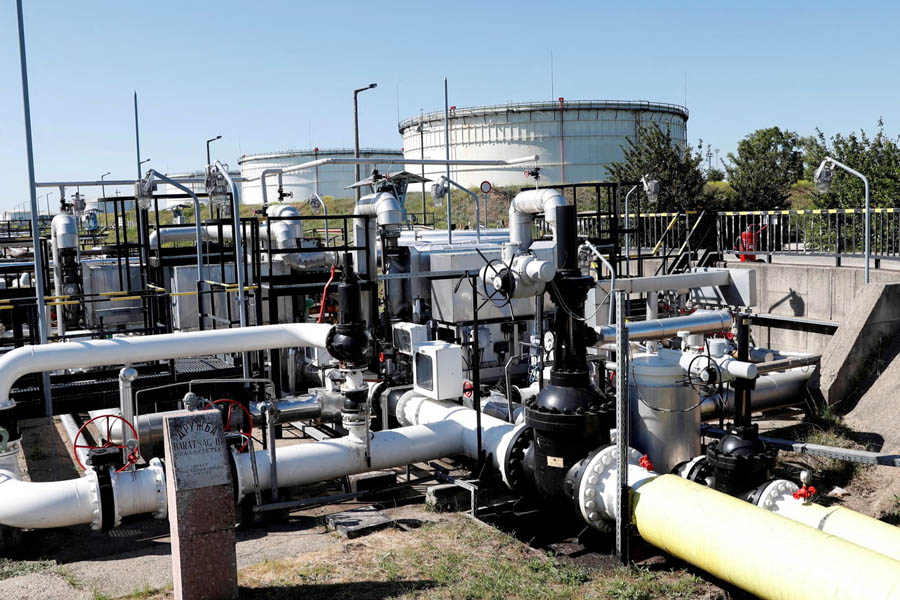
Ukraine has announced the completion of repair work on the Druzhba oil pipeline, signaling that operations could soon resume – even as diplomatic tensions deepen across Europe over energy security, sanctions, and a disputed €90 billion EU loan package.
President Volodymyr Zelenskyy confirmed that technical teams have completed restoration work on the pipeline system, which had been disrupted following reported attacks on energy infrastructure. But his message came with a catch: the pipeline's reopening is tied to European political decisions.
Key developments:
- Pipeline status: Repairs completed – operations could resume soon
- Ukraine's condition: Link reopening to unblocking of €90bn EU aid
- Hungary's position: Oil flows must resume first before lifting veto
- Slovakia's stance: Coordinated with Hungary
- EU timeline: Ambassadors to meet within days
- Zelenskyy quote: "We connect this with the unblocking of the European support package for Ukraine"
Ukraine's Bargaining Chip: Oil for Aid
"Although no one can currently guarantee that Russia will not repeat attacks on the pipeline infrastructure, our specialists have ensured the basic conditions for restoring the operation of the pipeline system and equipment," Zelenskyy said. The statement was technical. The subtext was not.
Ukraine, Zelenskyy made clear, would not simply turn the taps back on without something in return. "We connect this with the unblocking of the European support package for Ukraine," he said. "We also hope our partners will take the necessary steps regarding EU negotiation clusters."
The message was unmistakable: Kyiv is tired of waiting. And it is willing to use energy as leverage.
For a country that has spent four years fighting for its survival against Russian aggression, the calculus is cold but logical. Ukraine has sacrificed its people, its land, its future. If Europe wants the oil to flow, Europe must pay the price.
Hungary and Slovakia: "No Linkage"
But Budapest is not playing along. Hungarian and Slovak leaders have rejected any connection between pipeline operations and the EU's €90 billion financial support package for Ukraine.
Both governments insist that oil flows through Druzhba must resume first before Budapest considers lifting its veto on EU funding. The position is a mirror image of Ukraine's – but with the opposite demand.
Slovak Prime Minister Robert Fico echoed similar conditions, reinforcing a coordinated stance with Hungary. The two Central European nations, both heavily dependent on Russian energy, have emerged as the primary obstacles to EU unity on Ukraine.
"The pipeline must flow before we talk about money," a Hungarian official said, speaking on condition of anonymity. "Ukraine cannot hold Europe hostage to its political demands."
Ukraine's response: Europe has been holding Ukraine hostage for years. Now the tables have turned.
The Druzhba Pipeline: A Soviet Relic with Modern Power
The Druzhba pipeline – whose name means "Friendship" in Russian – was built in the 1960s to supply Soviet oil to Eastern Europe. More than half a century later, it remains one of the continent's most critical energy arteries.
Stretching thousands of kilometers from Russia through Belarus and Ukraine to refineries in Hungary, Slovakia, the Czech Republic, Germany, and Poland, Druzhba has long been a symbol of interdependence – and vulnerability.
Since Russia's full-scale invasion of Ukraine in 2022, the pipeline has become a geopolitical battleground. Ukraine has repeatedly accused Russia of using energy as a weapon. Russia has accused Ukraine of disrupting supplies. And European countries caught in the middle have scrambled to find alternatives.
But alternatives are expensive. And they take time. In the meantime, Druzhba remains indispensable – which is precisely why both sides are fighting over it.
EU Faces Tight Timeline and Political Pressure
EU ambassadors are expected to meet to discuss the issue within days, as pressure mounts to resolve both energy supply concerns and financial support mechanisms for Ukraine. The situation highlights growing friction inside the bloc over energy independence, sanctions policy, and geopolitical alignment with Russia.
Zelenskyy has urged continued sanctions pressure on Moscow, stating Europe must reduce dependency on adversarial energy supplies. But his own government is now using energy as a bargaining chip – a move that has made some European capitals uncomfortable.
"We understand Ukraine's frustration," said one EU diplomat. "But using oil flows as leverage for aid is a dangerous game. It sets a precedent we may come to regret."
Others see it differently. "Ukraine has every right to defend its interests," said another. "Europe has promised aid and delivered less. Kyiv is simply holding us to our word."
Broader EU Political Disputes Intensify
Beyond energy negotiations, the EU is simultaneously facing disputes over migration policy, legal frameworks, and fundamental rights enforcement. The bloc, already strained by the war in Ukraine and the conflict in the Middle East, is showing signs of fracture.
Separately, legal and political clashes have emerged in Italy over controversial migrant repatriation incentives, while EU courts continue to pressure member states on rule-of-law compliance. Hungary's incoming leadership faces early scrutiny following a landmark European Court of Justice ruling against its anti-LGBTQ+ legislation, raising further tensions within the bloc.
In this context, the Druzhba standoff is not an isolated dispute. It is a symptom of a deeper malaise – a Europe struggling to find consensus on almost every front.
Energy Security Remains Central to EU Strategy
The Druzhba pipeline dispute underscores Europe's continuing vulnerability in energy transit and its reliance on politically sensitive infrastructure spanning Ukraine, Russia, and Central Europe.
Analysts say the next 24 hours could prove decisive, as EU officials attempt to balance sanctions enforcement, energy stability, and financial commitments to Kyiv. The outcome will signal whether the EU can act as a unified bloc – or whether national interests will continue to trump collective action.
For Ukraine, the stakes could not be higher. The €90 billion aid package is essential to keeping the government functioning, the military supplied, and the economy afloat. Without it, the war effort could falter.
For Hungary, the stakes are equally high. Without Druzhba, Hungarian refineries would face severe supply shortages, driving up prices and potentially triggering an energy crisis.
Both sides need each other. Both sides are refusing to blink.
What Comes Next?
The next few days will determine whether the standoff escalates or resolves. EU ambassadors will meet. Diplomats will negotiate. And the oil will either flow – or it won't.
Zelenskyy has made his position clear. Hungary has made its position clear. Europe, caught in the middle, must now choose.
One thing is certain: the era of cheap, reliable Russian energy flowing through Ukrainian pipelines without question is over. The politics of energy have changed. And the Druzhba pipeline – a relic of the Soviet era – has become the front line of a new kind of war.
Stay updated with the latest world headlines on our World Headlines Page.