21 April 2026 | Seoul / Washington
Seoul, South Korea – A single sentence uttered in a parliamentary hearing has fractured decades of intelligence trust between two of the world's closest allies.
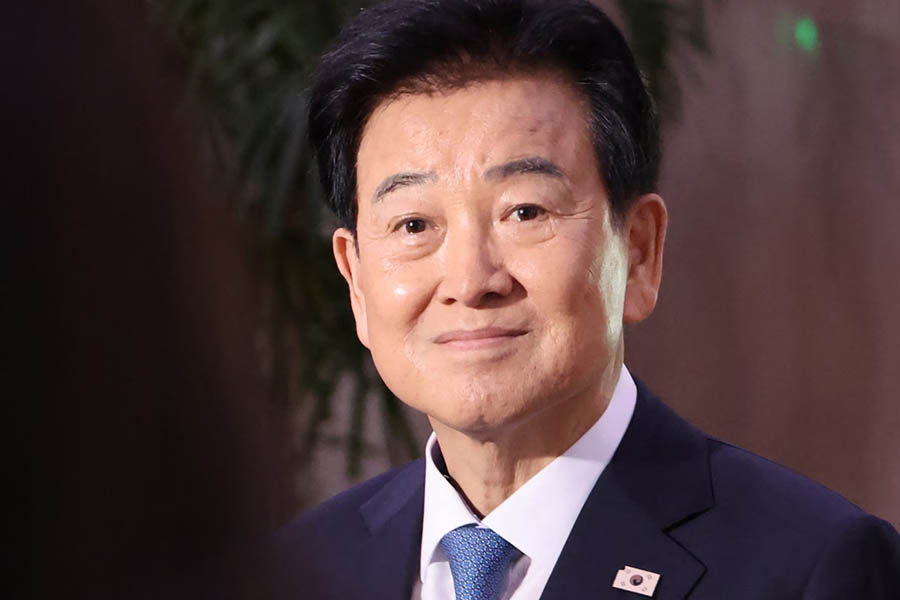
The United States has reportedly imposed partial restrictions on intelligence sharing with South Korea after Unification Minister Chung Dong-young publicly identified a suspected North Korean uranium enrichment site in Kusong – a revelation Washington never wanted made public.
The move marks a rare and dramatic rupture in the US-South Korea alliance, a partnership forged in blood during the Korean War and strengthened through decades of shared threat from the North.
Key developments:
- US action: Partial restrictions on satellite intelligence sharing
- Trigger: Minister Chung publicly identified Kusong nuclear site
- Intelligence affected: Satellite-based intel on North Korean technological developments
- Not affected: Missile surveillance; military readiness
- Chung's defense: Information was "open" – based on 2016 academic study
- President Lee's support: "Any claims that Minister Chung disclosed classified US intelligence are incorrect"
- Opposition reaction: Calls for Chung's resignation; "security disaster"
The Sentence That Shook an Alliance
It began in March. During a parliamentary hearing, Chung Dong-young, South Korea's Unification Minister, told lawmakers that North Korea was operating uranium enrichment facilities in Kusong – a north-western region not previously confirmed alongside known nuclear sites such as Yongbyon and Kangson.
The comment seemed routine to some. To US intelligence officials, it was a fire alarm.
Washington had not authorized the disclosure. The Kusong site was, in their view, sensitive intelligence – collected through satellite imagery, human sources, and signals intelligence. And now, a South Korean minister had broadcast it to the world.
According to South Korean media, the US has since limited the sharing of satellite-based intelligence related to North Korean technological developments. A senior military official, speaking to the Yonhap news agency, confirmed the restrictions have been in place since early this month.
However, the official emphasized that surveillance of missile activities continues as normal and that military readiness between the allies remains unaffected. The message: we are still allies. But trust has been damaged.
"Deeply Regrettable": Minister Fights Back
Chung Dong-young has strongly defended his statements, insisting they were based on publicly available information rather than classified intelligence.
"This is open information," Chung told reporters, pointing to earlier academic research and media reports, including a 2016 study by a US-based thinktank. He also noted that he had previously referenced the Kusong site during his confirmation hearing without controversy, expressing confusion over the renewed backlash.
The minister called the reaction "deeply regrettable" – a phrase that suggests frustration with what he sees as an overreaction from Washington.
But US officials appear unconvinced. Multiple expressions of concern have been conveyed to Seoul, with American intelligence agencies troubled by what they perceive as a breach of trust.
President Lee Backs His Minister
President Lee Jae Myung has publicly supported Chung, rejecting claims that classified information had been leaked. Writing during a state visit to India, Lee said the existence of the Kusong site had long been discussed in academic and media circles.
"Any claims that Minister Chung disclosed classified US intelligence are incorrect," Lee stated, adding that the situation required further scrutiny.
The president's backing is significant. It signals that Seoul does not believe Chung committed a serious error – and that the government will not throw its minister under the bus to appease Washington.
That stance, however, risks deepening the rift.
Political Fallout: "Security Disaster"
The issue has sparked political tension within South Korea. Opposition figures have called for Chung's resignation, labeling the situation a "security disaster" that could damage relations with Washington.
"The minister's carelessness has put our alliance at risk," said one opposition lawmaker. "How can we expect the US to trust us with sensitive information if we cannot control what our own officials say?"
The criticism has added domestic pressure on the Lee administration, which is already navigating a complex geopolitical environment.
Meanwhile, reports suggest the US has broader concerns beyond the Chung incident. Proposed legislation in Seoul would shift control over access to the Demilitarized Zone from the US-led UN Command to South Korean authorities – a move Washington views with deep skepticism.
The intelligence restrictions may be as much about the DMZ proposal as they are about Chung's comments.
Nuclear Concerns Intensify
The controversy unfolds against a backdrop of growing concern over North Korea's nuclear capabilities. The Kusong site, whether publicly confirmed or not, is real. And it is active.
Rafael Grossi, head of the International Atomic Energy Agency (IAEA), recently confirmed a significant increase in activity at the Yongbyon nuclear reactor – North Korea's most well-known nuclear facility.
"All indicators point to a serious expansion in North Korea's nuclear weapons production capacity," Grossi said, noting estimates of multiple warheads under development.
North Korean leader Kim Jong-un has shown no interest in denuclearization talks. Instead, he has accelerated production, expanding both his nuclear arsenal and his missile delivery systems.
The Kusong facility, if confirmed, would represent yet another site in North Korea's growing nuclear infrastructure – a fact that makes the US-South Korea intelligence rift all the more concerning.
Ongoing Cooperation: A Fragile Trust
Despite the reported restrictions, South Korea's defense ministry stated that close cooperation with the United States continues. Officials declined to provide details on intelligence-sharing arrangements, citing security concerns.
"Our alliance remains ironclad," a ministry spokesperson said. "We are working to resolve any misunderstandings through diplomatic channels."
But the restrictions are real. And they send a message: the US will protect its intelligence sources and methods – even if that means penalizing its closest ally.
For South Korea, the incident is a reminder of the limits of alliance. For all the shared history, for all the joint military exercises, for all the blood shed together – when it comes to intelligence, Washington draws its own red lines.
What Comes Next?
The diplomatic damage may not be permanent. Intelligence restrictions can be lifted. Trust can be rebuilt. But the incident has exposed a vulnerability in the US-South Korea relationship – one that North Korea will surely note.
Chung remains in his position, backed by the president. The US has not officially confirmed the restrictions. And the alliance continues to function, at least on the surface.
But beneath the surface, tensions are simmering. The Kusong comment was a spark. The DMZ proposal could be a fire. And in a region where North Korea's nuclear program is accelerating, the last thing the US and South Korea need is a rift in their intelligence partnership.
Stay updated with the latest world headlines on our World Headlines Page.