24 May 2026 | New Delhi & Washington & Tehran & Ankara — Updated 23:45 GMT
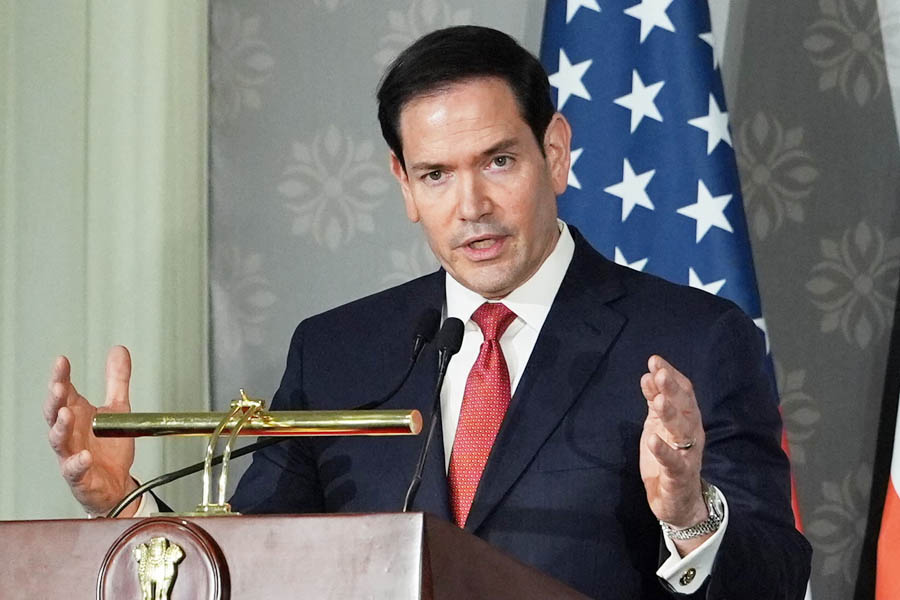
In New Delhi, America's top diplomat steps to the microphone. "I do think perhaps there is the possibility that in the next few hours the world will get some good news," Marco Rubio tells reporters. He has been shuttling between Gulf capitals for days. His voice carries the weight of exhaustion — and optimism.
In Washington, Donald Trump posts on Truth Social. "An agreement has been largely negotiated," he writes. He has been on the phone with the leaders of Saudi Arabia, Qatar, Turkey, Egypt, the UAE, Jordan, Pakistan — and Israel's Benjamin Netanyahu.
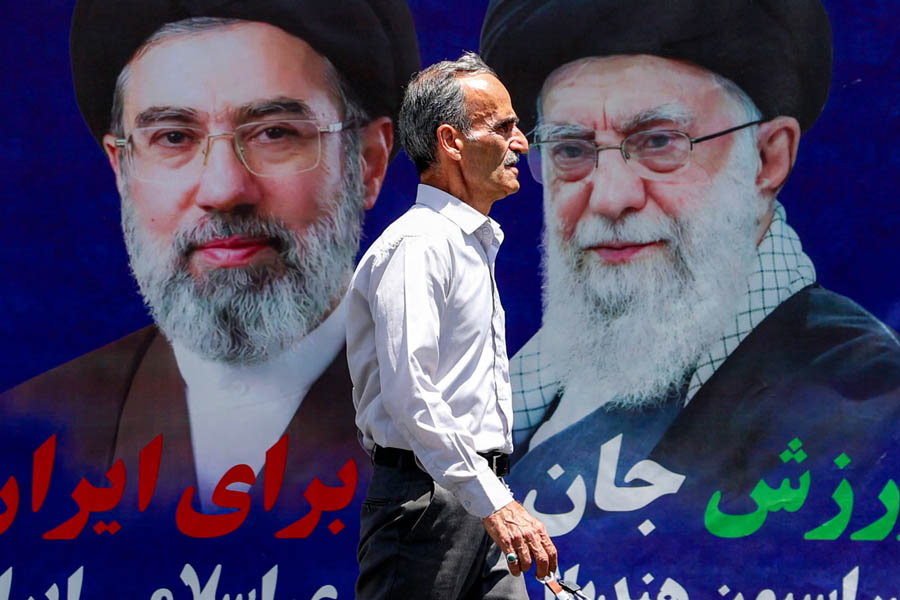
In Tehran, banners still hang of the late supreme leader, killed by an American bomb on 28 February. His son, Mojtaba, has not been seen in public since. Reports say he was severely injured. Iran's Revolutionary Guards are not celebrating. Their news agency pushes back: "The Strait will remain under Iranian control."
In Jerusalem, Netanyahu convenes his security cabinet. The draft reportedly includes a halt to fighting on all fronts — including Lebanon. Hezbollah has fired rockets into Israel for months. Israel has struck Lebanon regularly, despite a US-brokered ceasefire. The death toll in Lebanon has passed 3,100.
The guns may be about to fall silent. But the battle over the details has just begun.
NEW DELHI/WASHINGTON/TEHRAN/JERUSALEM – US Secretary of State Marco Rubio announced "significant" progress in peace talks with Iran on Sunday, saying "perhaps in the next few hours the world will get some good news" as Donald Trump claimed a memorandum of understanding "has been largely negotiated" — potentially ending the US-Israel war on Iran that began in February.
Rubio, speaking to reporters in New Delhi during a diplomatic visit to India, cautioned that the progress was not yet "final" but reiterated that Iran can never possess a nuclear weapon and that the Strait of Hormuz must be open to global marine traffic without tolls being charged by Tehran for safe passage.
⚡ PEACE DEAL AT A GLANCE: Trump claims agreement "largely negotiated" • 60-day ceasefire extension • Strait of Hormuz to reopen (but Iran says it stays in control) • Iran to clear mines, no tolls on ships • US to lift port blockade • Hostilities to halt on all fronts including Lebanon • Nuclear talks to follow • Iran denies giving up uranium stockpile.
'We Have Made Some Progress': What Rubio Said
Rubio provided the most detailed public remarks on the state of negotiations, telling reporters: "We have made some progress over the last 48 hours working with our partners in the Gulf region on an outline that could ultimately – if it succeeds – leave us not just with a completely open strait … and with addressing some of the key things that underpin what has been Iran's nuclear weapons ambitions in the past."
He added that any final agreement would have to ensure "Iran can never possess a nuclear weapon" and that the Strait of Hormuz would be open to international shipping without Iran charging tolls for safe passage.
Rubio's cautious optimism was echoed by Trump, who wrote on Truth Social: "An agreement has been largely negotiated, subject to finalization between the United States of America, the Islamic Republic of Iran, and the various other Countries." The president said he had spoken with leaders from Saudi Arabia, the UAE, Qatar, Egypt, Jordan, Bahrain, Pakistan's army chief, and Turkey's president, as well as Israel's prime minister.
— Marco Rubio, US Secretary of State
What's in the Draft? A 60-Day Ceasefire and Nuclear Talks to Come
Official details of the deal remain scant, and it remains possible some aspects could change. But here is what is known so far from US officials, Iranian sources, and regional mediators:
What could be included:
- A 60-day ceasefire extension during which the Strait of Hormuz would be reopened
- Iran would clear mines it has deployed in the strait and not impose tolls on ships
- Iran could freely sell oil during this period
- The US would lift its blockade on Iranian ports (in effect since 13 April)
- Talks on limiting Iran's nuclear program would be held within 30-60 days
- Hostilities would be halted on all fronts, including Israel and Lebanon
- Approximately $25bn in frozen Iranian assets could be released
What is probably not included:
- Handover of highly enriched uranium (HEU): A senior Iranian source told Reuters on Sunday that Tehran had not agreed to give up its stockpile, contradicting earlier New York Times reports.
- Iran's ballistic missile program — little mention
- Curbing support for regional allies like Hezbollah or the Houthis — not addressed in the draft
Iran Pushes Back: 'The Strait Will Remain Under Iranian Control'
Despite Trump's optimism, Iran's Fars news agency — which is close to the powerful Islamic Revolutionary Guard Corps — reported that the Strait of Hormuz would remain under Iranian control, a potential red line for the US. The news agency reported on Telegram that "the management of the Strait, determining the route, time, method of passage, and issuing permits will continue to be the monopoly and discretion of the Islamic Republic of Iran."
It said Trump's assertion that an agreement was nearly final was "inconsistent with reality."
A senior Iranian source told Reuters that Tehran had not agreed to hand over its highly enriched uranium stockpile and that all issues "regarding the nuclear matter" had been postponed, with the current draft limited to "ending the war."
If Iran's supreme national security council approves the memorandum, it would be sent to Supreme Leader Mojtaba Khamenei for final approval. No verified recording or visual sighting of Khamenei has been broadcast since he was appointed supreme leader in early March. Reports have suggested he was severely injured in the US-Israeli bombing that killed his 86-year-old father and predecessor on 28 February.
Netanyahu's Dilemma: Hezbollah and Lebanon
The Times of Israel is reporting that Prime Minister Benjamin Netanyahu will convene a "limited" security cabinet meeting to discuss the US-Iran deal. The draft agreement reportedly includes ending the war on all fronts, including Israel's assault on Lebanon — a provision Netanyahu may find difficult to accept.
Netanyahu has been pushing for the complete disarmament of Hezbollah, the Iranian-backed Lebanese militant group. Israel has continued striking Lebanon regularly, both south and north of the Litani River, despite a US-brokered ceasefire coming into effect last month. Hezbollah has fired rockets and drones into northern Israel and against Israeli troops in southern Lebanon.
According to the Lebanese health ministry, at least 3,111 people have been killed in Israeli attacks since the latest round of fighting between Hezbollah and Israel started on 2 March. Israel's deadly air assault and ground invasion were in response to Hezbollah firing rockets at northern Israel after the US and Israel killed the former Iranian supreme leader in Tehran on 28 February.
Turkey's Erdoğan: 'A Just Peace Would Have No Losers'
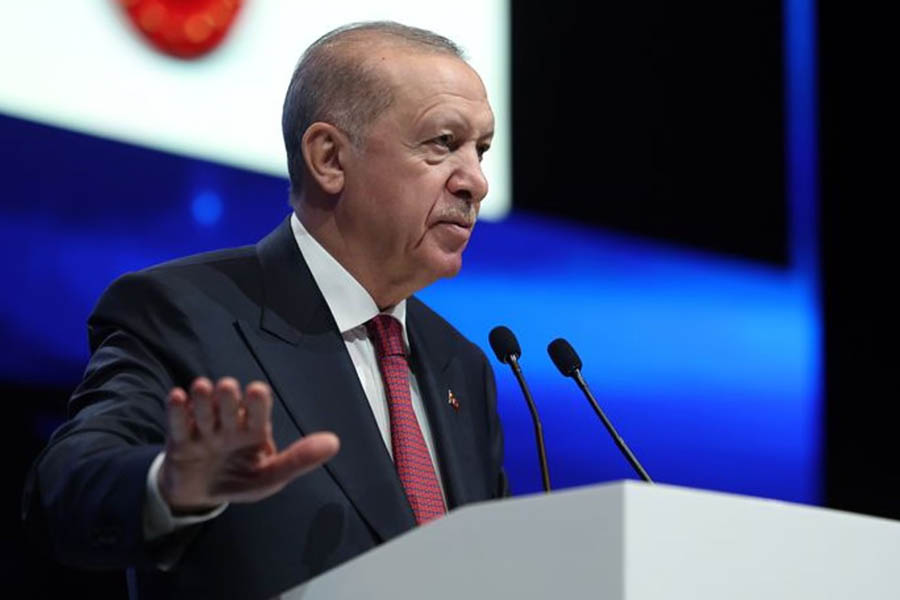
Turkish President Recep Tayyip Erdoğan welcomed the latest developments, saying he believed "appropriate solutions" could be found on nuclear and other contentious issues. He also said Turkey "stands ready to provide every kind of support" during the potential deal's implementation phase and that "a just peace would have no losers."
A post on X from the Turkish presidency said Erdoğan held a teleconference with Donald Trump and Middle Eastern leaders as well as Pakistan, expressing that "an agreement to secure free passage through the Strait of Hormuz would support stability in the region, providing a relief to global economy."
In the call, Erdoğan said that "appropriate solutions could be found over the course of the process to the issues that look contentious within the context of Iran, including the nuclear issue." He also underscored "that Türkiye desires a new era in which countries of the region do not pose threats to one another."
Pakistan's Mediation Role and Next Steps
Pakistan's Prime Minister Shehbaz Sharif later congratulated Trump on his peace efforts and said Pakistan hoped to host another round of talks between the US and Iran "very soon."
Sharif described the US president's call with the leaders of Saudi Arabia, Qatar, Turkey, Egypt, the UAE, Jordan and Pakistan as "very useful and productive," adding: "Pakistan will continue its peace efforts with utmost sincerity and we hope to host the next round of talks very soon."
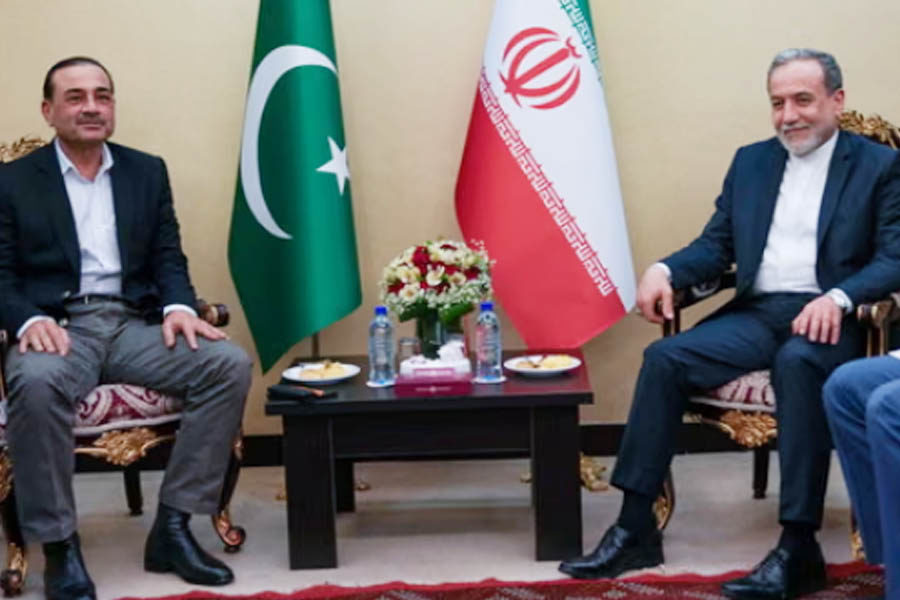
Pakistan's army chief, Syed Asim Munir, has been a key figure in the negotiations and has held meetings in Tehran recently with figures such as Iranian President Masoud Pezeshkian and parliamentary speaker Mohammad Bagher Ghalibaf.
Trump's announcement came after a Pakistani source told Reuters that Iran and Pakistan had submitted a revised proposal to the United States to end the war and reopen the Strait of Hormuz.
Republican Hawks vs. Obama-Era Negotiators
News of the potential deal triggered dismay among Republican hawks who had spent years calling for US military action against Iran. Mike Pompeo, who served as CIA director and secretary of state during Trump's first term, denounced the rumored terms as too close to what Barack Obama's negotiators had achieved.
"The deal being floated with Iran seems straight out of the Wendy Sherman-Robert Malley-Ben Rhodes playbook: Pay the IRGC to build a WMD program and terrorize the world," Pompeo wrote on social media. The alternative, he added, is "straightforward: Open the damned strait. Deny Iran access to money. Take out enough Iranian capability so it cannot threaten our allies in the region."
Ben Rhodes responded: "Not quite the path Wendy, Ben or I would have taken. But if this deal brings an end to an unlawful, unjustifiable war, to the senseless loss of life and destruction, and to the cascading global economic fallout, I am quite sure we'd willingly accept it over the alternative."
The White House director of communications, Steven Cheung, was less diplomatic: "Mike Pompeo has no idea what the fuck he's talking about. He should shut his stupid mouth and leave the real work to the professionals."
📊 IRAN WAR & PEACE DEAL – KEY NUMBERS
- Lebanon death toll (since 2 March): 3,111+ (Lebanese health ministry)
- Proposed ceasefire duration: 60 days
- Iranian frozen assets to be released: ~$25 billion
- US port blockade start date: 13 April
- Former supreme leader killed: 28 February
- Days since Mojtaba Khamenei seen in public: Nearly 3 months
- Countries involved in mediation: Pakistan, Turkey, Saudi Arabia, UAE, Qatar, Egypt, Jordan, Bahrain
🔍 US-Iran Peace Deal: Q&A / Vizual Guide
❓ What did Marco Rubio announce?
Rubio said "significant" progress had been made in US-Iran peace talks over the last 48 hours, working with Gulf partners. He suggested "perhaps in the next few hours the world will get some good news."
❓ What did Trump say about the deal?
Trump claimed on Truth Social that an agreement "has been largely negotiated, subject to finalization," with "final aspects and details" still being discussed. He said the Strait of Hormuz would be opened as part of the deal.
❓ What is reportedly in the draft agreement?
60-day ceasefire extension, Strait of Hormuz reopened without tolls, Iran clears mines, US lifts port blockade, Iran can sell oil freely, talks on nuclear program to follow, hostilities halted on all fronts including Lebanon, ~$25bn in frozen assets released.
❓ How did Iran's Fars news agency respond?
Fars reported that the Strait of Hormuz would remain under Iranian control — "determining the route, time, method of passage, and issuing permits will continue to be the monopoly and discretion of the Islamic Republic of Iran." It called Trump's assertion "inconsistent with reality."
❓ What did Iran say about its nuclear material?
A senior Iranian source told Reuters that Tehran had not agreed to hand over its highly enriched uranium stockpile. All nuclear issues have been postponed, with the current draft limited to "ending the war."
❓ How will the deal be approved in Iran?
If Iran's supreme national security council approves the memorandum, it would be sent to Supreme Leader Mojtaba Khamenei for final approval. No verified sighting of Khamenei has been broadcast since he was appointed in early March.
❓ What is Israel's position?
Netanyahu will convene a security cabinet meeting. The draft reportedly includes halting fighting on all fronts including Lebanon, which may conflict with Netanyahu's push for Hezbollah's complete disarmament.
❓ What is the human toll in Lebanon?
At least 3,111 people have been killed in Israeli attacks since 2 March, according to the Lebanese health ministry. Hezbollah has fired rockets into Israel, and Israel has struck Lebanon regularly despite a US-brokered ceasefire last month.
❓ What did Erdoğan say?
Erdoğan welcomed the developments, saying "appropriate solutions" could be found on nuclear and other issues. He said Turkey "stands ready to provide every kind of support" and that "a just peace would have no losers."
❓ What role is Pakistan playing?
Pakistan's army chief Asim Munir has been a key mediator, meeting Iranian leaders in Tehran. Pakistan hopes to host the next round of talks "very soon," according to Prime Minister Shehbaz Sharif.
❓ How have Republican hawks reacted?
Mike Pompeo denounced the deal as similar to Obama-era negotiations, calling it "pay the IRGC to build a WMD program." The White House responded harshly, with communications director Steven Cheung telling Pompeo to "shut his stupid mouth."
❓ What did Ben Rhodes say?
Rhodes, an Obama-era negotiator, said: "Not quite the path Wendy, Ben or I would have taken. But if this deal brings an end to an unlawful, unjustifiable war... I am quite sure we'd willingly accept it over the alternative."
❓ What started the war?
The US and Israel killed the former Iranian supreme leader (Ayatollah Ali Khamenei) in Tehran on 28 February. Hezbollah responded by firing rockets into northern Israel, leading to Israel's air assault and ground invasion of Lebanon.
❓ When did the US blockade of Iranian ports start?
13 April — the deal reportedly includes the US lifting this blockade in exchange for Iran reopening the Strait of Hormuz without tolls.
📝 PROPOSED US-IRAN DEAL – KEY PROVISIONS
🕊️ Ceasefire
60-day extension
🛳️ Strait of Hormuz
Reopened, no tolls, mines cleared
⛽ Oil sales
Iran can freely sell oil
🚢 US blockade
Lifted on Iranian ports
💵 Frozen assets
~$25bn released
🌍 All fronts
Hostilities halted (including Lebanon)
🇱🇧 LEBANON – CONFLICT CASUALTIES (2 MARCH – 24 MAY 2026)
👑 IRAN'S SUPREME LEADERS – FATHER TO SON
Ayatollah Ali Khamenei
Supreme Leader 1989-2026
Killed 28 February 2026
Mojtaba Khamenei
Supreme Leader from March 2026
Not seen publicly in ~3 months
🌍 COUNTRIES INVOLVED IN MEDIATION
⏳ TIMELINE: PATH TO PEACE
🗣️ KEY QUOTES – FROM DIPLOMATS TO HAWKS
Marco Rubio:
"I do think perhaps there is the possibility that in the next few hours the world will get some good news."
Mike Pompeo (former Trump official):
"The deal being floated with Iran seems straight out of the Wendy Sherman-Robert Malley-Ben Rhodes playbook: Pay the IRGC to build a WMD program."
Ben Rhodes (Obama negotiator):
"If this deal brings an end to an unlawful, unjustifiable war... I am quite sure we'd willingly accept it."
Steven Cheung (White House):
"Mike Pompeo has no idea what the fuck he's talking about. He should shut his stupid mouth."
Stay updated with the latest world headlines on our World Headlines Page.