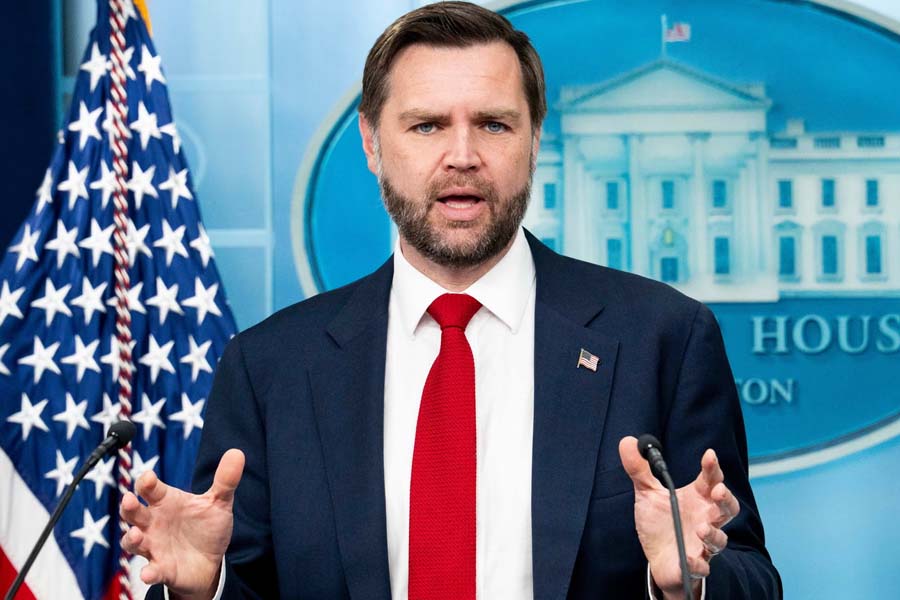
Washington DC / Tehran / Bern – Talks set to take place on Friday between the United States and Iran on implementing the 14-point agreement to end their war have been cancelled, Switzerland's foreign ministry announced, in a dramatic diplomatic setback that came so abruptly that Vice-President JD Vance's staff had already gathered at the airbase ready to fly to the summit.
The talks were set to begin in the tiny Swiss village of Obbürgen on Friday, two days after the signing of a memorandum of understanding (MOU) that opened a 60-day window to negotiate a permanent understanding about Iran's nuclear program while getting oil traffic moving through the Strait of Hormuz.
The White House said the US looked forward to "beginning technical talks as soon as possible," as it announced that Vance, who is leading negotiations for the Trump administration, would now not be travelling.
"The logistics of these negotiations have never been simple or predictable. As of now the vice-president is not departing tonight," a White House spokesperson said late on Thursday.
Key developments:
- US-Iran talks in Switzerland abruptly cancelled hours before scheduled start
- JD Vance's staff and media had gathered at Joint Base Andrews ready to depart
- Iran delayed sending delegation due to Israel's ongoing military campaign in Lebanon
- Tehran wants to see "signs of implementation" of interim agreement before next round
- Khamenei approved MOU despite reservations, says Trump signed "out of desperation"
- MOU opens 60-day window to negotiate permanent nuclear agreement
- US forces lifted naval blockade of Iranian ports on Thursday
- Israel continues Lebanon campaign despite MOU calling for "permanent termination"
- Trump and Vance have openly criticised Netanyahu's operations in Lebanon
- Iran warns of "decisive response" to any breach of agreement
- Regional war has killed at least 7,000 people and shaken global markets
'No Confirmation' Iran Would Travel
The cancellation of the talks came so abruptly that Vance's staff and a small pack of journalists had even gathered at Joint Base Andrews outside Washington in anticipation of the trip. Dozens of White House officials, advance staffers and media were already in Switzerland to prepare for Vance's anticipated arrival.
Iran's Supreme Leader Ayatollah Mojtaba Khamenei said on Thursday that he had approved the MOU despite reservations, while at the same time, the United States officially lifted a blockade of Iranian ports.
But the semi-official Tasnim news agency said before the talks were cancelled that Iranian negotiators needed to see signs of implementation of the interim agreement from the US before the next rounds of peace talks could begin, and that there was no confirmation that its delegation would travel to Geneva.
Israel's Lebanon Campaign Derails Diplomacy
The cancellation of the talks came after a report from Al-Mayadeen, an Arabic language network politically allied with the Iranian-backed Lebanese militant group Hezbollah, that said Tehran was delaying sending its delegation to Switzerland due to Israel's ongoing military campaign in Lebanon.
Israel, which was not included in the peace talks and has distanced itself from the US-Iran agreement, has continued its fighting against Hezbollah in Lebanon and launched fresh airstrikes early on Thursday.
The MOU calls for the "permanent termination" of the war in Lebanon and for the country's "territorial integrity and sovereignty" to be ensured. US President Donald Trump has said he expects a complete ceasefire on all fronts.
But the government of Benjamin Netanyahu has continued to stress that it has no intention of withdrawing from Lebanon, leading to open criticism from Trump and Vance of Israel's operations.
Khamenei: Trump Signed 'Out of Desperation'
Khamenei on Thursday said Trump had signed the deal "out of desperation" and signalled that upcoming talks would not be easy.
"If the American side wants to be too demanding, we will not accept it," he said in a written message.
The deal gives negotiators 60 days to reach agreement on the status of Iran's nuclear program unless both sides agree to an extension, and sets up a $300 billion reconstruction fund for Iran and other financial incentives.
On Friday, Iran's chief negotiator Mohammad Ghalibaf warned against any breach of the agreement, saying "in case of misconduct, breach of treaty and excess of the other side, we have no doubt that decisive respond will be given to the enemy."
US Lifts Naval Blockade But Strait Remains Quiet
On Thursday, US forces lifted their naval blockade of Iranian ports that had prevented ships from sailing to or from the Islamic republic, the US military said, noting that American warships "will remain in the general area."
Activity was still muted in the Strait of Hormuz, the strategic bottleneck for energy shipments that Iran blockaded during the conflict. The strait remains a critical chokepoint for global oil supplies, and its closure has sent energy prices soaring and shaken global markets.
What Happens Next?
The diplomatic back-and-forth over the planned talks adds to the uncertainty over whether a lasting truce can be found to a regional war that has killed at least 7,000 people, sent energy prices soaring and shaken global markets.
Key questions remain unanswered:
- Will the talks be rescheduled? Both sides have expressed willingness to negotiate, but the timing remains unclear
- Can Israel be brought on board? Netanyahu's continued operations in Lebanon directly contradict the MOU's terms
- Will Iran see implementation before negotiating? Tehran insists on seeing US actions before further talks
- What about the $300bn reconstruction fund? The financial incentives remain contingent on a final agreement
For now, the cancellation represents a significant setback for Trump's diplomatic push to end the Iran war. The president has made clear he wants a deal, but his administration's ability to deliver one – particularly with Israel pursuing its own military objectives – remains deeply uncertain.
🌍 The Big Picture
The abrupt cancellation of US-Iran talks in Switzerland is a stark reminder of the fragility of diplomatic efforts to end the Middle East war. Just two days after signing a memorandum of understanding that opened a 60-day window for negotiations, the process has been derailed by Israel's ongoing military campaign in Lebanon – a conflict the MOU explicitly calls for ending. With Vice-President JD Vance's staff already at the runway, the last-minute cancellation underscores the deep divisions between Washington and Jerusalem, and Tehran's insistence on seeing implementation before further engagement. As Khamenei warns that Trump signed the deal "out of desperation" and Iran threatens a "decisive response" to any breach, the path to peace remains as uncertain as ever. The regional war has already killed at least 7,000 people, sent energy prices soaring, and shaken global markets. Whether diplomacy can recover from this setback will depend on whether all parties – including Israel – can be brought to the table.
🌍 For more breaking news and world headlines: Visit NewsOrbit - World Breaking News for the latest updates from around the globe.