26 May 2026 | Washington, Tehran, Beirut, Doha, Jaipur — Updated 23:45 GMT
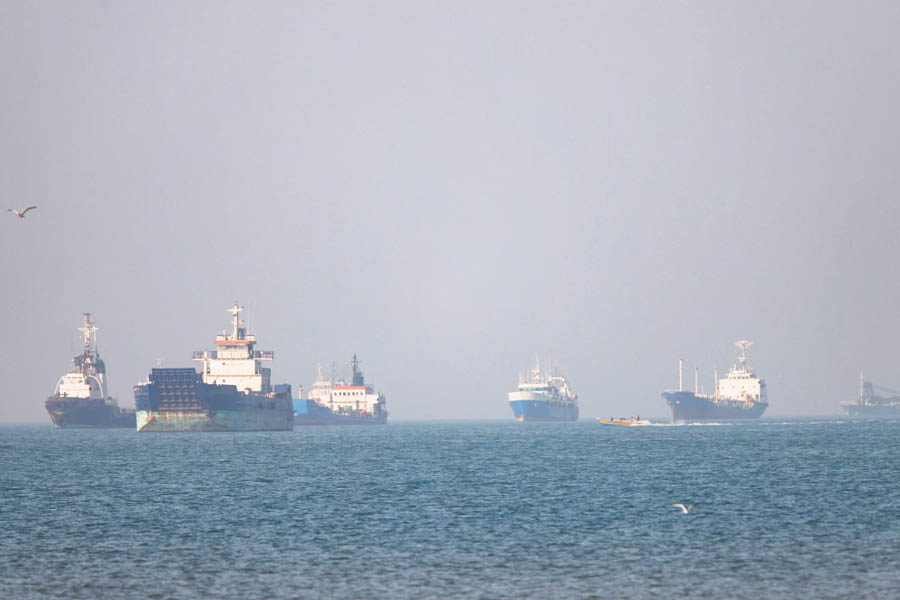
Explosions echo across the southern Iranian port city of Bandar Abbas. The US military says it has carried out "self-defence strikes" targeting Iranian boats laying mines in the Strait of Hormuz and missile launch sites. Iran insists the situation is "completely under control."
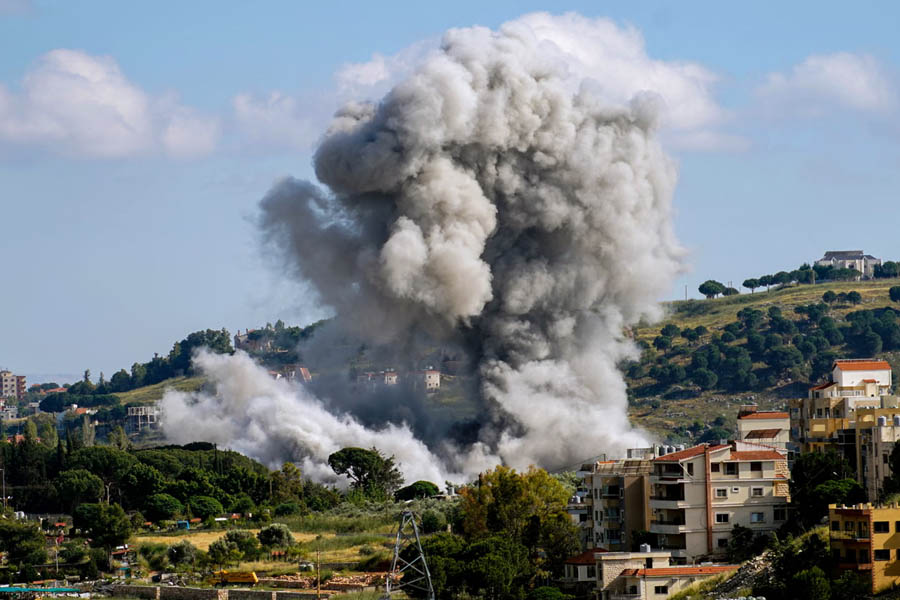
In Lebanon, smoke rises from the village of Nabatieh after an Israeli airstrike. Benjamin Netanyahu orders an escalation: "We will intensify our blows, increase our firepower, and we will crush them." Hezbollah responds with drone attacks on northern Israel barracks.
Two wars. One region. A fragile ceasefire hanging by a thread. And Marco Rubio, speaking from a plane in Jaipur, India, delivers a blunt message: The Strait of Hormuz will be open "one way or the other."
WASHINGTON/TEHRAN/BEIRUT/DOHA/JAIPUR – The Middle East is once again teetering on the edge of wider conflict as US forces launch military strikes on southern Iran just as diplomatic efforts for a peace deal enter a critical phase. Simultaneously, Israel has intensified its air campaign against Hezbollah in Lebanon, with Prime Minister Benjamin Netanyahu vowing to "crush" the Iran-backed militant group.
The US military's Central Command announced that forces carried out strikes on southern Iran in "self-defence," targeting Iranian boats seen laying mines in the strategic Strait of Hormuz as well as missile launch sites. Explosions were heard in the port city of Bandar Abbas, though Iranian state news agency Mehr said the situation was "completely under control" and there was no reason for residents to worry.
⚡ MIDDLE EAST CRISIS AT A GLANCE: US strikes Iran in "self-defence" • Iranian boats laying mines in Strait of Hormuz • Explosions in Bandar Abbas • Rubio: Strait will be open "one way or the other" • Israel strikes 70+ Hezbollah sites in Lebanon • Netanyahu vows to "crush" Hezbollah • 3,100+ killed in Lebanon since 2 March • Peace talks continue in Doha despite strikes.
'One Way or the Other': Rubio's Warning on the Strait of Hormuz
US Secretary of State Marco Rubio, speaking to reporters on his plane in Jaipur, India, on Tuesday, delivered a stark message regarding the strategic waterway through which approximately 20% of the world's oil passes.
"The straits have to be open, they're going to be open one way or the other, so they need to be open," Rubio was quoted as saying. He added that the negotiating language of a potential deal with Iran could "take a few days."
The strikes came as Iran's top negotiator and its foreign minister were in Doha for talks with Qatar's prime minister over a potential deal to end the war. The discussions focused on the Strait of Hormuz and Iran's stockpile of highly enriched uranium, according to an official briefed on the trip. Iran's central bank governor also attended to discuss the potential release of frozen Iranian funds as part of a final deal.
— Marco Rubio, US Secretary of State
Iranian Mines in the Strait: What We Know
Fox News, quoting a senior US official, reported that two Iranian boats had been spotted laying mines in the Strait of Hormuz. US forces responded after a missile site targeted American warplanes. The US military destroyed both Revolutionary Guard vessels and struck a surface-to-air missile site in Bandar Abbas.
"These were defensive strikes," the official said, adding that the strikes did not indicate the ceasefire with Iran was over. The official later confirmed the US strikes were "over for now."
Despite the military action, the price of West Texas Intermediate crude oil fell more than 5% on Tuesday, as investor optimism for a reopening of the strait outweighed concerns over the strikes. Brent futures rose more than 1% in early Asian trade to $97.32 a barrel.
Iran's foreign ministry spokesperson, Esmaeil Baghaei, said earlier that nuclear issues would be negotiated only after a framework accord was agreed. He also noted that future management of the Strait of Hormuz was a matter for Oman and Iran to reach agreement on, insisting that what was being proposed were not tolls but "fees for navigational services."
Trump: Enriched Uranium Could Be Destroyed Inside Iran
President Donald Trump, who remains deeply involved in the negotiations, announced on his Truth Social platform that Iran's stockpile of enriched uranium could be destroyed inside the country under international supervision.
"The Enriched Uranium (Nuclear Dust!) will either be immediately turned over to the United States to be brought home and destroyed or, preferably, in conjunction and coordination with the Islamic Republic of Iran, destroyed in place," Trump wrote, adding that the Atomic Energy Commission would witness the process.
The fate of Iran's stockpile of highly enriched uranium has been a major sticking point in negotiations. In previous talks, Iran has said it is willing to down-blend the enriched uranium but would not permit transfer of the stockpile to either the US or Russia. Experts say Trump's announcement could amount to a major concession as he seeks to finalize an agreement with Tehran.
Israel Escalates: 'We Will Crush Them'
Separately, Israel has intensified its military campaign against Hezbollah in Lebanon, with Prime Minister Benjamin Netanyahu ordering an escalation of operations.
"I have ordered an even greater acceleration of our operations," Netanyahu said in a video statement posted on his Telegram channel. "It is true that they are attacking us with drones, including fibre-optic drones, but we have teams working on countermeasures and we will solve this issue … We will intensify our blows, increase our firepower, and we will crush them."
The Israeli military announced it struck more than 70 Hezbollah sites on Monday. Dozens of Israeli strikes targeted several towns and villages in southern Lebanon in the early hours, killing three people in two cars and on a motorcycle, according to Lebanon's National News Agency (NNA). Israeli airstrikes then targeted several towns near the ancient city of Tyre after Israel issued evacuation orders for 10 villages, accusing Hezbollah of breaching the truce.
Following Netanyahu's call for escalation, an Agence France-Presse correspondent saw residents fleeing the southern suburbs of Beirut, a Hezbollah stronghold. The Israeli air force carried out successive strikes in the Bekaa valley in eastern Lebanon on Monday evening.
Hezbollah Strikes Back: Drone Attacks on Northern Israel
In response, Hezbollah claimed responsibility for several attacks on Monday on three barracks and a military post in northern Israel "in response to the violation of the ceasefire" by Israel.
The Iran-backed group staged at least four drone attacks on the Shomera barracks, as well as attacks on two barracks in towns in northern Israel, and another on a military post in Misgav Am. The attacks were carried out around midday at short intervals.
Fighting between Israel and Hezbollah erupted on 2 March. Despite a ceasefire that came into effect on 17 April, both sides have continued to exchange fire on a near-daily basis. According to Lebanese authorities, Israeli strikes since early March have killed more than 3,100 people.
The Israeli military also announced that a soldier had been killed the previous day in southern Lebanon, bringing the number of Israeli soldiers killed since the outbreak of hostilities with Hezbollah to 23. One civilian contractor has also been killed.
Iran Praises Hezbollah's 'Resistance'
Iran's foreign minister, Abbas Araghchi, issued a statement praising Hezbollah for its ongoing resistance against Israel. In a statement on Telegram, Araghchi congratulated the group's secretary general, Naim Qassem, and Nabih Berri, speaker of the Lebanese parliament, in separate messages to mark the anniversary of Liberation Day in Lebanon — commemorating the Israeli withdrawal from Lebanon in 2000.
"In these messages, Araghchi... emphasized the Islamic Republic of Iran's continued and resolute support for the independence, sovereignty, and territorial integrity of the Lebanese people and their legitimate resistance against the occupation and aggression of the Zionist regime," the statement read.
Iran's foreign ministry spokesperson, Esmaeil Baghaei, earlier praised Hezbollah for its continuing resistance against Israel.
Far-Right Israeli Ministers Call for Further Expansion
Two far-right ministers called for an expansion of Israel's military campaign in Lebanon. Finance minister Bezalel Smotrich, who lives in an occupied West Bank settlement, said on Telegram: "There is an urgent need to put an end to the threat posed by Hezbollah's explosive drones."
National security minister Itamar Ben Gvir called for a "return to intensive warfare" and for "taking control" of further territory.
Diplomacy Amid the Chaos: Peace Talks Continue in Doha
The fresh US strikes on southern Iran came as Iran's top negotiator and its foreign minister were in Doha for talks with Qatar's prime minister over a potential deal to end the war, Reuters quoted an official as saying on Monday.
The visit came after Washington and Tehran played down hopes for an imminent breakthrough. The unnamed official said the discussions with the Iranians focused on the Strait of Hormuz and Iran's stockpile of highly enriched uranium. Iran's central bank governor also attended to discuss the potential release of frozen Iranian funds as part of a final deal.
Iranian foreign ministry spokesperson Esmaeil Baghaei said earlier that nuclear issues would be negotiated only after the framework accord was agreed.
📊 MIDDLE EAST CRISIS – KEY NUMBERS
- Lebanon death toll (since 2 March): 3,100+ (Lebanese authorities)
- Israeli soldiers killed: 23
- Hezbollah sites struck by Israel (Monday): 70+
- Israeli strikes on Lebanon (early hours): Dozens
- Hezbollah drone attacks on Israel (Monday): 4+
- Brent crude price: $97.32/barrel
- WTI crude price: $91.33/barrel (down 5.46%)
- Countries involved in peace mediation: Pakistan, Qatar, Turkey, Saudi Arabia, UAE, Egypt, Jordan, Bahrain
Middle East Power Shift: How the Iran War Forced Rivals Together and Pushed Trump Toward Peace
The Iran war has triggered a dramatic geopolitical realignment across the Middle East, pushing longtime regional rivals toward an unlikely diplomatic alliance while increasing pressure on President Donald Trump to embrace peace negotiations over continued military escalation.
What began as another dangerous confrontation in the Gulf is now reshaping the balance of power in one of the world’s most volatile regions. Behind closed doors, Arab leaders, Gulf monarchies, and key Muslim-majority nations are quietly recalculating their future — and many are no longer convinced the United States can guarantee regional stability.
A Region Shocked by War
The conflict exposed deep vulnerabilities across the Middle East. Despite America’s military strength and decades of influence, Washington struggled to contain the crisis, secure the Strait of Hormuz, or fully shield Gulf allies from escalating Iranian attacks.
For many regional governments, the war became a wake-up call.
Iran may have few close allies in the Arab world, but Tehran’s survival through the conflict forced neighboring countries to confront a new reality: Iran is not disappearing, and endless confrontation may only deepen instability.
As oil markets trembled and fears of a wider regional war intensified, diplomatic channels suddenly became more valuable than military threats.
Trump Faces Pressure From Both Sides
While Israel pushed for a harder military response, a coalition of Middle Eastern nations quietly moved in the opposite direction — urging President Trump to back a peace framework instead of prolonging the conflict.
Diplomatic efforts accelerated after senior officials from Qatar and Pakistan traveled to Tehran in a last-minute attempt to prevent a wider catastrophe. Their message was clear: reopen negotiations, stabilize the Gulf, and prevent the region from collapsing into chaos.
During a high-level call with Trump, leaders from several Muslim-majority nations reportedly urged the White House to support a ceasefire agreement, reopen the Strait of Hormuz, and revive talks surrounding Iran’s nuclear program.
Trump later described the proposed agreement as “largely negotiated,” signaling that even Washington may now recognize the limits of military pressure.
The Decline of American Dominance?
The war also sparked uncomfortable questions about America’s future role in the Middle East.
Andreas Krieg, an associate professor at King’s College London, said Gulf states were deeply frustrated by what they viewed as Washington prioritizing Israel’s security while leaving Arab allies increasingly exposed.
“We may be witnessing the final stage of American dominance in the Middle East,” Krieg warned. “Across the Gulf, confidence in US leadership is fading rapidly.”
That frustration is quietly transforming regional politics.
Countries that once competed fiercely for influence — including Saudi Arabia, Qatar, Turkey, Egypt, and the United Arab Emirates — are now finding common ground through diplomacy rather than confrontation.
An Unlikely Regional Alliance Emerges
Perhaps the most surprising development has been the emergence of a broader regional consensus.
The UAE, once seen as supporting stronger military action against Iran, eventually joined Saudi Arabia, Bahrain, Jordan, Pakistan, Turkey, and Egypt in backing peace negotiations.
Behind the scenes, intensified communication between Gulf rulers has reportedly helped repair several long-standing rivalries, particularly between Saudi Arabia and the UAE.
The region appears increasingly united around one shared fear: the collapse of Iran could create a vacuum far more dangerous than the current regime itself.
Israel Finds Itself Increasingly Isolated
The diplomatic shift may also leave Israel facing a difficult strategic reality.
Before the war, Israeli Prime Minister Benjamin Netanyahu held enormous influence in Washington and successfully argued for a tougher stance against Tehran. But as fears of regional collapse grew, many Arab governments began prioritizing stability over escalation.
Analysts now believe Israel’s influence over the broader regional strategy may be weakening as diplomatic negotiations gain momentum.
The fallout could also damage future expansion of Trump’s signature Abraham Accords, which aimed to normalize relations between Israel and Arab nations. Reports suggest that when Trump recently encouraged more countries to join the accords, regional leaders responded with silence.
A New Middle East Is Taking Shape
Experts say the biggest consequence of the Iran war may not be military at all — but geopolitical.
HA Hellyer, senior associate fellow at the Royal United Services Institute in London, believes Gulf nations are already preparing for a future where the United States may no longer serve as the region’s unquestioned security guarantor.
“The Middle East is no longer building its entire security structure around Washington,” Hellyer explained. “Regional powers are preparing for a world where America may not always be there when crisis strikes.”
As diplomatic efforts continue, one thing is becoming increasingly clear: the Iran war may have done more than ignite another regional crisis — it may have accelerated the birth of a completely new Middle East power structure.
🔍 Middle East Crisis: Q&A / Vizual Guide
❓ What happened in the US strikes on Iran?
US Central Command carried out "self-defence strikes" on southern Iran targeting Iranian boats laying mines in the Strait of Hormuz and missile launch sites. Explosions were reported in Bandar Abbas. Iran says the situation is "completely under control."
❓ What did Marco Rubio say about the Strait of Hormuz?
Speaking from his plane in Jaipur, India, Rubio declared: "The straits have to be open, they're going to be open one way or the other, so they need to be open." He added that negotiating language for a deal with Iran could "take a few days."
❓ What is happening between Israel and Hezbollah?
Israel has intensified airstrikes on Lebanon, striking over 70 Hezbollah sites. Netanyahu vowed to "crush" Hezbollah. Hezbollah responded with drone attacks on northern Israel barracks. Over 3,100 people have been killed in Lebanon since fighting began on 2 March.
❓ What is Trump's position on Iran's enriched uranium?
Trump announced that Iran's enriched uranium stockpile could be destroyed inside Iran under international supervision. Experts say this could be a major concession as he seeks to finalize an agreement with Tehran.
❓ What is happening with peace talks?
Despite the strikes, Iran's top negotiator and foreign minister are in Doha for talks with Qatar's prime minister. Discussions focus on the Strait of Hormuz and Iran's uranium stockpile. Iran's central bank governor is discussing release of frozen funds as part of a final deal.
❓ How are Middle East rivals responding to the crisis?
The shock of the Iran war has united traditional rivals like the UAE and Saudi Arabia behind a peace deal. Eight Muslim-majority nations urged Trump to accept a deal. Experts say the region is adapting to diminished US power and preparing for a future where Washington may not be the primary security guarantor.
🎯 US STRIKES ON IRAN – KEY DETAILS
Targets
Iranian mine-laying boats • Surface-to-air missile site
Location
Bandar Abbas, southern Iran
US justification
"Self-defence" – boats laying mines, missile site targeting US warplanes
Iran response
"Completely under control" – no reason for residents to worry
🇮🇱🇱🇧 ISRAEL-HEZBOLLAH – ESCALATION (26 MAY 2026)
Israeli strikes
70+
Hezbollah sites struck Monday
Hezbollah attacks
4+
Drone attacks on Israel barracks
Lebanon death toll
3,100+
Since 2 March
🛢️ OIL MARKET REACTION – POST-STRIKES
🌍 COUNTRIES INVOLVED IN PEACE MEDIATION
⏳ TIMELINE: MIDDLE EAST CRISIS (MAY 2026)
🗣️ KEY QUOTES – FROM NETANYAHU TO RUBIO
Benjamin Netanyahu (Israeli Prime Minister):
"We will intensify our blows, increase our firepower, and we will crush them."
Marco Rubio (US Secretary of State):
"The straits have to be open, they're going to be open one way or the other, so they need to be open."
Andreas Krieg (Professor, King's College London):
"We're probably seeing the final days of American empire in the Middle East. Across the Gulf, there is complete disillusionment with American influence."
Iranian state media (Mehr):
"The situation is completely under control and there is no reason for residents to worry."
Stay updated with the latest world headlines on our World Headlines Page.