10 May 2026 | Moscow, Russia / Kyiv, Ukraine
MOSCOW – Russian President Vladimir Putin has signalled that the war in Ukraine may be entering its final phase, saying the conflict is “coming to an end” while simultaneously condemning Western military support for Kyiv and proposing new negotiations over Europe’s security architecture.
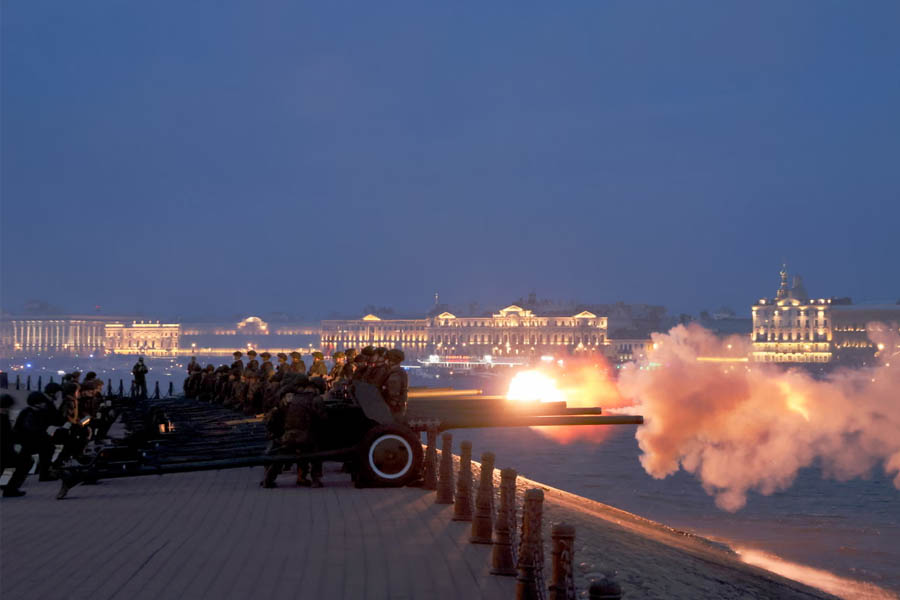
The remarks came only hours after Russia staged its most diminished Victory Day parade in years on Red Square, a ceremony that reflected both the strain of war and the growing insecurity inside Moscow amid continued Ukrainian drone and missile attacks.
“I think that the matter is coming to an end,” Putin said, referring to the war that has now entered its fifth year and remains Europe’s deadliest military conflict since World War II.
⚡ WAR SNAPSHOT: 5th year of war • Hundreds of thousands dead • Nearly 20% of Ukraine under Russian control • 3-day ceasefire announced • 1,000 prisoner swap proposed • Victory Day parade scaled back dramatically
Putin: “The War Is Still Serious, But It’s Heading to an End”
Speaking to reporters after the annual Victory Day commemorations, Putin blamed the West for prolonging the war, accusing Europe and the United States of escalating confrontation with Russia.
“They started ratcheting up the confrontation with Russia, which continues to this day,” Putin said.
“They waited for Russia to suffer a crushing defeat, for its statehood to collapse. It didn’t work out. Now they cannot get out of that path.”
Despite his confidence, Russian military progress has slowed considerably this year. While Moscow controls just under one-fifth of Ukrainian territory, Russian forces remain unable to capture the entirety of the Donbas region, where Ukrainian defensive positions continue to hold key fortress cities.
— Vladimir Putin, Russian President
Negotiations on Europe’s Future Security?
In a striking diplomatic signal, Putin said he would be willing to negotiate broader security arrangements for Europe, suggesting that Germany’s former chancellor Gerhard Schröder would be his preferred partner for talks.
“For me personally, the former chancellor of Germany, Mr Schröder, is preferable,” Putin said.
The suggestion immediately raised eyebrows across Europe and Ukraine. Schröder has long been seen as one of Putin’s closest Western allies, maintaining deep ties to Russian energy projects including the controversial Nord Stream pipelines.
In 2022, Ukrainian President Volodymyr Zelenskyy publicly condemned Schröder for maintaining contact with Putin, calling his actions “disgusting.”

Putin Open to Meeting Zelenskyy — But With Conditions
Putin also said he would be willing to meet Ukrainian President Volodymyr Zelenskyy, but only after the terms of a peace agreement had already been settled.
“This should be the final point, not the negotiations themselves,” Putin said, maintaining his longstanding position that leader-to-leader talks should only formalise agreements already reached.
The Kremlin confirmed there are no plans to extend the three-day ceasefire announced jointly by Moscow, Kyiv and US President Donald Trump.
Both Russia and Ukraine accused each other of violating the truce, though military activity appeared significantly reduced compared to previous weeks.
Ceasefire Violations Continue Despite Truce
Ukraine’s military said Russian forces launched 51 attacks on the first day of the ceasefire, with artillery and drone operations continuing in frontline regions.
Russian drones reportedly killed two civilians in Ukraine’s Zaporizhzhia and Dnipropetrovsk regions, while Russian authorities said Ukrainian drone attacks wounded three civilians in Belgorod.
Neither side reported major missile strikes, suggesting the ceasefire—while imperfect—was at least partially holding.
📊 UKRAINE WAR STATUS
- War duration: Fifth year
- Territory under Russian control: Nearly 20%
- Prisoner exchange planned: 1,000 each
- Ceasefire duration: 3 days
- Attacks reported during ceasefire: 51 (Ukraine claims)
- Civilian casualties (Ukraine): 2 dead, 3 injured
- Civilian casualties (Russia): 3 injured
Moscow’s Victory Day Parade Shrinks Under War Pressure
This year’s Victory Day parade was noticeably smaller than in previous years, with no tanks, armoured vehicles or missile systems displayed for the first time in nearly two decades.
Instead, attendees watched video presentations featuring Russian drone warfare capabilities and nuclear weapons systems.
Security across Moscow was unprecedented, with mobile internet services disrupted citywide amid fears of Ukrainian drone attacks targeting the celebrations.
Only a handful of allied foreign leaders attended, including representatives from Belarus, Kazakhstan, Uzbekistan, Laos and Malaysia — a sharp contrast to previous years when high-profile figures such as China’s Xi Jinping were present.
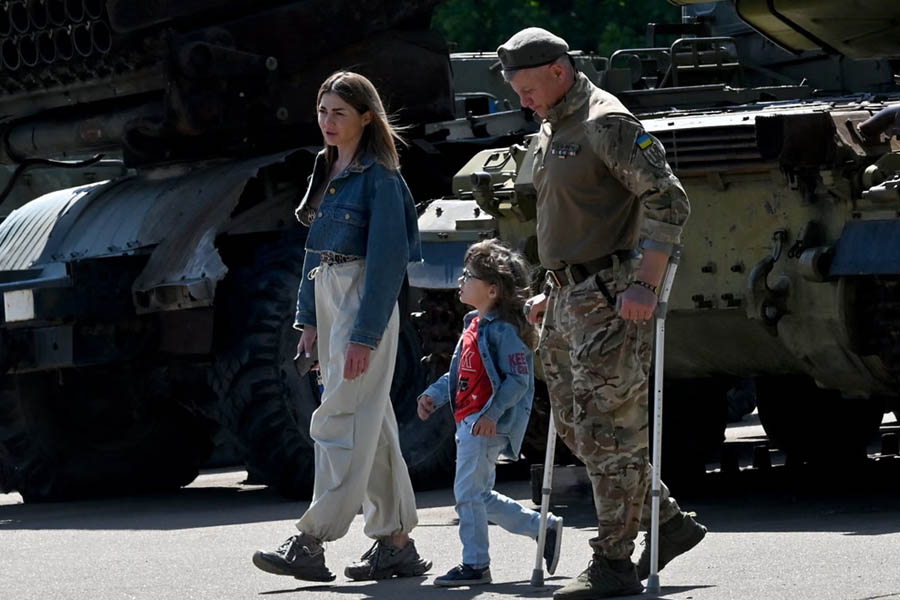
Zelenskyy Marks Europe Day, Calls Ukraine “Part of the European Family”
While Moscow commemorated Victory Day, Kyiv celebrated Europe Day — a symbolic move by President Zelenskyy to reinforce Ukraine’s future inside Europe.
“From the first days of the full-scale war until today, Europe has stood with Ukraine,” Zelenskyy said.
“This is not charity. It is a choice made by Europeans: to stand on the same side as the brave and the strong.”
Zelenskyy described Ukraine as an “inseparable part of the European family,” underlining Kyiv’s long-term strategic commitment to the European Union.
Can Europe Negotiate Peace?
The European Council President António Costa said last week there remains “potential” for the EU to engage directly with Russia in discussions over Europe’s future security structure.
That prospect remains politically sensitive, particularly as fighting continues and trust between Russia and Europe remains deeply fractured.
Still, Putin’s latest comments may represent the clearest indication yet that Moscow sees the war moving toward a political endgame — even if the battlefield remains active.
The War’s Deadly Legacy
Now in its fifth year, the Russia-Ukraine war has devastated cities, displaced millions, and killed hundreds of thousands on both sides.
What began as a full-scale invasion in 2022 has transformed into a prolonged war of attrition that has reshaped Europe’s geopolitical order and driven relations between Moscow and the West to Cold War-era lows.
Whether Putin’s latest comments signal genuine movement toward peace — or simply another strategic repositioning — remains to be seen.
For now, both the battlefield and the negotiating table remain open.
Stay updated with the latest world headlines on our World News Page.