Nepal President Poudel Unveils Policy & Program for Upcoming Fiscal Year: Strengthening Security, Expanding Irrigation, Promoting Tourism
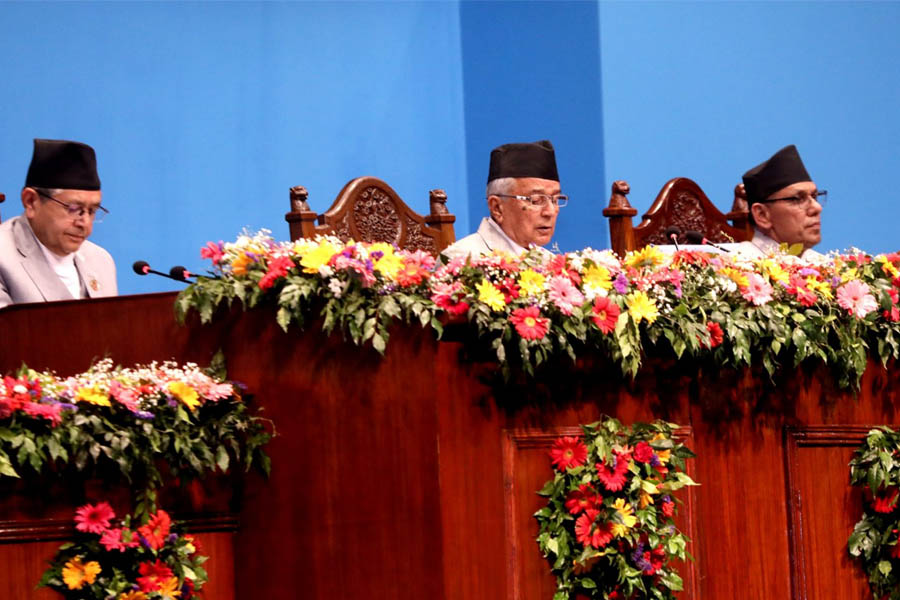
Kathmandu: In a momentous joint session of Nepal's Federal Parliament, President Ramchandra Poudel unveiled the government's policy and program for the fiscal year 2081/2082. Among the array of strategies and initiatives outlined, three critical agendas stood out: Strengthening the National Security System, Expansion of Irrigation Facilities, and robust Tourism Development — underlining the nation's multifaceted approach to progress and prosperity.
At the core of Nepal's agenda lies the imperative to fortify its national security apparatus. The policy underscores a holistic approach, encompassing the enhancement of capabilities across all security agencies, including the esteemed Nepali Army. With an unwavering commitment to safeguarding sovereignty, independence, and national unity, Nepal pledges to bolster its defense infrastructure and prepare disciplined youth manpower dedicated to the nation's interests.
Moreover, the policy outlines initiatives for achieving self-reliance in defense production, fostering mutual understanding on security issues, and establishing a national defense university for advanced studies and research. President Poudel's assertion of making home administration more effective and professional reflects the government's dedication to ensuring peace, security, and good governance for its citizens.
Recognizing the vital role of agriculture in Nepal's economy, the government is embarking on an ambitious mission to expand irrigation facilities. By targeting an additional 15 thousand hectares of arable land, Nepal aims to augment agricultural productivity through innovative schemes like lift irrigation systems and deep tube well installations. The focus extends to both mountainous and Terai regions, with a concerted effort to harness local resources and technological advancements for sustainable water resource management.
The expedited construction of multipurpose projects and mechanized irrigation schemes underscores Nepal's commitment to modernizing its agricultural infrastructure. With an eye on future needs, the government envisions comprehensive programs to replenish water resources, mitigate risks, and optimize irrigation efficiency, thereby ensuring food security and rural development.
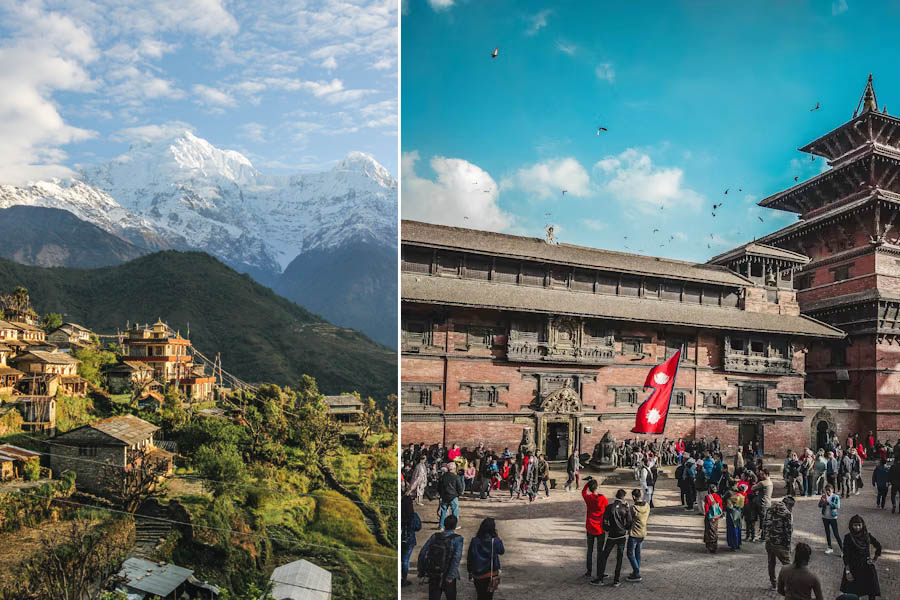
Nepal's breathtaking landscapes, rich cultural heritage, and warm hospitality have long held allure for travelers worldwide. Leveraging this potential, the government is poised to transform Nepal into a premier tourist destination. With a strategic focus on infrastructure development, promotion of film tourism, and preservation of cultural heritage, Nepal aims to capitalize on the burgeoning global interest in travel.
The commitment to modernizing aviation policies, enhancing accessibility to tourist destinations, and fostering religious and cultural tourism underscores Nepal's holistic approach to tourism development. By harnessing the power of technology and collaboration across sectors, the government envisions a thriving tourism industry that not only boosts the economy but also preserves and celebrates Nepal's unique identity.
National Defense University & Self-Reliance
As part of the security modernization drive, the government announced plans to establish a National Defense University for advanced strategic studies and research. This institution will focus on defense policy, military strategy, and security governance. Additionally, initiatives for achieving self-reliance in defense production will reduce dependency on foreign imports and create domestic employment opportunities in the defense manufacturing sector.
Agricultural Transformation Through Irrigation
The expansion of irrigation facilities is expected to directly benefit over 50,000 farming households across 25 districts. Priority will be given to lift irrigation projects in hilly regions and deep tube wells in the Terai. The government has allocated significant budget for the completion of ongoing multipurpose projects including the Bheri-Babai Diversion and Rani Jamara Kulariya irrigation schemes.
Tourism Infrastructure: Airports & Heritage Sites
Under the tourism development agenda, the government pledged to expedite the operation of Gautam Buddha International Airport and Pokhara Regional International Airport. Heritage conservation projects in Lumbini (birthplace of Lord Buddha), Pashupatinath, and Swayambhunath will receive additional funding. Film tourism will be promoted through incentives for international productions shooting in Nepal's iconic landscapes.
Global Post Headline — Nepal's trusted source for policy analysis. globalpostheadline.com
More Nepal News & Policy Updates