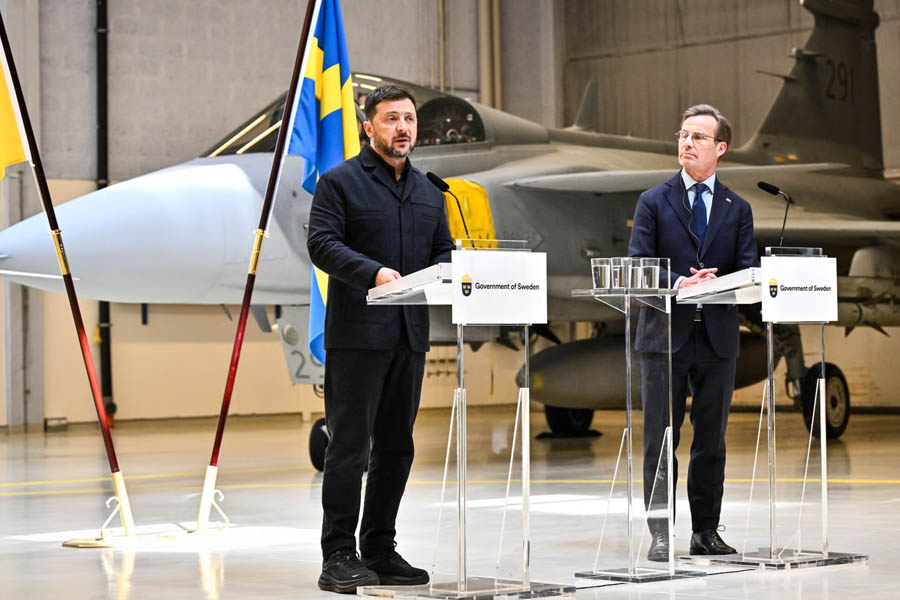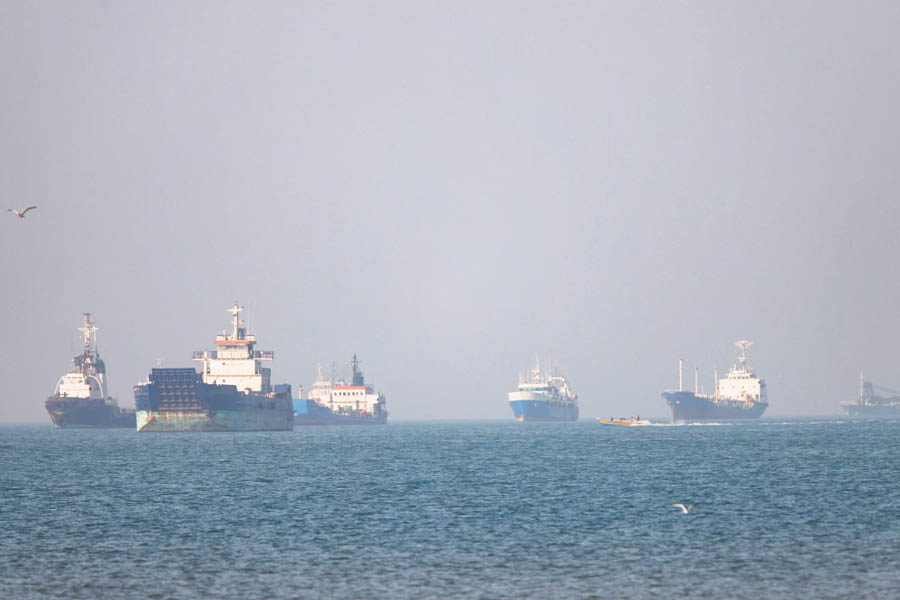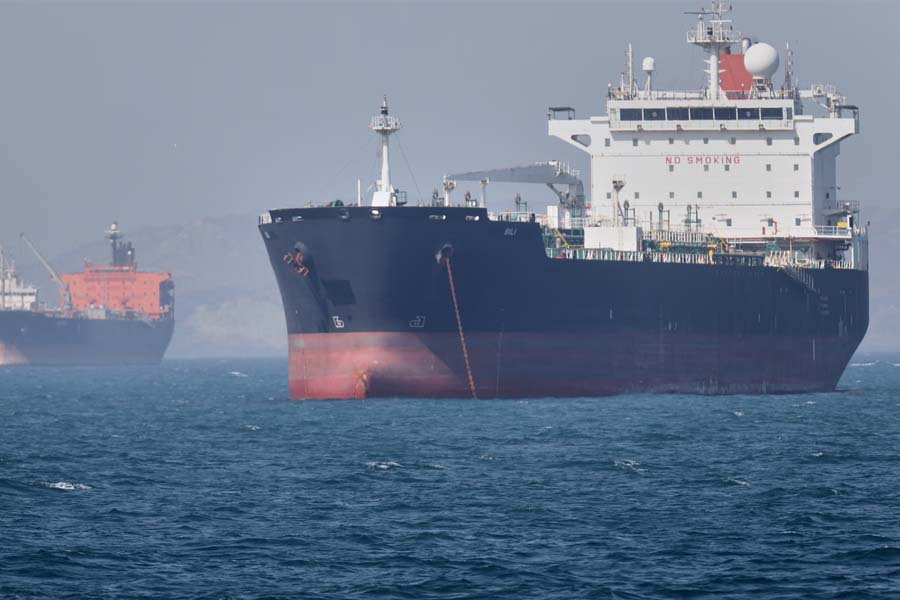
Oil tankers at anchor in the strait of Hormuz off Bandar Abbas, Iran. Vessel traffic has returned to its highest level since late February, with 57 ships carrying 1,100 seafarers transiting since 23 June under a UN evacuation scheme.
Oil Crashes to $72: Pre-War Prices Return as 57 Tankers Sail Through Hormuz — 'Fears of Global Energy Crunch Slinking Away'
25 June 2026 | London, New York, Dubai — Updated 14:30 GMT
The oil price is back where it started. Brent crude fell to a low of $72.24 a barrel on Thursday — slightly lower than the day before the US and Israel launched missile attacks on Tehran on 28 February. Prices have fallen more than 20% this month.
"Fears of a long-lasting global energy crunch induced by the Iran conflict are slinking away," said Susannah Streeter, chief investment strategist at the Wealth Club.
Vessel traffic in the strait of Hormuz doubled over the previous 24 hours to its highest level since late February. Fifty-seven ships carrying an estimated 1,100 seafarers have transited the strait since June 23 under a United Nations evacuation plan.
The shutdown of the strait had cut 14.4 million barrels of oil a day from the Gulf's prewar output. Now, the oil is flowing again.
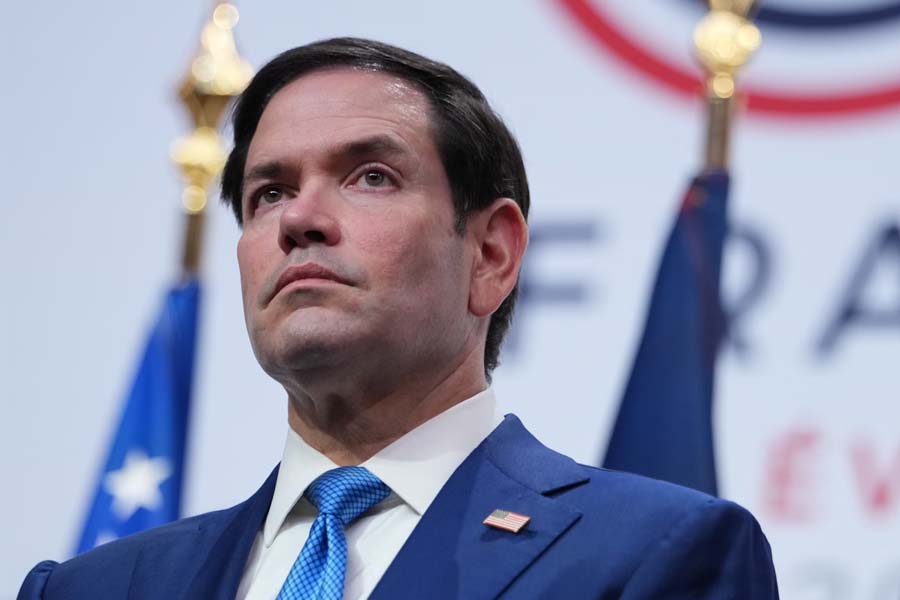
Marco Rubio, the US secretary of state, arrived in the Gulf to reassure allies that the US remains committed to their security. "It's an international waterway," Rubio said. "No country is allowed to charge tolls or fees on an international waterway."
But tensions remain. Iran's chief negotiator met Oman's Sultan to discuss a long-term agreement to manage the strait. Israel launched an airstrike that killed two people in southern Lebanon — the first since the latest ceasefire took effect. And Iraq is considering leaving Opec if its quota is not increased.
Welcome to the new normal — where oil is cheap, tankers are moving, but the Middle East is still a powder keg.
🛢️ OIL PRICE — THE NUMBERS: Brent crude: $72.24/barrel (↓20% this month) • Pre-war price: $72.48 (27 February) • Peak: $126.41 (April) • 14.4m barrels/day cut during war • 57 ships transited since 23 June • 1,100 seafarers evacuated • Japan Nikkei ↑4.6% • South Korea Kospi ↑6% • European Stoxx 600 ↑0.64%.
Oil Falls Below Pre-War Levels: $72.24 and Falling
Oil prices have fallen below levels last seen before the Iran war started in late February as more oil tankers exited the strait of Hormuz.
Brent crude, the global benchmark, fell to a low of $72.24 a barrel on Thursday, slightly lower than the day before the US and Israel launched missile attacks on Tehran on 28 February. Prices have fallen more than 20% this month.
Brent crude for August delivery was trading lower than that for September, which was priced at $73.59, signalling ample short-term supply.
Vessel traffic in the strait, a vital shipping passage, doubled over the previous 24 hours to its highest level since late February, according to CNN and MarineTraffic data.
Ipek Ozkardeskaya, senior analyst at Swissquote, said news that vessels are now transiting the strait of Hormuz with their satellite signals switched on had helped push down the oil price.
She added: "A combination of strategic inventory releases, a collapse in demand from top buyer China and a substantial number of tankers quietly leaving the Persian Gulf 'dark' had contributed to a small oversupply in some important markets."
📈 OIL PRICE JOURNEY — 2026
- 27 February: $72.48/barrel (pre-war)
- March 2026: $119/barrel (surge)
- Late April: $126.41/barrel (peak)
- May-June: Steady decline
- 26 June: $72.24/barrel (↓20% this month)
- Fall from peak: -42.9%
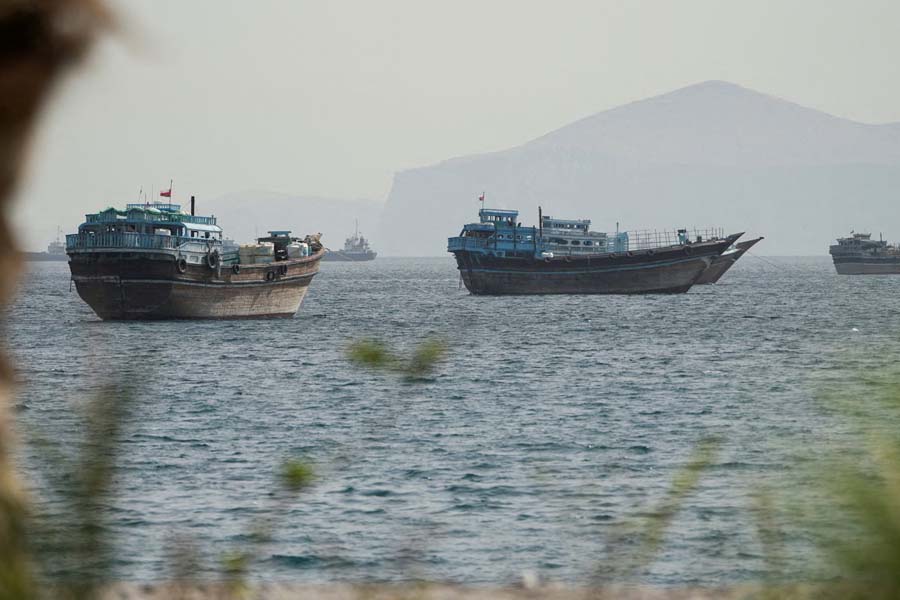
The shutdown of the strait of Hormuz cut 14.4 million barrels of oil a day from the Gulf's prewar output. Now, with vessel traffic returning to normal levels, that supply is flowing back into global markets — pushing prices down.
57 Ships, 1,100 Seafarers: UN Evacuation Plan Under Way
Some 57 ships carrying an estimated 1,100 seafarers have transited the strait of Hormuz since June 23 under a United Nations evacuation plan launched this week, data from the U.N.'s shipping agency showed today, Reuters reports.
These are the first numbers to be released by the UN's International Maritime Organization for the initiative, which will enable hundreds of ships with some 11,000 seafarers to leave the strait.
According to current IMO data, 12 ships sailed through during the morning of June 25, 32 during June 24 and 13 during June 23.
Susannah Streeter, chief investment strategist at the Wealth Club, said: "Fears of a long-lasting global energy crunch induced by the Iran conflict are slinking away, with oil prices sinking back towards pre-crisis levels. Instead of relief coursing through European markets, there's still a big dose of caution as the knock-on effects of the record-breaking heatwave collide with concerns about weak growth across the region."
— Susannah Streeter, Wealth Club
Rubio: 'No Country Can Charge Tolls in International Waterway'
The US secretary of state, Marco Rubio, has said no country, including Iran, would be allowed to charge tolls for shipping in the strait of Hormuz as he sought to reassure US allies in the Gulf that Washington would take a firm line in peace negotiations with Tehran.
Rubio is to meet Gulf allies on Tuesday and Wednesday in an attempt to reassure them that the US remains committed to their security and the 60-day ceasefire deal struck with Iran last week will not embolden Tehran.
Arriving in Abu Dhabi on Tuesday, Rubio said the US would provide for freedom of navigation through the strait of Hormuz and that no country would be allowed to charge a toll there, which Iran has said it has a right to do.
"It's an international waterway," Rubio said. "No country is allowed to charge tolls or fees on an international waterway. That's existing international law. That's the way it is in international waterways all over the world, and that's the way we expect it'll be here."
— Marco Rubio, US Secretary of State
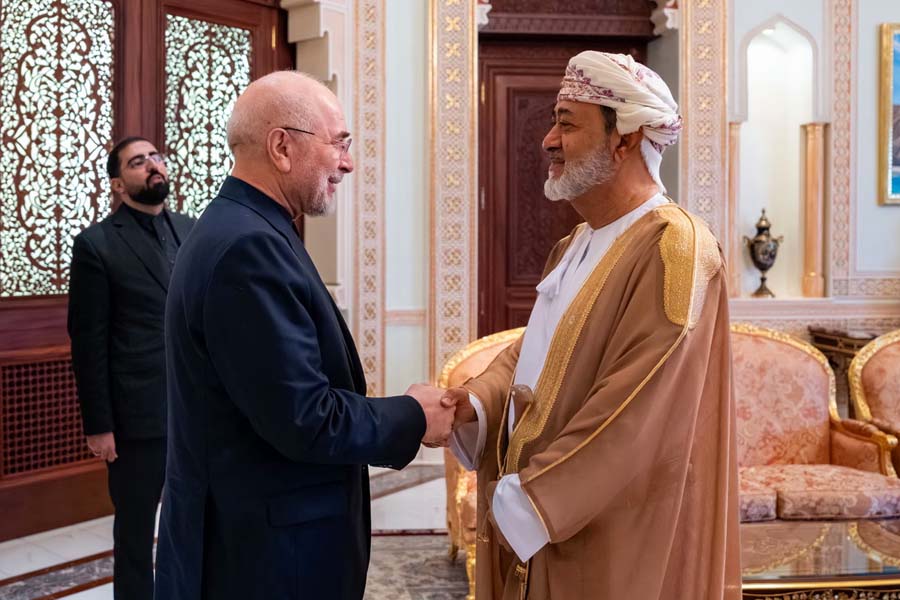
Iran's chief negotiator, Mohammad Bagher Ghalibaf (left), met Oman's Sultan Haitham bin Tarik in Muscat this week. Ghalibaf said he was working with Oman on a long-term agreement to manage the strait of Hormuz — a potential flashpoint with the US.
Iran Courts Oman as Rubio Reassures Gulf Allies
The long-term Iranian aim is to persuade the Gulf states to eject the US from the region. In what is still a fluid debate inside Iran and the Gulf, some Iranian voices are calling for a rapprochement with the region, perhaps by forming an alliance with a powerful new grouping of Turkey, Saudi Arabia, Pakistan and Egypt. The Iranian president, Masoud Pezeshkian, flew to Pakistan on Tuesday in his first overseas visit since the war ended.
There have also been signs that the UAE – the Gulf state with the closest economic ties with Iran – is also looking to defuse the crisis in relations with Iran.
In the short term, Iran is expecting roughly $6bn (£4.54bn) of its assets locked in Qatar due to US sanctions to be unfrozen, with another $6bn to be given by Doha as a repayable loan.
Over the next two months Iran can also expect to receive at least $8bn of income since the US Treasury's decision on Monday to issue a sanctions waiver on Iranian oil exports. The treasury's waiver document details that the payments can be made in dollars.
Some internal Iranian estimates claim the income from unhindered oil sales – principally to China – could rise to more than $30bn over a year. Iran has long been evading US sanctions by covertly trading with China but at heavily discounted prices.
The shipping monitors Kepler said 36 ships passed through the strait of Hormuz on Monday, the highest traffic volume since 1 March. Iran's chief negotiator, Mohammad Bagher Ghalibaf, has said he was working with Oman on a long-term agreement to manage the strait. Ghalibaf met the Sultan of Oman on Monday in Muscat.
Iraq Threatens to Follow UAE Out of Opec
Could Iraq be poised to follow the United Arab Emirates out of Opec? Reuters is reporting that Iraqi officials had considered leaving the Opec oil cartel, but are currently planning to remain a member and seek a higher quota under Opec rules.
They report: "Iraq will be compelled to consider all available options if its OPEC quota is not significantly increased, a senior Iraqi oil ministry official told Reuters on Thursday.
"Iraq is enduring a critical financial crisis on the back of the Iran war and a significant increase in its OPEC quota is a must and should be treated with utmost seriousness, the source told Reuters."
Two months ago, the UAE rocked Opec by quitting the group after 60 years of membership, amid the biggest supply crisis in history.
Markets Surge: Nikkei Up 4.6%, Kospi Rallies 6%
Asia-Pacific stock markets have jumped today, amid relief that the oil price has fallen to its pre-Iran war levels.
Japan's Nikkei has surged by 4.6%, while South Korea's KOSPI is up over 6%.
Jim Reid, market strategist at Deutsche Bank, says: "Markets are in a buoyant mood this morning, with Brent crude oil prices finally back at their pre-conflict levels.
"It comes as flows through the strait of Hormuz have continued to ramp up, with the number of vessels getting through at its highest since the conflict started. And more broadly, the oil price decline has eased fears about a stagflationary shock and aggressive rate hikes to deal with any inflation."
Traders are also relieved that chip giant Micron reported a surge in quarterly profits last night, easing fears that the AI boom might falter.
📊 MARKETS — TODAY'S PERFORMANCE
- Japan Nikkei: ↑4.6%
- South Korea Kospi: ↑6%
- European Stoxx 600: ↑0.64%
- EasyJet shares: ↑8% (after takeover talks)
- Micron Technology: ↑15% (after-hours)
🛢️ OIL PRICE JOURNEY: THE NUMBERS THAT DEFINE THE MARKET
📉 OIL PRICE TIMELINE (BRENT CRUDE)
🛢️ SUPPLY IMPACT
📊 MARKET REACTION
Japan Nikkei
South Korea Kospi
European Stoxx 600
💰 IRAN'S FINANCIAL GAINS
🗣️ THE VOICES OF THE MARKET
Marco Rubio (US Secretary of State):
"No country is allowed to charge tolls or fees on an international waterway. That's existing international law."
Susannah Streeter (Wealth Club):
"Fears of a long-lasting global energy crunch induced by the Iran conflict are slinking away, with oil prices sinking back towards pre-crisis levels."
Ipek Ozkardeskaya (Swissquote):
"Oil prices will probably swing between $60 and $80 a barrel in the coming weeks. Geopolitical risks remain."
⚠️ WHAT'S NEXT
🛢️ THE FINAL VERDICT: OIL BACK TO NORMAL — FOR NOW
✅ WHAT'S IMPROVED:
- Oil back to $72.24 — pre-war levels
- 57 ships transited — 1,100 seafarers
- Markets rally — Nikkei ↑4.6%, Kospi ↑6%
- Rubio: "No tolls in international waters"
- Fears of energy crunch "slinking away"
⚠️ WHAT REMAINS:
- Iran-Oman strait talks — potential tolls
- Israel strike in Lebanon — 2 killed
- Iraq may leave Opec
- Iran to receive $30bn+ annual oil income
- Geopolitical risks remain
"Oil is back to $72 — the same price it was before the war. Fifty-seven ships have sailed through Hormuz. Markets are rallying. The fears of a global energy crunch are slinking away. But the Middle East is never calm for long. Iran is courting Oman. Rubio is reassuring the Gulf. Israel struck Lebanon. Iraq is threatening to leave Opec. The oil is flowing — for now. But the powder keg is still there."
— Oil Market Analysis
Stay updated with the latest oil prices, Middle East developments, and global markets on our Global Markets Page.

Garments From Nepal

Wholesale Tibetan Singing Bowls

Experience the Himalayan Craft Shopping | Exclusive Wholesale Offer
Shop Wholesale Now