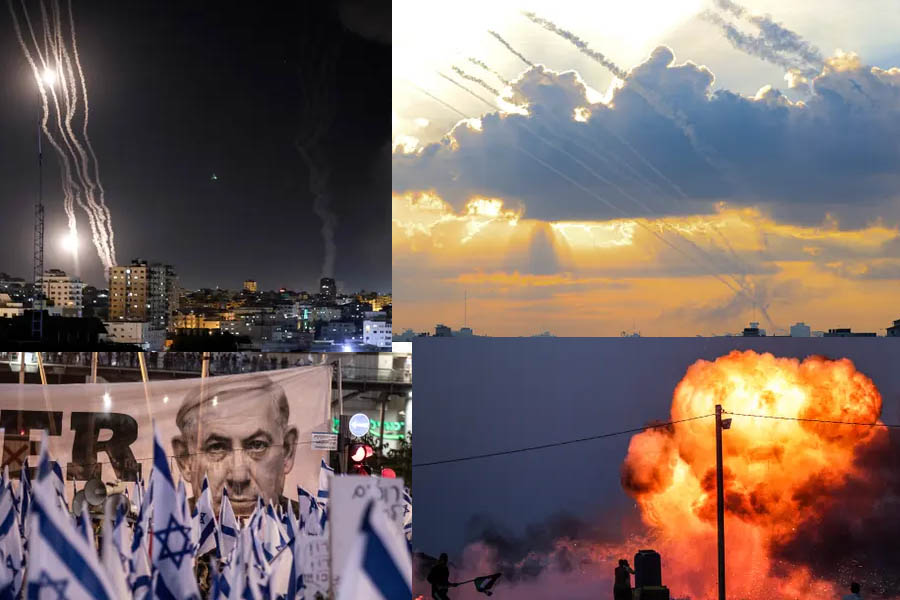
Israel Death Toll Surges to Over 1,200 as Crisis Escalates — October 7 Attack Casualties Rise
In a grim turn of events, Israel is grappling with a rapidly rising death toll that has now exceeded 1,200 people, with the majority being civilians, as reported by Kan, the public broadcaster. This significant increase of 200 casualties comes amidst a deepening crisis in the region following Hamas's unprecedented terror attack on October 7. The toll includes victims of the initial assault as well as soldiers killed in subsequent operations. The deadliest single day for Israel since its founding, the October 7 attack has fundamentally altered the country's security landscape.
The October 7 Attack: Unprecedented Assault
The Hamas attack, which began on the morning of October 7, involved over 1,500 militants breaching the Gaza border fence and infiltrating dozens of Israeli communities, military bases, and a music festival near Re'im. The terrorists killed civilians in their homes, massacred young people at the Nova music festival, and took over 240 hostages back to Gaza — including women, children, and the elderly. The brutality of the attack shocked Israel and the world, leading to a formal declaration of war and a massive Israeli military response.
International Evacuations Underway
The turmoil in Israel has forced international evacuations, including 192 South Koreans who arrived at Incheon Airport in South Korea from Tel Aviv. An estimated 570 South Koreans are residing long-term in Israel, with an additional 230 on short-term stays, according to South Korea's foreign ministry. The situation at Ben Gurion Airport in Tel Aviv was described as "crowded" and "hectic" by passengers, with many desperately attempting to leave the country as numerous international airlines canceled flights. Several other nations, including the United States, United Kingdom, Germany, France, and Canada, have organized evacuation flights or chartered aircraft to repatriate their citizens.
The Toll on Gaza: Humanitarian Crisis Deepens
Gaza's Health Ministry reports that the ongoing Israeli air strikes have resulted in the deaths of at least 900 Palestinians, with approximately 4,600 individuals wounded. Gaza, a densely populated enclave home to 2.2 million people, is enduring heavy bombardments from land, sea, and air. As the conflict persists, the number of internally displaced people in Gaza has risen to over 260,000, further escalating the humanitarian crisis. Israel has imposed a "complete siege" on Gaza, cutting off food, water, electricity, and fuel supplies, leading the UN to warn of a catastrophic humanitarian situation.
International Responses: Biden's Support
The situation in Israel has not only intensified regional tensions but has also become a significant challenge for the United States and its diplomatic efforts. President Joe Biden, in a televised speech, condemned the attack by Hamas militants, categorizing it as an "act of sheer evil." He affirmed U.S. support for Israel, recognizing the complexity of the ongoing conflict. Biden announced that the US would provide additional military aid, including interceptors for Israel's Iron Dome defense system. The US also deployed an aircraft carrier strike group to the Eastern Mediterranean as a deterrent against Hezbollah and Iran entering the conflict.
Broader Geopolitical Implications: Axis of Resistance
The ongoing hostilities in Israel have broader implications on the geopolitical stage. The Hamas attack, coupled with regional developments, has the potential to reshape the Middle East's political agenda. Hamas seeks to ignite rebellion in the occupied West Bank, challenge the Palestinian Authority, and renew global focus on the Palestinian cause. The group is also reaching out to other members of the "axis of resistance" to rally support. This network, backed by Iran, includes Hezbollah in Lebanon, the Houthis in Yemen, and various militias in Iraq and Syria. Already, Hezbollah has shelled Israeli positions in the Sheba'a Farms area, and the Houthis have launched missiles toward Israel, raising fears of a multi-front war.
Iran's Concerns: Regional Influence at Stake
Iran is closely monitoring the situation, with concerns that the region is slipping away from its influence into that of the United States and Israel. The recent progress in establishing diplomatic relations between Arab countries and Israel, underpinned by security guarantees from the U.S., has raised alarms in Tehran. The Abraham Accords normalization agreements between Israel and several Arab nations were a direct threat to Iran's regional strategy. Iran's Supreme Leader Ayatollah Ali Khamenei has denied Iranian involvement in the October 7 attack but praised the operation, calling it a "devastating blow" to Israel.
Emerging Challenges and Potential Escalation
The conflict in Israel is creating a complex landscape, with pressure on other regional actors to take action. Hizbullah has shelled Israeli positions in the Sheba'a farms, and Houthi rebels have renewed cross-border hostilities in Yemen. As the fighting intensifies, the dynamics of the Middle East are in flux, presenting challenges for diplomacy and regional stability. The United Nations has called for a humanitarian ceasefire, but diplomatic efforts have so far failed to halt the violence. The situation in Israel continues to evolve rapidly, and the global community watches with apprehension as the death toll mounts and the broader geopolitical implications unfold.
Related Coverage: For ongoing updates on the October 7 war and regional crisis, visit our Middle East Breaking News page and Israel-Gaza War Hub.
Global Post Headline — independent Middle East coverage. globalpostheadline.com | Follow live: middle-east-breaking.php