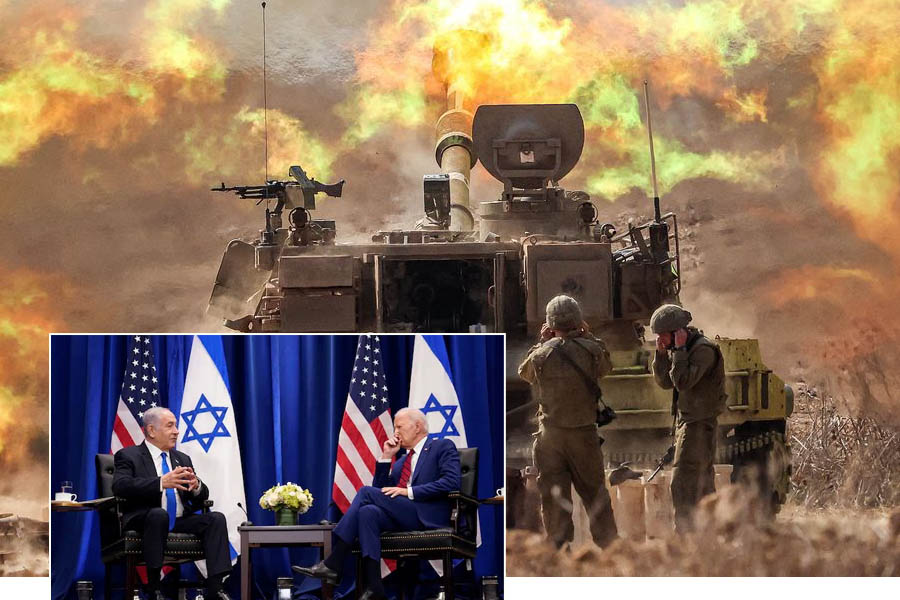
Tensions Soar in Tel Aviv: Air Raid Sirens Wail, Hamas Demands Release of 6,000 Prisoners in Exchange for 199 Hostages, US-Led Diplomacy Falters in Gaza Crisis
Jerusalem, Israel - The ongoing conflict between Israel and Hamas has escalated to alarming levels, prompting swift responses from world leaders and organizations as the region teeters on the brink of a humanitarian crisis. Air raid sirens wailed across Tel Aviv as Hamas launched rocket barrages at central Israel, while the militant group made an unprecedented demand: the release of 6,000 Palestinian prisoners in exchange for the 199 hostages held in Gaza. The demand far exceeds any previous prisoner exchange in Israeli history, presenting a major obstacle to diplomatic efforts.
International Leaders' Response
In a significant move, President Joe Biden announced his visit to Israel on Wednesday, signaling strong support for the nation during these trying times. Secretary of State Antony Blinken confirmed that Biden's visit aims to reaffirm solidarity with Israel and discuss strategies to minimize civilian casualties while ensuring the flow of humanitarian aid to Gaza. Additionally, the U.S. has ordered 2,000 troops to prepare for a possible deployment to support Israel, emphasizing their commitment to regional stability. German Chancellor Olaf Scholz also announced his travel to Israel, highlighting the global concern over the escalating conflict. The European Union has announced plans to airlift humanitarian aid to Egypt, intending to support Gaza residents affected by the conflict.
Hostages and Displaced Citizens
The crisis has left 199 individuals held hostage by Hamas, amplifying the urgency of international interventions. According to Israeli officials, the hostages include women, children, elderly men, and foreign nationals from over 20 countries, including the United States, United Kingdom, Germany, France, Thailand, and Nepal. The Israeli military revealed that approximately 500,000 Israelis have been displaced within the country due to the conflict, underscoring the magnitude of the crisis — the largest internal displacement in Israel's history. Tens of thousands of residents have been evacuated from communities near the Gaza border and the northern border with Lebanon, where Hezbollah clashes have intensified.
Humanitarian Aid and Diplomatic Efforts
Efforts are underway to facilitate the delivery of humanitarian aid to civilians in Gaza. The United States, in collaboration with Israel, is developing plans to ensure aid reaches those in need without benefiting Hamas. These discussions also explore the creation of safe zones to protect civilians from harm. The Rafah border crossing between Gaza and Egypt remains the primary potential entry point for aid, but it has been closed due to Israeli airstrikes and Egyptian security concerns. The World Health Organization (WHO) has expressed concerns over Gaza's dwindling water supply, warning that dehydration and waterborne diseases could kill thousands.
Regional Escalation Concerns
With President Biden's visit imminent, questions arise about potential delays in ground operations. Israeli officials assert that the visit's purpose is not to hinder military operations but to minimize the risk of regional escalation, highlighting the delicate balance between international diplomacy and national security imperatives. Hezbollah has continued its daily attacks on northern Israeli military positions, raising fears of a second front. Iran has warned that if Israeli ground operations continue, Hezbollah and other Iranian-backed militias may enter the war fully, potentially drawing the United States and other nations into a wider regional conflict.
Humanitarian Crisis in Gaza
Gaza's water supply has reached critical levels, with the UN warning that the entire population of 2.2 million is at risk of dehydration. Desalination plants and water pumps have shut down due to lack of fuel. Hospitals are overwhelmed, with doctors performing surgeries without anesthesia and using vinegar as antiseptic. The World Health Organization has warned that disease outbreaks — including cholera, dysentery, and typhoid — are imminent. The Red Cross has called for an immediate humanitarian corridor to bring in medical supplies and fuel.
Ongoing Military Operations
The Israeli Defense Forces (IDF) continue their preparations for enhanced military operations, focusing on dismantling Hamas and its military capabilities. Challenges persist, particularly in preventing Hamas fighters from relocating to different areas, underscoring the complexities of the conflict. The IDF has called up over 360,000 reservists — the largest mobilization in Israeli history — and has massed forces along the Gaza border in preparation for a potential ground invasion. Israeli officials have indicated that the ground operation will aim to destroy Hamas's tunnel network and eliminate its senior leadership.
International Collaboration
As leaders converge in Israel and the region, collaboration among nations becomes vital. Coordinated efforts are necessary to de-escalate tensions, provide humanitarian aid, and work towards a lasting resolution to the crisis. The international community's response to the Israel-Hamas conflict reflects the gravity of the situation and the urgent need for concerted action. As leaders from across the globe mobilize, the focus remains on protecting civilians, ensuring humanitarian assistance, and striving for a peaceful resolution. The world watches with bated breath, hoping for a swift end to the conflict and a path towards lasting peace in the region.
Related Coverage: For ongoing updates on the Gaza war and hostage crisis, visit our Middle East Breaking News page and Israel-Gaza War Hub.
Global Post Headline — independent Middle East coverage. globalpostheadline.com | Follow live: middle-east-breaking.php