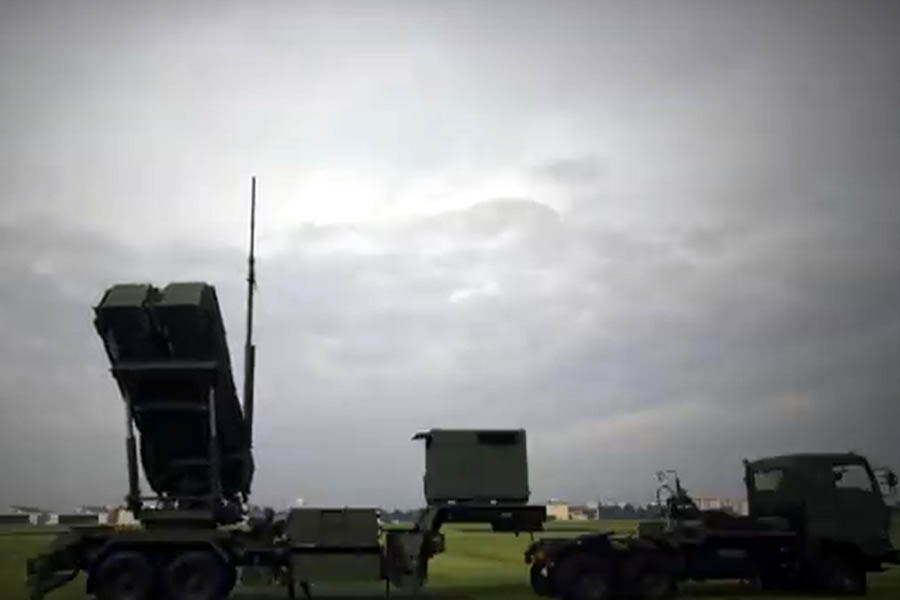
Japan Breaks Decades-Long Tradition, Offers Patriot Missiles to Boost U.S. Defenses — Historic Shift in Japan's Defense Export Policy
In a historic move that signals a profound shift in Japan's defense posture, the Japanese government has announced its decision to transfer license-built Patriot missiles to the United States — breaking decades of self-imposed restrictions on military weaponry exports. The decision, announced in late December 2023, marks the first time Japan has authorized the export of lethal weapons under its revised defense equipment transfer guidelines and carries significant implications for the Japan-US alliance and regional security dynamics.
The move comes as the United States faces critical shortages of missile interceptors following extensive use of Patriot systems in Ukraine and increased deployments in the Middle East. Japan's willingness to replenish American stocks demonstrates the deepening integration of the two allies' defense industrial bases, but also raises questions about Japan's own military readiness and the symbolic nature of the contribution.
A Historic Break from the Past
Japan's post-war constitution and successive governments had long adhered to the "Three Principles on Arms Exports" established in 1967, which effectively banned the export of military equipment to most nations. The principles were progressively relaxed in 2014 under Prime Minister Shinzo Abe, allowing for exports of defense equipment for purposes such as international cooperation and rescue missions. However, the export of lethal weapons — particularly those that could be used in active combat — remained a red line until now.
The decision to export Patriot PAC-3 missiles, produced in Japan under license from the American defense giant Lockheed Martin, represents a tangible manifestation of the revised guidelines. Japan's Cabinet approved the transfer after determining that the missiles would contribute to Japan's own defense by ensuring the United States — its primary security guarantor — maintains robust deterrent capabilities in the Asia-Pacific region.
Strategic Investment or Virtue Signaling?
Analysts are divided on the true significance of Japan's missile export. On one hand, the decision is undeniably historic — no Japanese government has previously authorized the export of lethal weapons. On the other hand, the reported number of missiles — described by officials as "dozens" — appears to be a token gesture rather than a substantial contribution to addressing the American missile shortfall.
Critics argue that this move is akin to "virtue signaling" — a carefully calibrated diplomatic gesture intended to show support for the United States during its engagements with Ukraine and Israel, while also securing Washington's continued attention on Asia amid competing crises in Europe and the Middle East. Japan, they contend, is providing a limited number of missiles in exchange for the assurance of robust U.S. military support in any future confrontation with China or North Korea.
Supporters, however, see the decision as a necessary first step in a longer journey. "This is not about the number of missiles today," said a Japanese defense official speaking on condition of anonymity. "It is about establishing a precedent and building trust. Once the pipeline is open, future transfers can be scaled up."
Japan's Own Defense Shortfalls
The decision to export Patriot missiles has also raised questions about Japan's own military preparedness. Reports suggest that Japan's Self-Defense Force may have insufficient stocks of missiles, ammunition, and other essential supplies for its own territorial defense. The JSDF's inventory of Patriot interceptors — used to defend against North Korean ballistic missile threats — is reportedly far below optimal levels, a concern that has been raised by both domestic and U.S. military planners.
Japan has announced plans to increase missile production, but the timeline and projected volume may not be sufficient to both replenish domestic stocks and export significant quantities. This suggests that the current export is a one-time exception rather than the beginning of large-scale weapons exports.
Despite recent increases in defense spending — Japan has pledged to double its defense budget to approximately 2% of GDP by 2027 — and the ordering of long-range attack missiles capable of striking North Korean or Chinese targets, Japan's overall defense capabilities remain a work in progress. The JSDF still lacks sufficient ammunition reserves, logistics capacity, and integrated command structures to sustain prolonged combat operations.
China and North Korea: The Unspoken Drivers
While the official rationale for the Patriot export centers on replenishing U.S. stocks, the unspoken driver is clearly geopolitical: counterbalancing China's growing military power and North Korea's expanding ballistic missile arsenal. Japan has watched with alarm as China has conducted increasingly assertive military operations in the East China Sea and around Taiwan, while North Korea has launched a record number of ballistic missiles in 2023, including several that overflew Japanese territory.
By deepening defense industrial cooperation with the United States — of which weapons exports are a key component — Japan aims to lock in American support and ensure that Washington remains fully committed to the defense of Japanese territory. The Patriot transfer can be seen as a form of strategic investment: Japan provides a limited number of missiles and, in return, receives the intangible but crucial asset of U.S. strategic attention.
"Japan is signaling to both its ally and its adversaries that the US-Japan alliance is more integrated than ever," said Dr. Hiroshi Takahashi, a defense analyst at the National Institute for Defense Studies in Tokyo. "The actual number of missiles is less important than the message that Japan is willing to reinterpret its defense identity."
Global Implications: A New Role for Japan?
The Patriot missile export could mark the beginning of a more active Japanese role in global security. Under Prime Minister Fumio Kishida's administration, Japan has already revised its National Security Strategy, committed to acquiring counterstrike capabilities, and increased defense cooperation with allies including Australia, the United Kingdom, and South Korea.
However, Japan remains constrained by public opinion and constitutional interpretations that limit the scope of military action. The Patriot export, being a purely defensive weapon system, is politically more palatable than exporting offensive missiles or fighter jets. It remains to be seen whether Japan will extend weapons exports to other nations, such as the Philippines or Vietnam, as part of efforts to counter Chinese influence in the South China Sea.
Looking Ahead: From Symbol to Substance
Japan's decision to export Patriot missiles is unquestionably a watershed moment. The question is whether it remains a symbolic one-off or becomes the foundation of a broader shift in Japanese defense policy. Much will depend on how the current export is received in Washington and Beijing, how Japan's domestic defense industry responds, and whether the JSDF can resolve its own readiness challenges.
For now, Japan has taken a small but significant step away from its post-war pacifist identity. The Patriot missile export may be just a handful of weapons, but it carries the weight of decades of precedent and signals that Japan is prepared to play a more active — and potentially more controversial — role in global security.
Related Coverage: For more on Japan's defense transformation, explore Shigeru Ishiba: Japan's New Prime Minister and Japan's Leadership and Business Revolution.
Global Post Headline — independent coverage of Asia-Pacific security and defense affairs. globalpostheadline.com | Follow defense updates: Asian News | Military Tech

Authentic Nepali crafts, pashmina, singing bowls — worldwide shipping.